Dublin
Georgian squares, literary pubs, live music and a warm welcome in Ireland's lively capital by the sea.
- Best time to go
- May to September for long days; March for St Patrick's Day
- Local time
- –
- Currency
- Euro (EUR)
- Reading time
- 4 min
- Language
- Irish and English

Dublin was founded by Vikings in the ninth century on the banks of the River Liffey, grew into the second city of the British Empire in the eighteenth century, and became the capital of an independent Ireland in the twentieth. Its elegant Georgian squares, grand public buildings and narrow medieval lanes tell that layered story.
It's a city of writers, from Jonathan Swift to James Joyce, Oscar Wilde and Samuel Beckett, and of music, conversation and pubs. Compact and friendly, it's easy to explore on foot, and the sea and the mountains are a short train ride away.
The top 10 in Dublin
- 1
Trinity College and the Book of Kells
Photo: Diliff, CC BY-SA 4.0, via Wikimedia Commons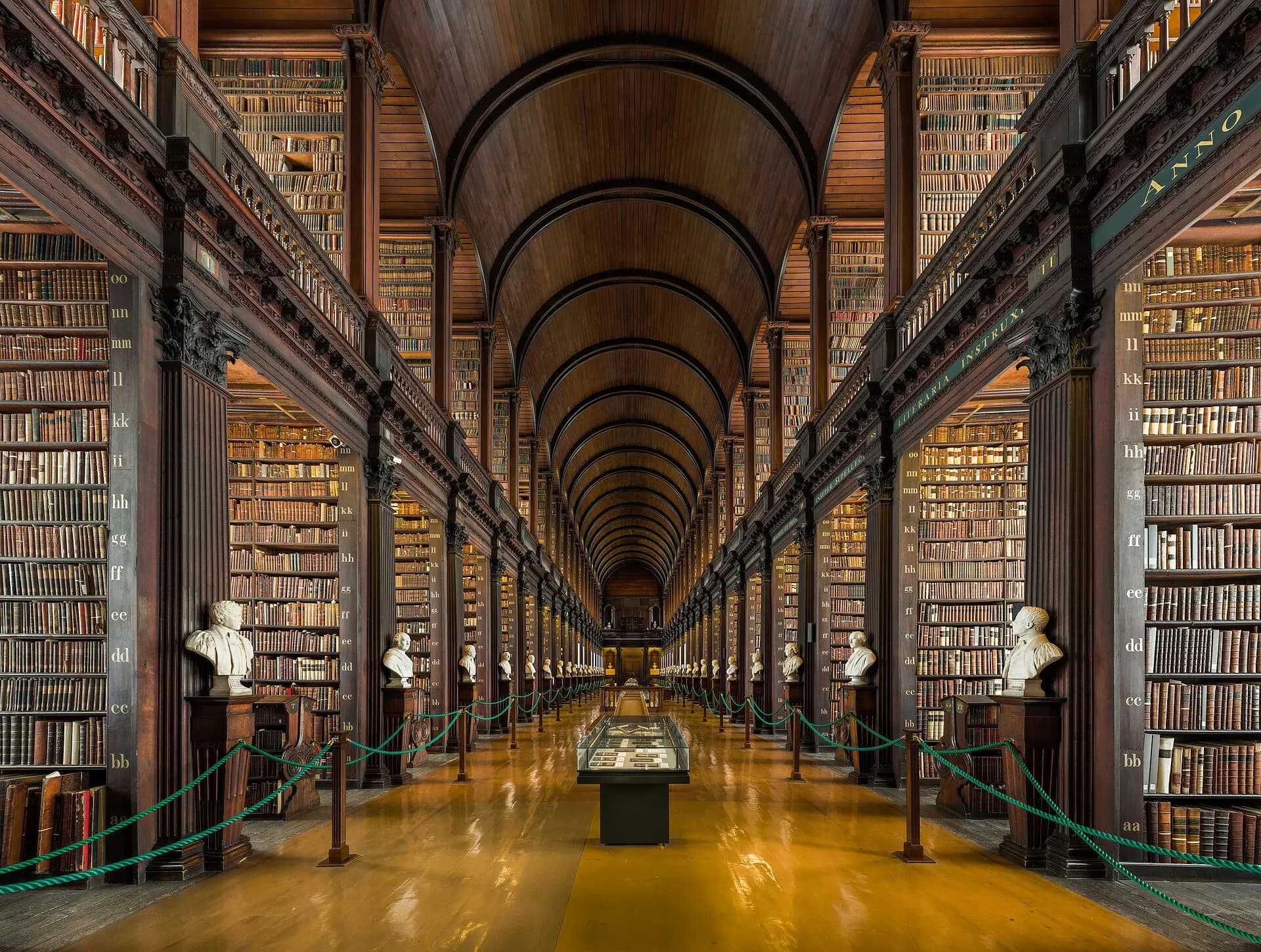
Ireland's oldest university, founded in 1592, has cobbled squares in the heart of the city. Its treasure is the Book of Kells, a ninth-century illuminated manuscript of the Gospels, one of the finest in the world, displayed in the Old Library, whose Long Room is lined with ancient books beneath a barrel-vaulted ceiling.
TipBook a timed ticket online; parts of the Old Library have been undergoing conservation works, so check what's open.
- 2
Dublin Castle and the Chester Beatty
Photo: Derval O'Carroll, CC BY 4.0, via Wikimedia Commons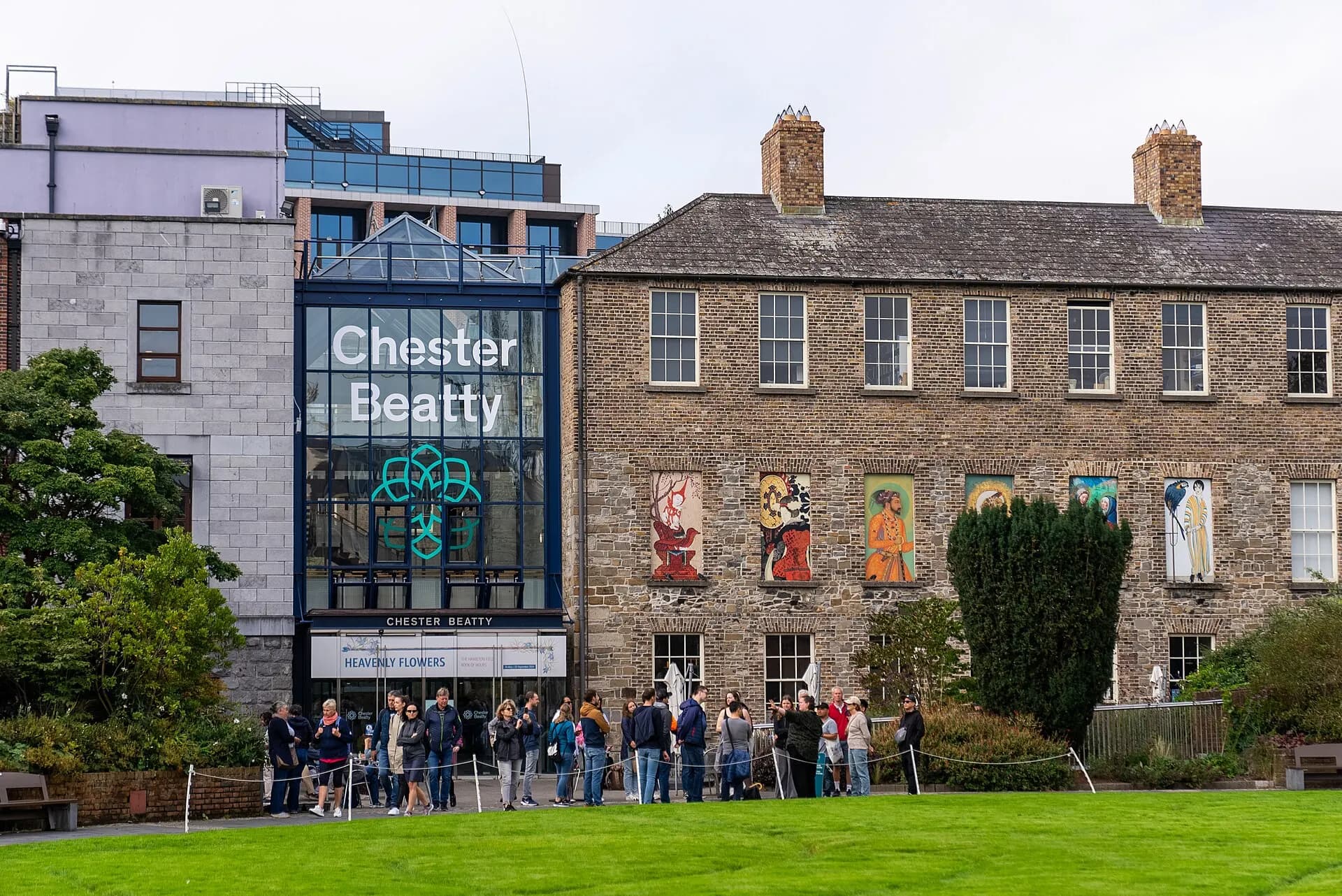
The seat of British rule in Ireland for seven centuries, now used for state occasions, with ornate State Apartments and medieval undercroft. In its gardens, the Chester Beatty museum holds a superb free collection of manuscripts, prints and decorative arts from Asia, the Middle East and Europe.
- 3
St Patrick's Cathedral and Christ Church
Photo: Berthold Werner, CC BY-SA 4.0, via Wikimedia Commons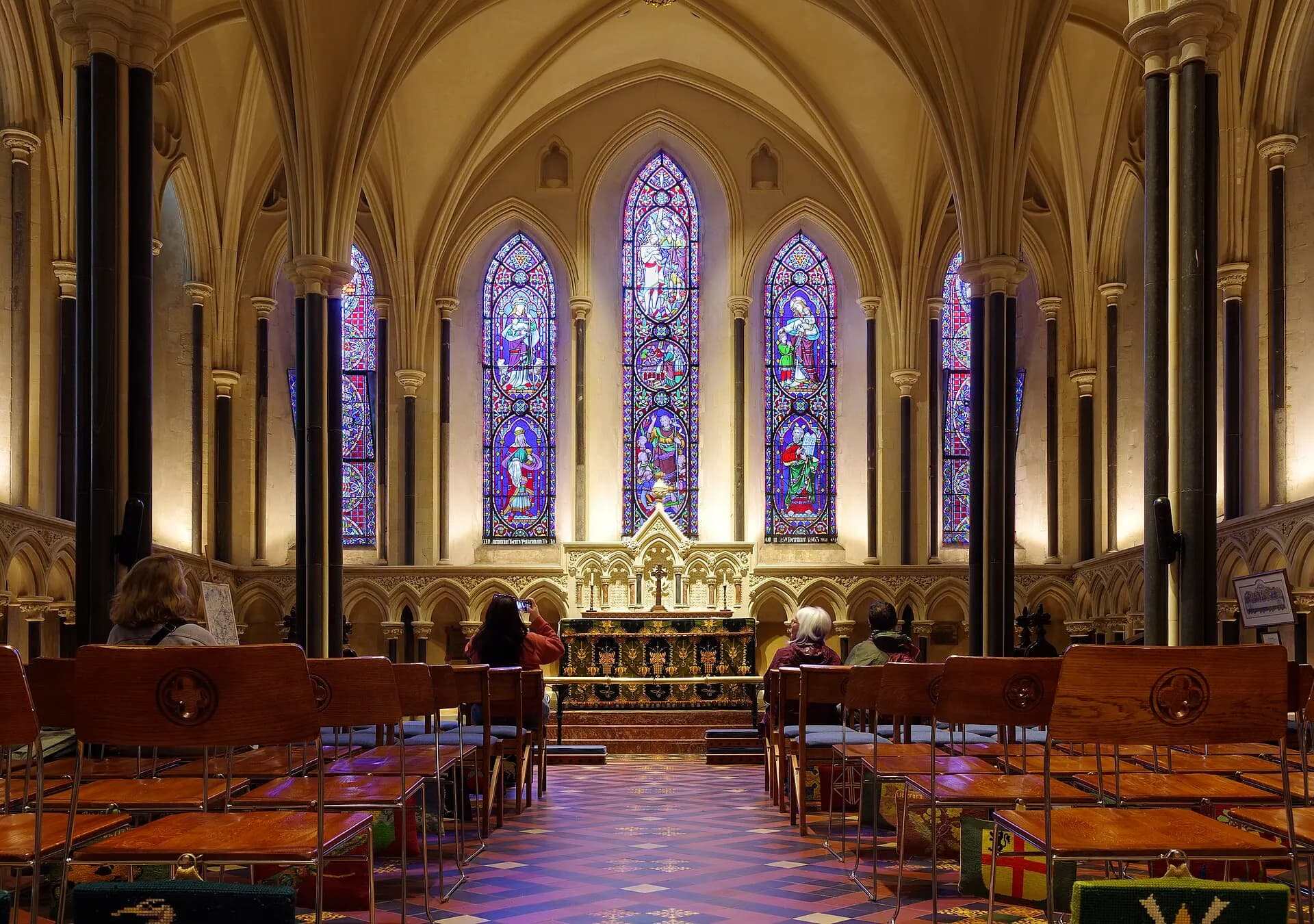
Dublin's two medieval cathedrals. St Patrick's, the largest church in Ireland, where Jonathan Swift was dean, stands beside a pretty park. Christ Church, founded by a Viking king, has a vast crypt, one of the oldest structures in the city.
- 4
Temple Bar
Photo: Gordon Leggett, CC BY-SA 4.0, via Wikimedia Commons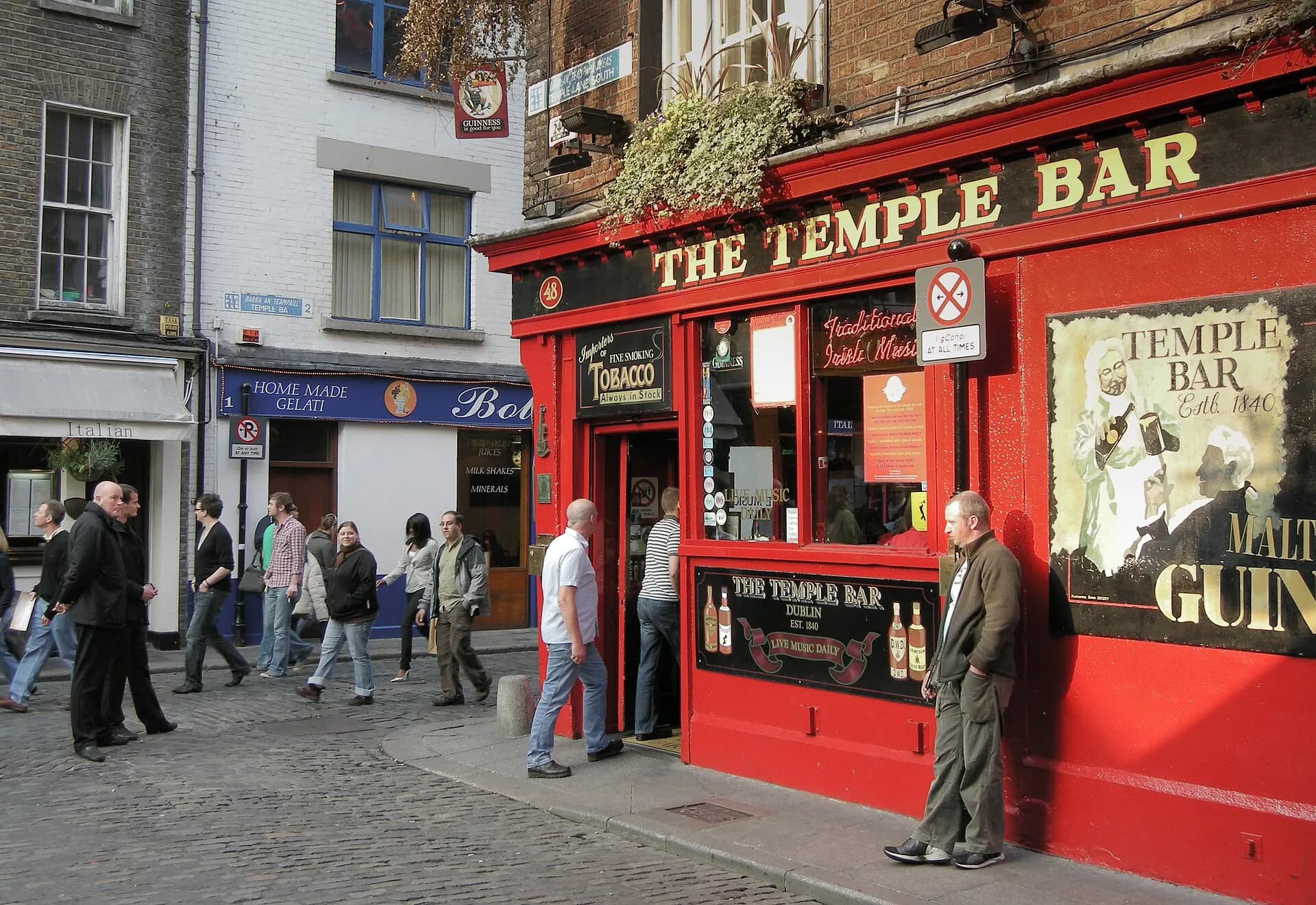
A cobbled district of pubs, restaurants, galleries and street performers on the south bank of the Liffey. It's lively, touristy and pricey, but fun in the evenings, with traditional music in many bars.
- 5
The National Museum of Ireland: Archaeology
Photo: Photograph by Mike Peel (www.mikepeel.net)., CC BY-SA 4.0, via Wikimedia Commons
A free museum with treasures from Ireland's past, including prehistoric gold, Viking artefacts, the Ardagh Chalice and remarkably preserved Iron Age "bog bodies".
- 6
Merrion Square and Georgian Dublin
Photo: Robert Linsdell from St. Andrews, Canada, CC BY 2.0, via Wikimedia Commons
Elegant squares of red-brick townhouses with colourful front doors and fanlights, built in the eighteenth century. Merrion Square has a park with a statue of Oscar Wilde, who lived on its corner, and the National Gallery of Ireland is nearby.
- 7
Kilmainham Gaol
Photo: Velvet, CC BY-SA 3.0, via Wikimedia Commons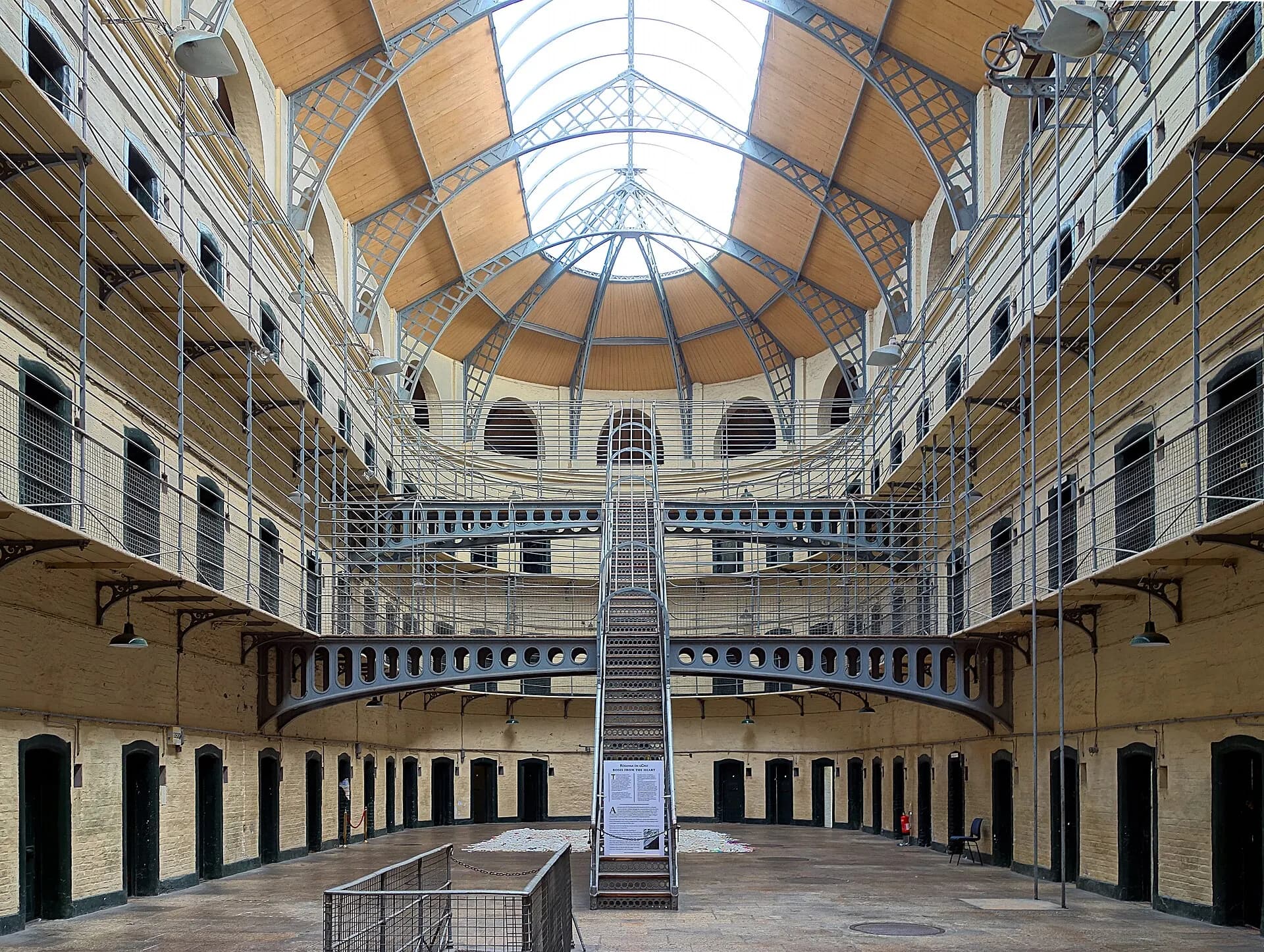
A former prison where leaders of Irish rebellions, including those of the 1916 Easter Rising, were held and executed. Guided tours tell the story of Ireland's struggle for independence.
TipTours are by timed ticket and sell out; book well ahead.
- 8
The Guinness Storehouse
Photo: Dieglop, CC BY-SA 4.0, via Wikimedia Commons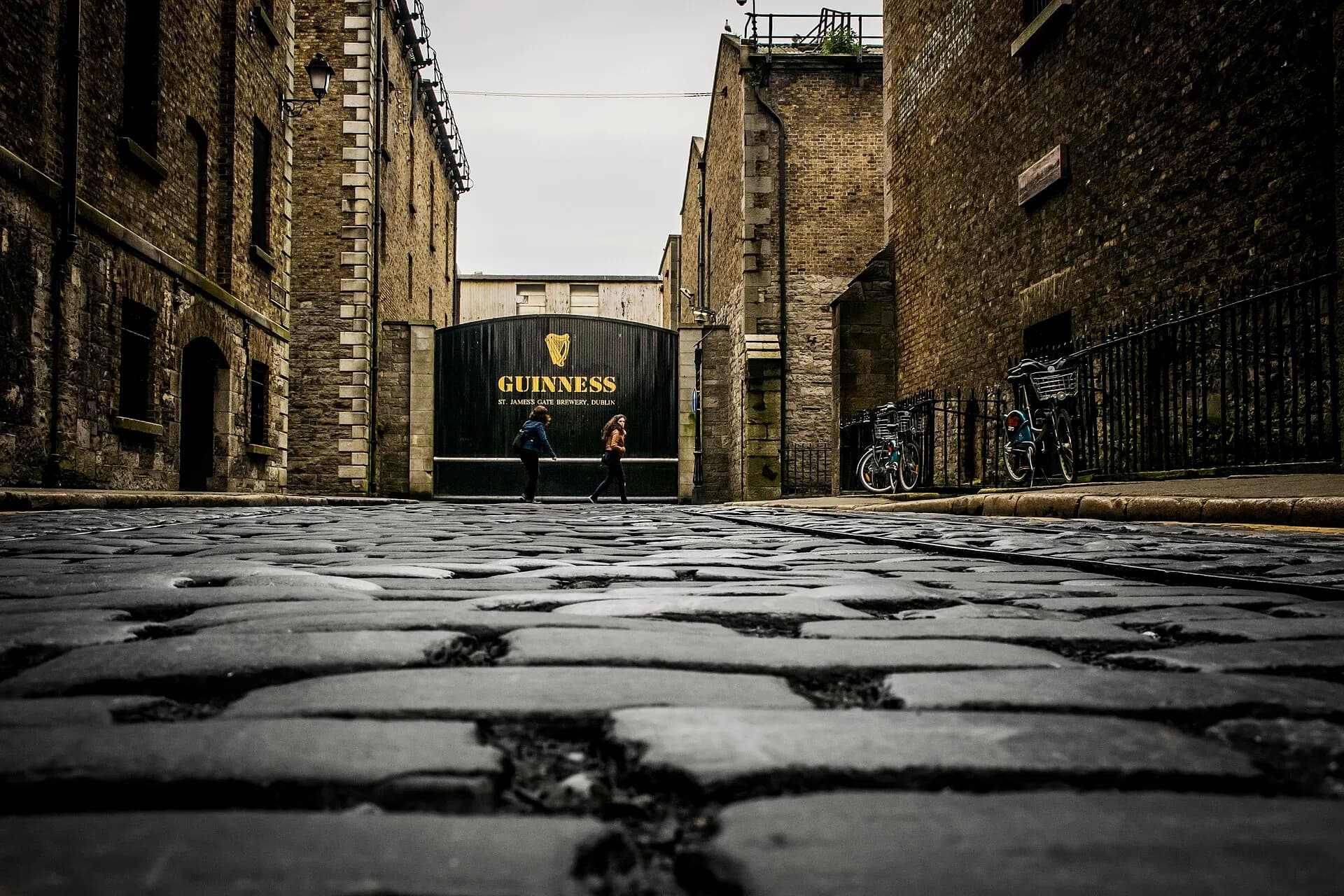
A former fermentation plant at the St James's Gate brewery, now a visitor experience about the famous stout, ending in the Gravity Bar, with panoramic views over the city.
- 9
EPIC The Irish Emigration Museum
Photo: Dublinprojekt, CC BY-SA 4.0, via Wikimedia Commons
An interactive museum in the Docklands telling the story of the millions of Irish people who emigrated around the world, and their influence on it.
- 10
Howth
Photo: Satdeep Gill, CC BY-SA 4.0, via Wikimedia Commons
A fishing village on a peninsula north of the city, reached by the DART train in about half an hour, with a busy harbour, seafood restaurants, seals and a spectacular cliff walk around the headland.
When to go
Dublin's weather is mild and changeable all year, with rain possible at any time. Summer brings long evenings and outdoor events. St Patrick's Day, on 17 March, fills the city with a parade and celebrations for several days. Bloomsday, on 16 June, celebrates James Joyce's Ulysses. Winter is cool and dark early, but cosy in the pubs.
Getting around
The city centre is compact and walkable. Dublin Bus, the Luas tram and the DART coastal railway cover the city and suburbs; a Leap Card or contactless payment gives cheaper fares. Dublin Airport is about thirty minutes from the centre by bus.
Local tips
- Book the Book of Kells, Kilmainham Gaol and the Guinness Storehouse in advance.
- Carry a light waterproof jacket at any time of year.
- Pub culture is relaxed; it's customary to buy rounds when drinking in a group.
- Tipping around 10% is usual in restaurants with table service.
- Many national museums and galleries are free.
- Traffic drives on the left; look carefully when crossing.
Eat and drink
Try Irish stew, coddle (a Dublin stew of sausages, bacon and potatoes), seafood chowder with brown soda bread, and a full Irish breakfast. The city's restaurant scene has grown enormously, with excellent local produce. A pint of Guinness in a traditional pub, such as those on Baggot Street or around Stephen's Green, is a Dublin ritual, and Irish whiskey distilleries offer tastings in the city.
Day trips
Glendalough, in the Wicklow Mountains about an hour south, is a monastic site founded in the sixth century, with a round tower and ruined churches beside two glacial lakes. Newgrange, in the Boyne Valley north of the city, is a Neolithic passage tomb older than the pyramids, whose chamber is lit by the rising sun at the winter solstice. The Cliffs of Moher, on the west coast, are a long day trip.
Where to stay
The area around St Stephen's Green and Grafton Street, south of the Liffey, is the most central, with Trinity College, the museums and the Georgian squares within a short walk. Temple Bar is handy but noisy at night. Smithfield and Stoneybatter, north-west of the centre, are characterful neighbourhoods with good pubs and cafés, while the coastal suburbs of Ballsbridge, Sandymount and Dún Laoghaire, on the DART line, are quieter and close to the sea.
Music and pubs
Traditional Irish music sessions, where musicians gather informally to play fiddles, flutes and bodhráns, take place in pubs across the city most evenings; The Cobblestone in Smithfield is famous for them. Dublin's historic pubs, with their snugs and polished wood, are part of its literary history, and walking tours follow the footsteps of Joyce and other writers between them.