Bali
Temples on clifftops and in lakes, rice terraces carved into hillsides, and a living Hindu culture of daily offerings.
- Best time to go
- April to October, the dry season, with May, June and September the sweet spot
- Local time
- –
- Currency
- Indonesian Rupiah (IDR)
- Reading time
- 4 min
- Language
- Indonesian

Bali is a small island with an extraordinary culture. Unlike most of Indonesia, it is predominantly Hindu, and religion shapes daily life: small offerings of flowers and rice are placed everywhere each morning, temples stand in every village, and ceremonies with music and processions are constant. Its landscape of volcanoes, lakes, rice terraces and beaches has made it one of the world's best-loved destinations.
Its popularity brings challenges, from traffic jams to crowds at the famous sights. The best trips mix a few well-chosen bases, such as Ubud for culture and the south coast for beaches, with early starts and time spent in quieter corners of the island.
The top 10 in Bali
- 1
Ubud
Photo: Jakub Hałun, CC BY-SA 4.0, via Wikimedia Commons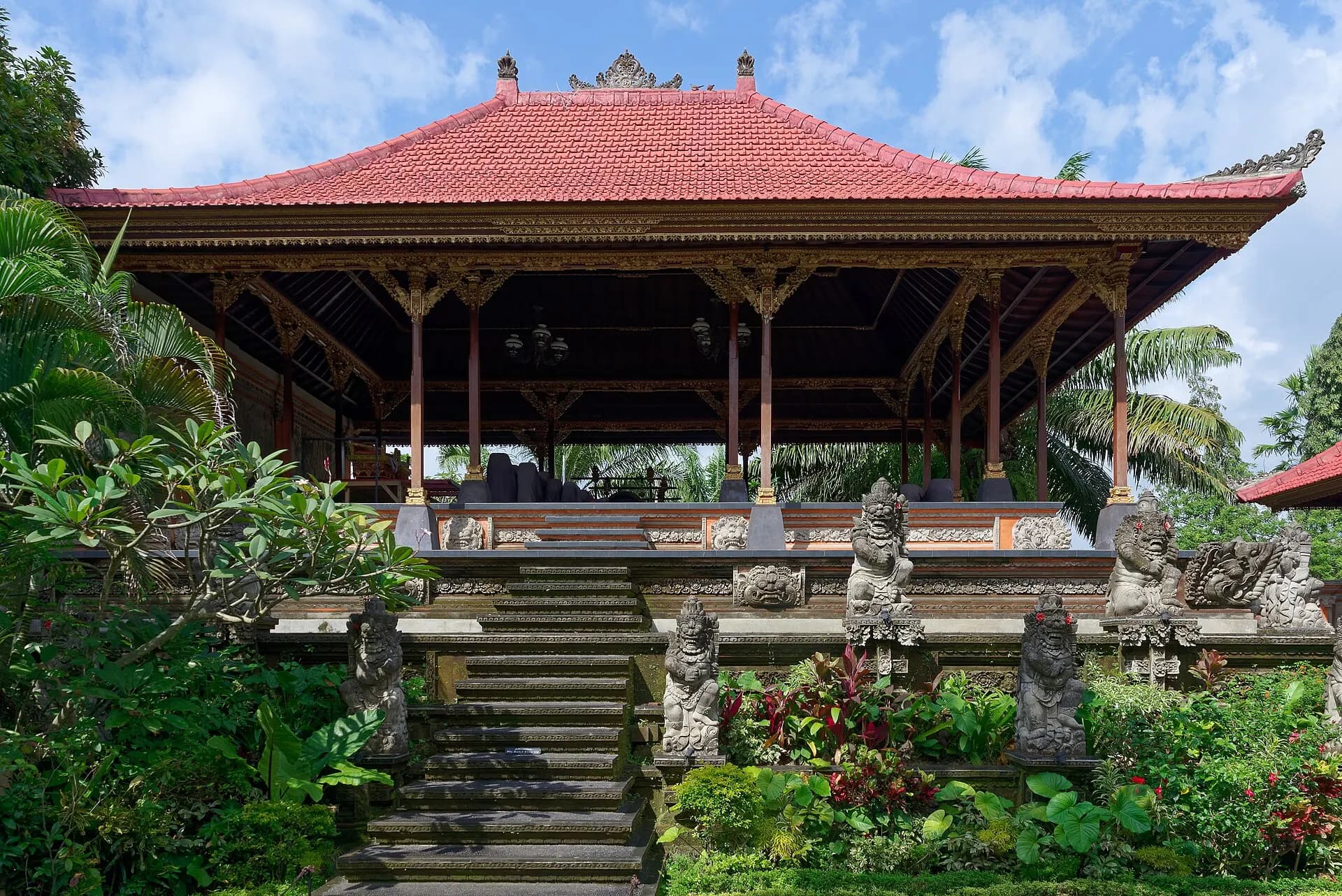
The island's cultural heart, in the hills of central Bali, with palaces, temples, art museums, craft workshops and evening performances of traditional dance. It's surrounded by rice fields and rivers, and the town is a base for yoga, cooking classes and walks.
TipWatch a Legong or Kecak dance performance in the evening at the Ubud Palace or a temple nearby.
- 2
The Tegallalang and Jatiluwih rice terraces
Photo: Vyacheslav Argenberg, CC BY 4.0, via Wikimedia Commons
Bali's terraced rice fields are irrigated by the subak, a cooperative water system dating back to the ninth century and recognised by UNESCO. Tegallalang, north of Ubud, is the most visited; Jatiluwih, in the west of the island, is far larger and quieter, with terraces stretching across the hillsides.
TipVisit early in the morning for soft light and few people.
- 3
Tanah Lot
Photo: CEphoto, Uwe Aranas, CC BY-SA 3.0, via Wikimedia Commons
A sea temple perched on a rock in the waves of the west coast, one of the island's most important. At low tide, you can walk out to its base, though only worshippers may enter. It's at its most beautiful, and busiest, at sunset.
- 4
Uluwatu Temple
Photo: CEphoto, Uwe Aranas, CC BY-SA 3.0, via Wikimedia Commons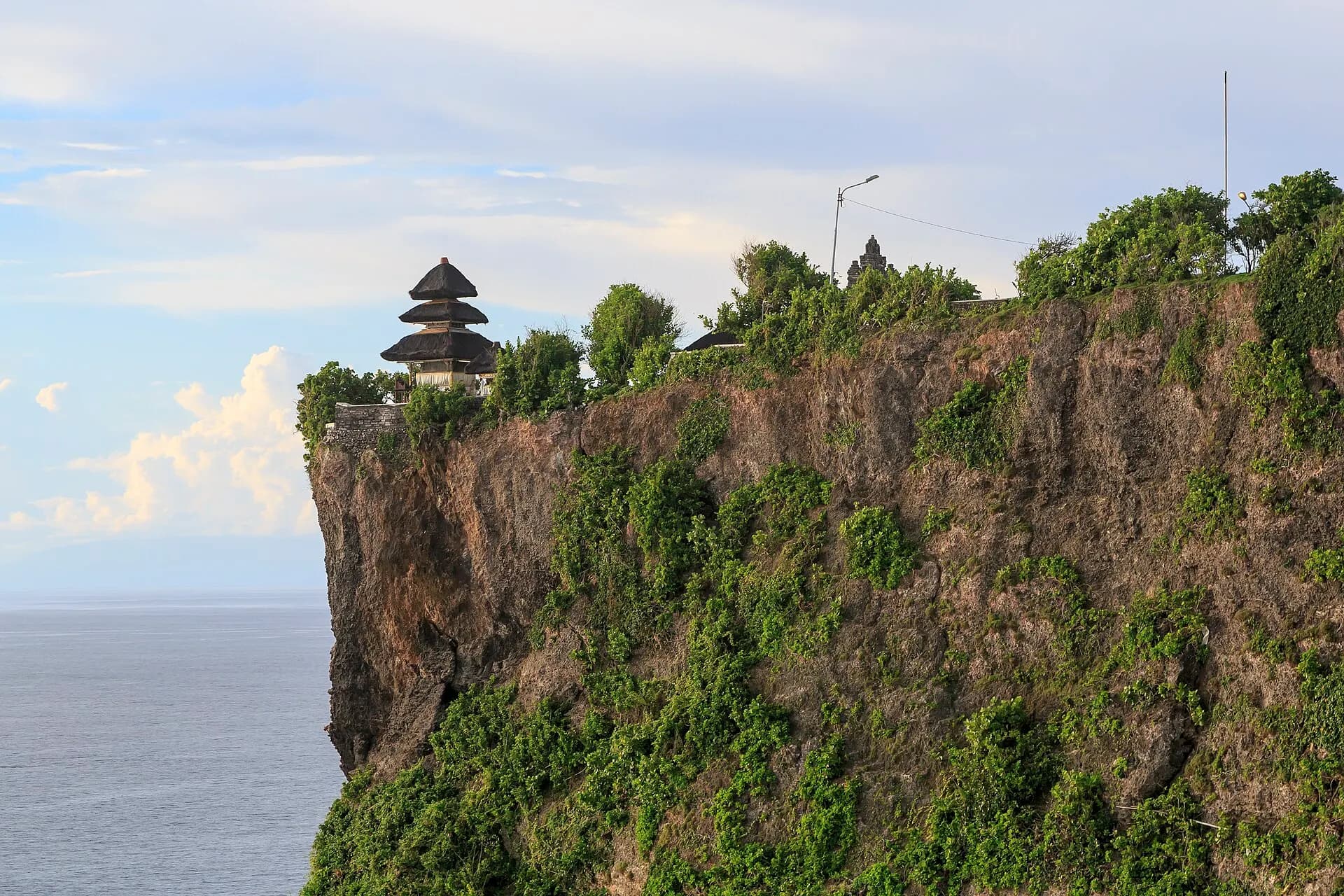
A temple on the edge of a seventy-metre cliff at the southern tip of the island, above the crashing surf. In the evening, the Kecak fire dance is performed in an amphitheatre on the clifftop, against the sunset.
TipKeep sunglasses, hats and phones out of sight: the temple's monkeys are expert thieves.
- 5
Pura Ulun Danu Bratan
Photo: CEphoto, Uwe Aranas, CC BY-SA 3.0, via Wikimedia Commons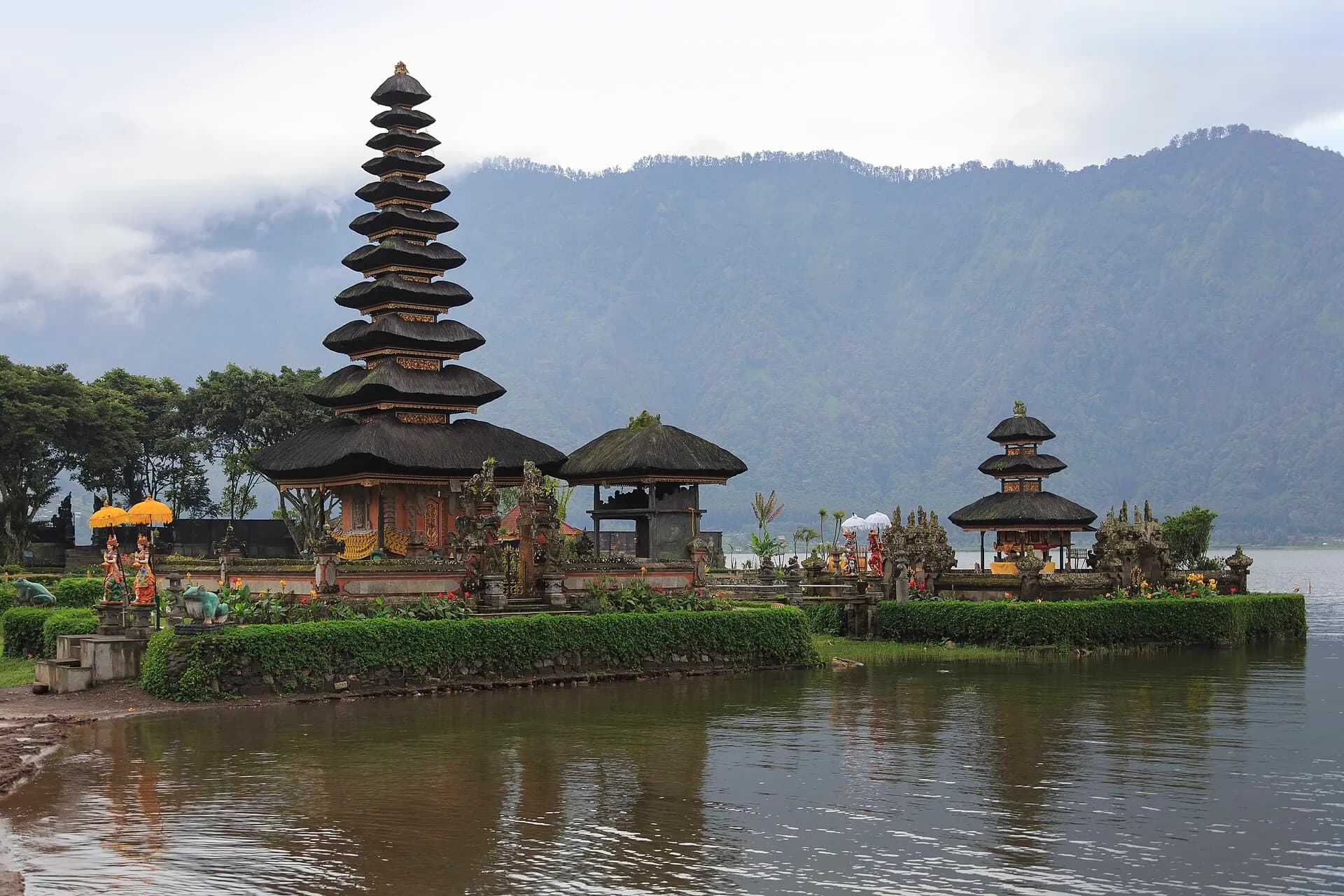
A temple on the shore of Lake Bratan, in the cool highlands, whose shrines appear to float on the water when the lake is high. It's dedicated to the goddess of the lake, who brings water to the island's farms.
- 6
Pura Lempuyang
Photo: Slleong, CC0, via Wikimedia Commons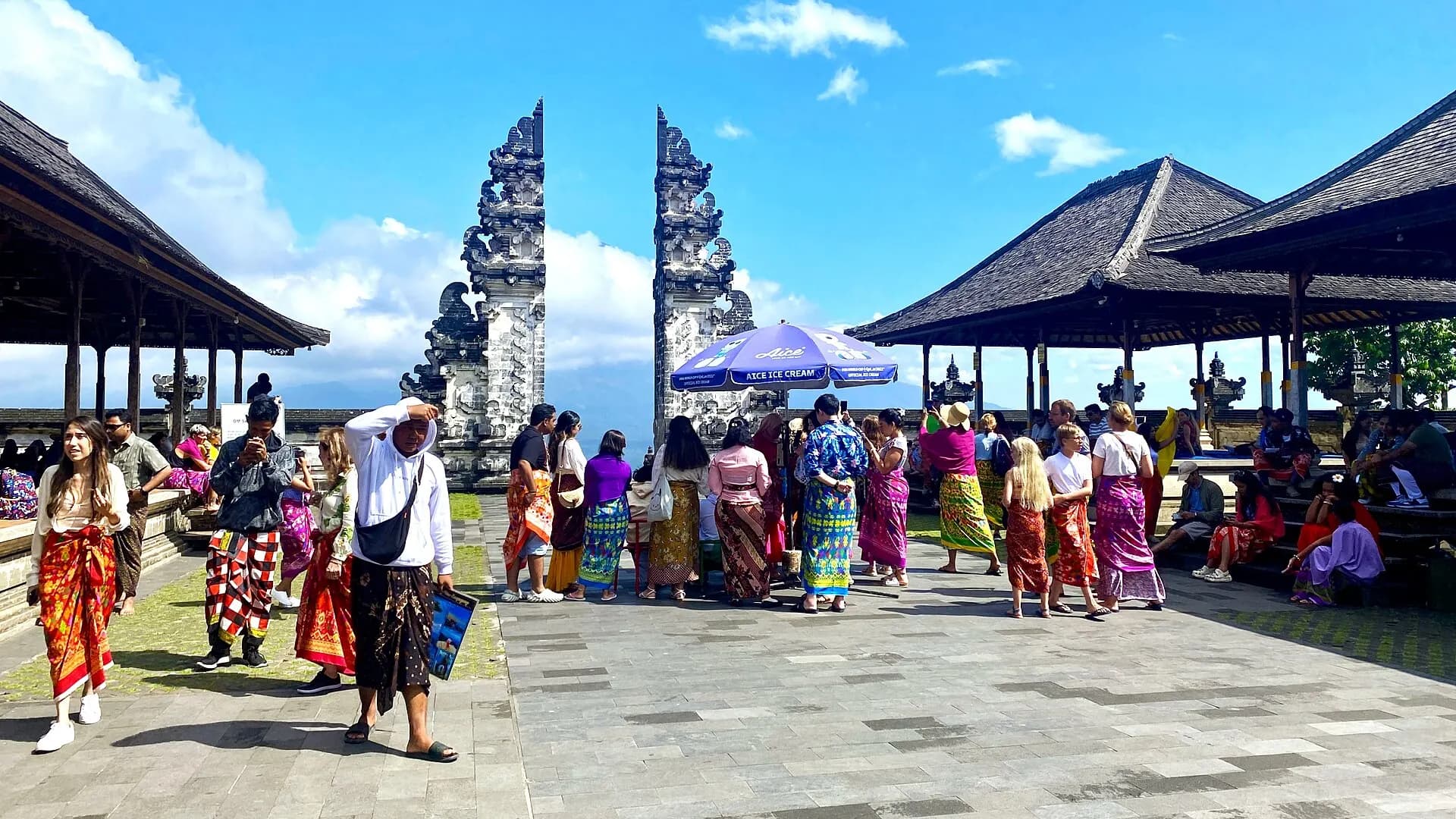
A temple complex on the slopes of Mount Lempuyang in the east, famous for its "Gates of Heaven", a split gateway framing Mount Agung, Bali's highest and holiest volcano. The full pilgrimage climbs through several temples up the mountain.
TipExpect long queues for photos at the gate; the climb beyond it is quieter and more spiritual.
- 7
Mount Batur
Photo: CEphoto, Uwe Aranas, CC BY-SA 3.0, via Wikimedia Commons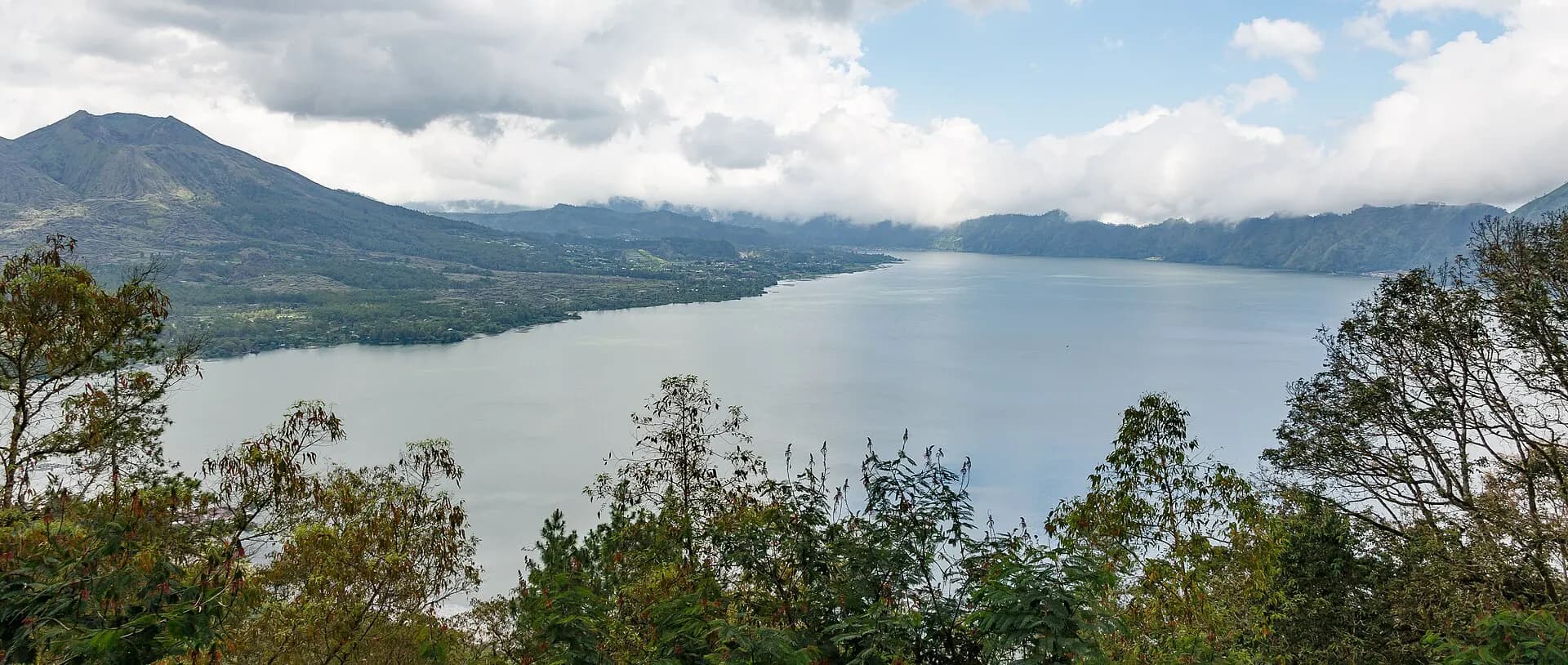
An active volcano in the north-east, with a crater lake below it. A popular hike starts in the dark around four in the morning to reach the rim for sunrise over Mount Agung and Mount Rinjani on Lombok.
- 8
Sidemen
Photo: rahmat nugroho, CC BY-SA 4.0, via Wikimedia Commons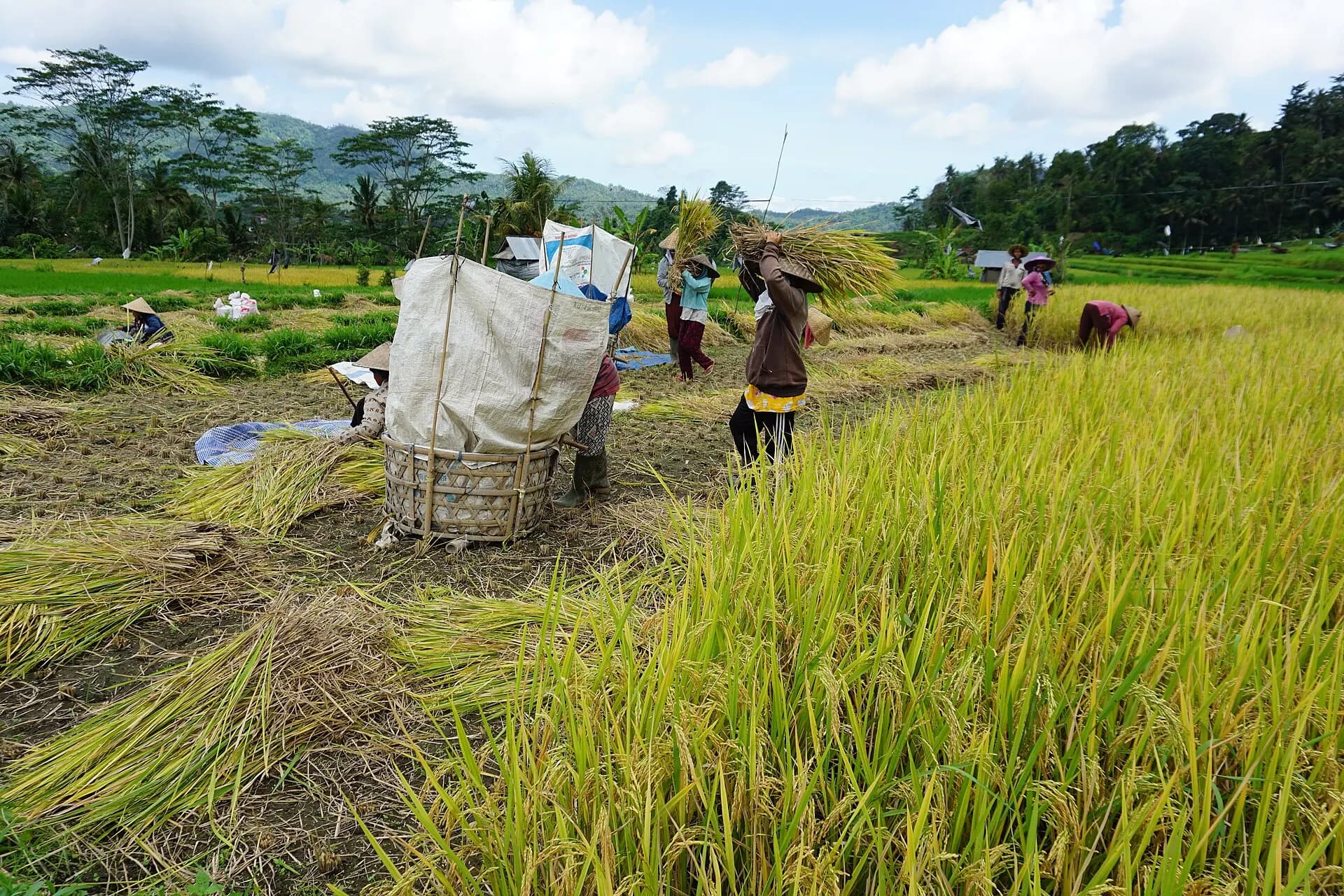
A valley in the east of the island with rice terraces, weaving villages and views of Mount Agung, and a calm, traditional way of life that's hard to find in the busier south.
- 9
- 10
The south coast beaches
Photo: Jakub Hałun, CC BY-SA 4.0, via Wikimedia Commons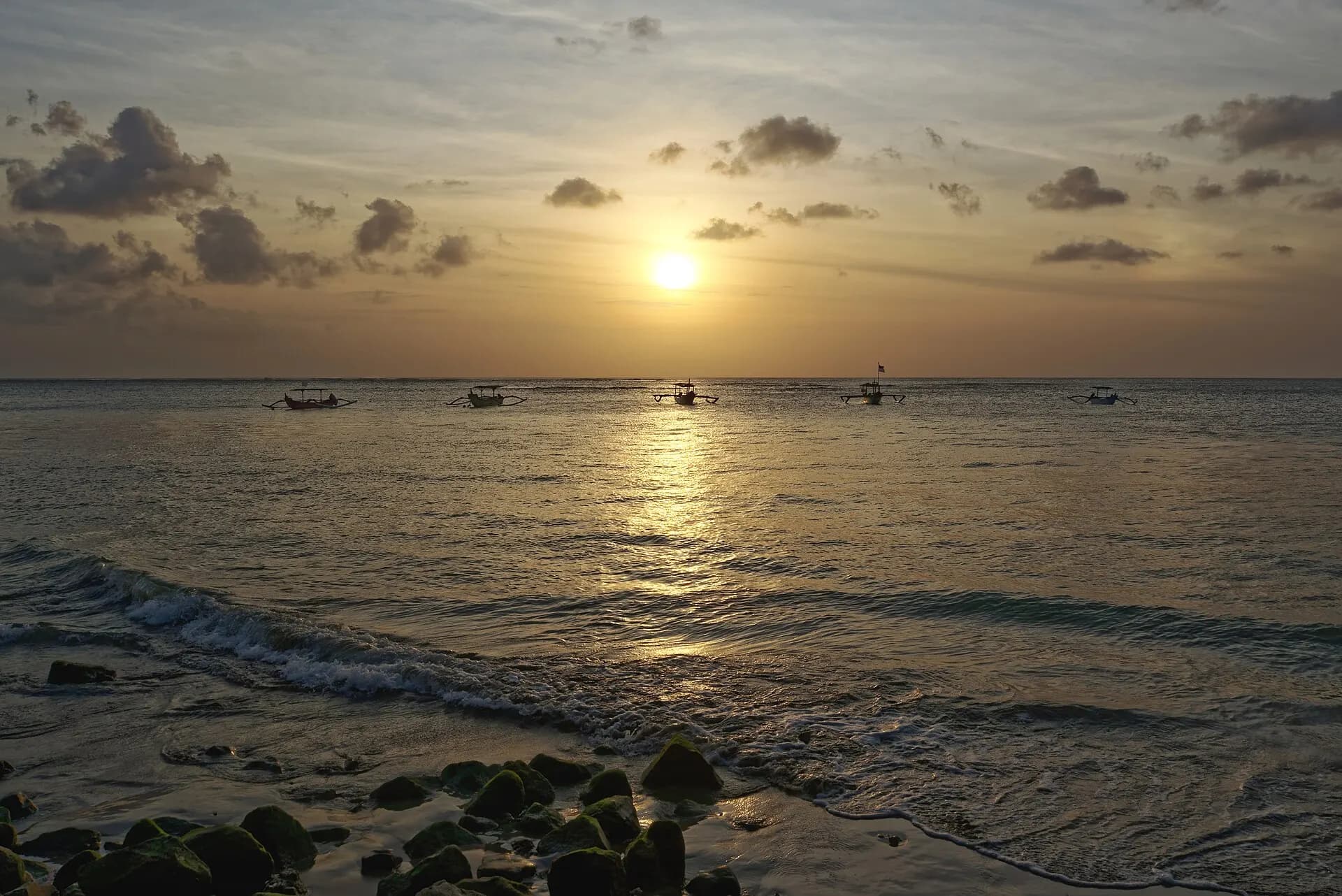
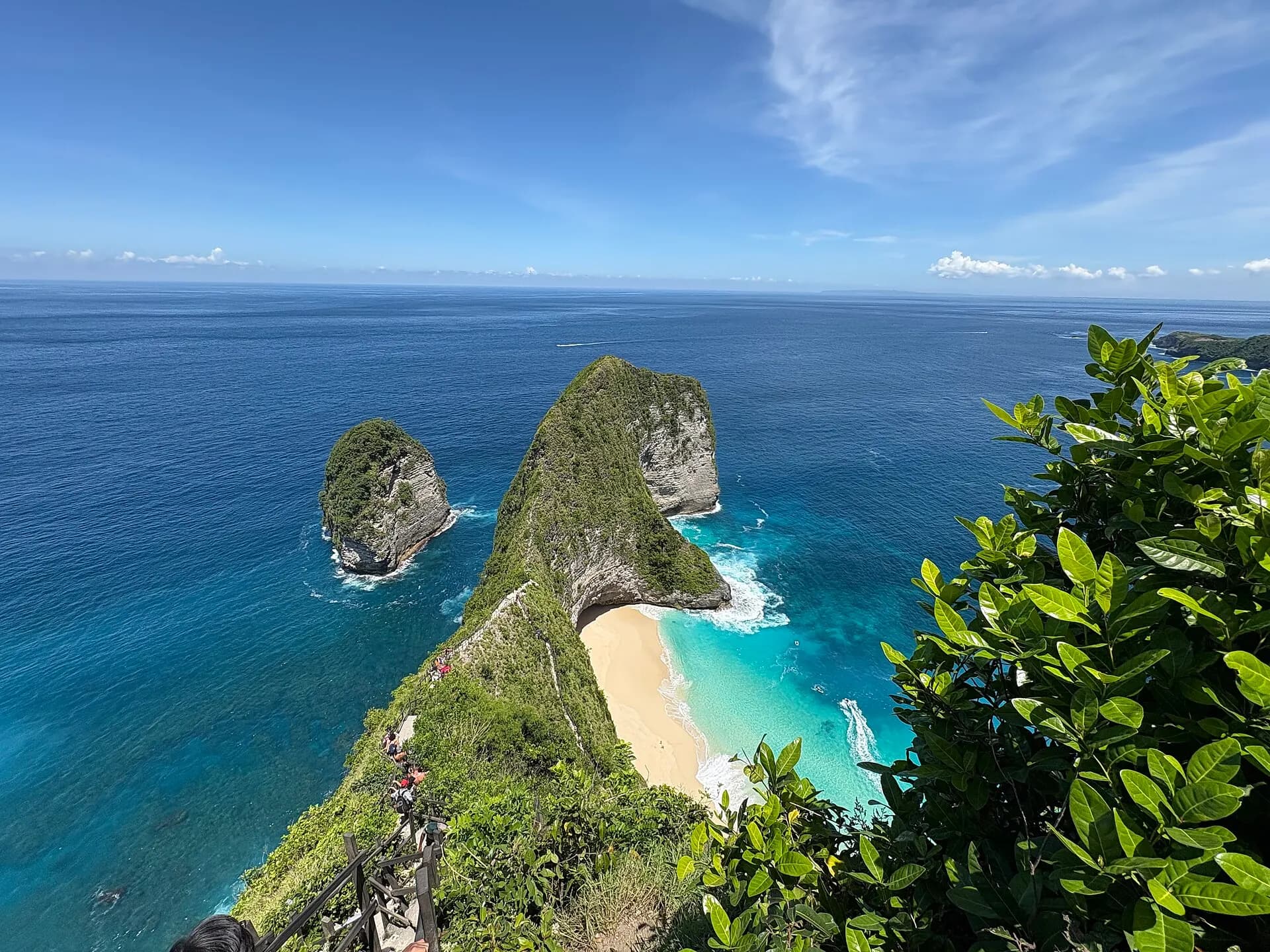
The beaches of the south range from the surf and nightlife of Canggu, Seminyak and Kuta to the calmer, family-friendly waters of Sanur and Nusa Dua, and the surf breaks and cliff-backed coves of the Bukit peninsula.
When to go
The dry season, from April to October, brings sunny days and lower humidity, the best time for hiking and beaches. July, August and the Christmas holidays are the busiest. The wet season, from November to March, brings heavy afternoon showers, but also fewer visitors and lush landscapes. Nyepi, the Balinese day of silence in March or April, shuts down the whole island, including the airport, for twenty-four hours.
Getting around
Bali has little public transport. Most visitors hire a car with a driver by the day, an affordable and comfortable option, or use ride-hailing apps. Renting a scooter is popular, but traffic is chaotic and you need a valid licence and a helmet. Traffic in the south can be very slow, so plan your bases to limit long journeys.
Ngurah Rai International Airport is near Kuta, in the south.
Local tips
- Check visa requirements; many visitors can get an e-visa on arrival. A tourist levy is charged on arrival, payable online.
- Wear a sarong and sash at temples; they're often lent at the entrance.
- Don't step on the small offerings (canang sari) on the pavements.
- Respect sacred sites: don't climb on shrines or pose disrespectfully, which can lead to deportation.
- Drink bottled or filtered water.
- Swim only at beaches with lifeguards: currents can be strong.
Eat and drink
Try babi guling, roast suckling pig, and bebek betutu, duck slow-cooked with spices, both Balinese specialities, as well as nasi campur, rice with a selection of small dishes, satay, and sambal matah, a fresh chilli and lemongrass relish. Local warungs, small family restaurants, serve the best food at the lowest prices. Coffee from the highlands is excellent.
Where to stay
Choose your base by the trip you want. Ubud suits culture, walks and food, with guesthouses among the rice fields. Canggu and Seminyak, on the south-west coast, are the busiest areas for surfing, cafés, beach clubs and nightlife. Sanur, on the east coast, is calmer and good for families, with a long beachfront path and boats to Nusa Penida. The Bukit peninsula, around Uluwatu, has clifftop hotels and surf beaches, and Nusa Dua has large resorts on calm, protected water. For a slower Bali, consider a few nights in Sidemen, Amed on the east coast, or Munduk in the northern highlands.