Reykjavík
The world's northernmost capital: colourful houses, geothermal pools, and glaciers and geysers within a day's drive.
- Best time to go
- June to August for midnight sun and road trips; September to March for the northern lights
- Local time
- –
- Currency
- Icelandic Króna (ISK)
- Reading time
- 4 min
- Language
- Icelandic
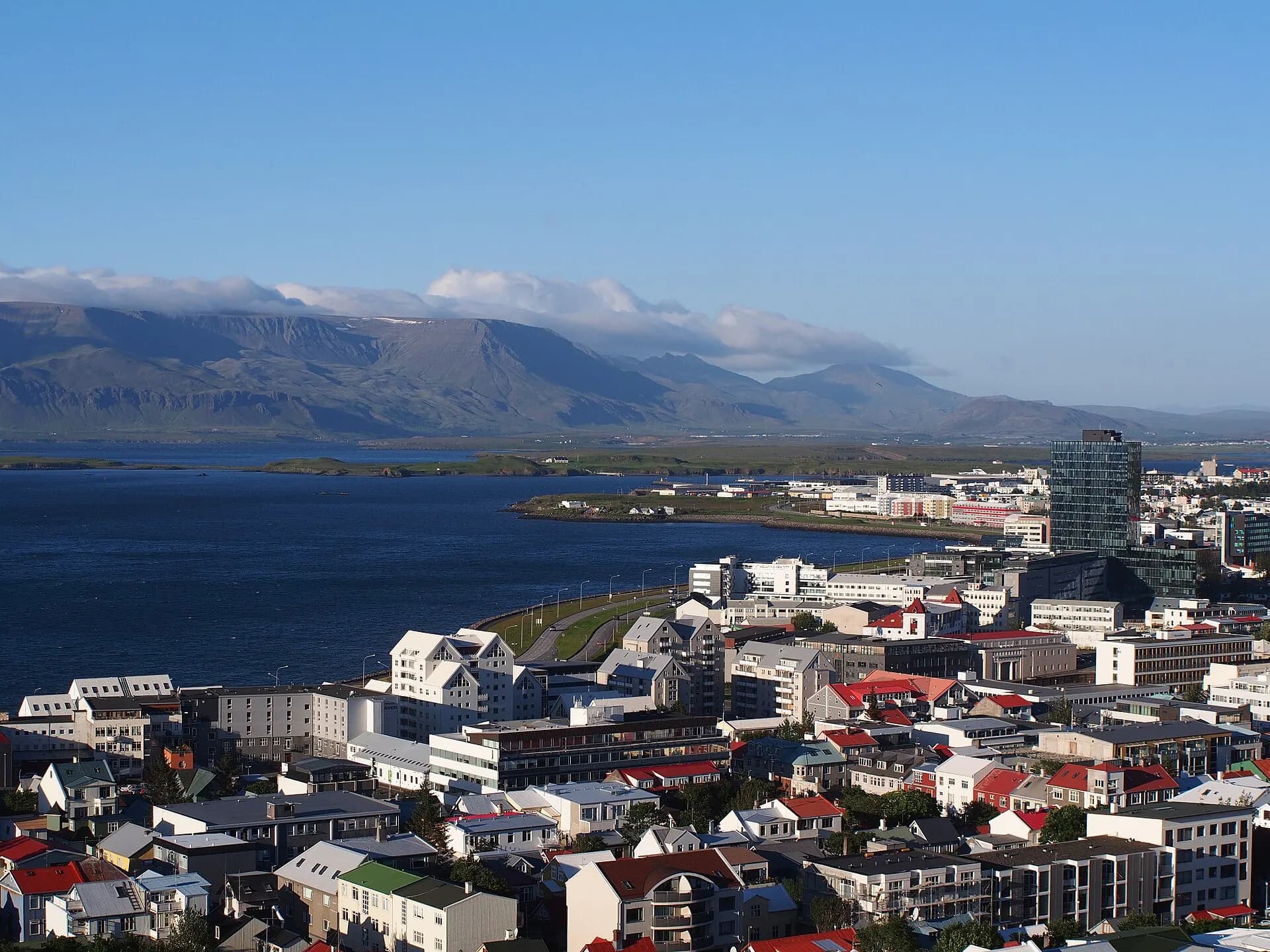
Reykjavík is a small capital with a big personality. Its centre of brightly painted houses, cafés and design shops can be crossed on foot in half an hour, yet it has a lively music and arts scene and a deep connection to the dramatic nature that surrounds it. Mountains rise across the bay, the sea is never far away, and hot water from beneath the ground heats the city's homes and swimming pools.
Most visitors use Reykjavík as a base for exploring Iceland's waterfalls, geysers, glaciers and lava fields, many of them within a day trip. Give the city itself a day or two as well: soak in a hot pot with the locals, walk the harbour, and in winter, look up for the northern lights.
The top 8 in Reykjavík
- 1
Hallgrímskirkja
Photo: Jakub Hałun, CC BY-SA 4.0, via Wikimedia Commons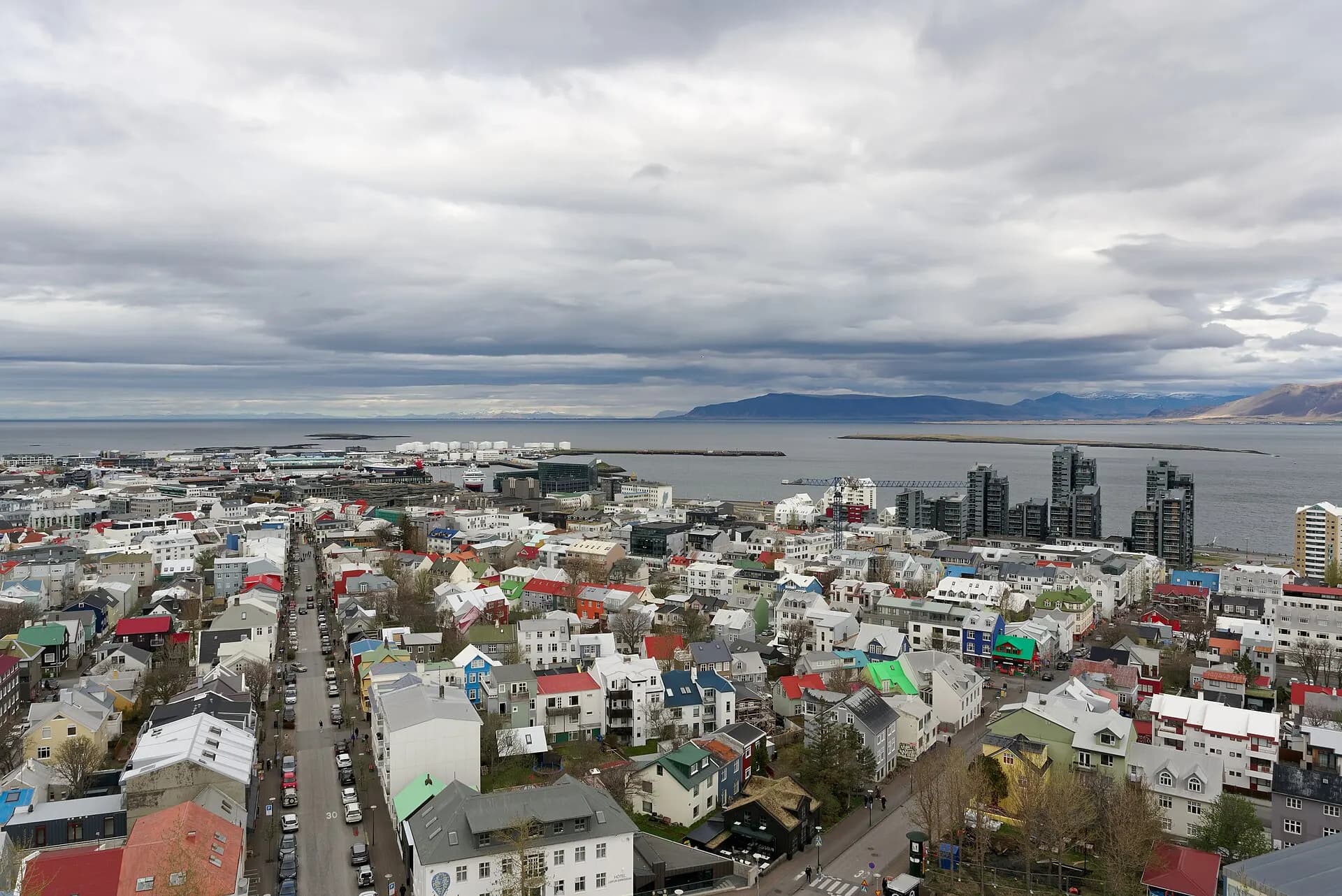
The city's landmark church, its concrete tower designed to evoke the basalt columns of Icelandic lava, rises above the centre. The lift to the top of the tower offers the best view of the city's colourful rooftops, the bay and the mountains. Inside, the bright, simple nave holds a huge pipe organ.
- 2
Harpa
Photo: Gerd Eichmann, CC BY-SA 4.0, via Wikimedia Commons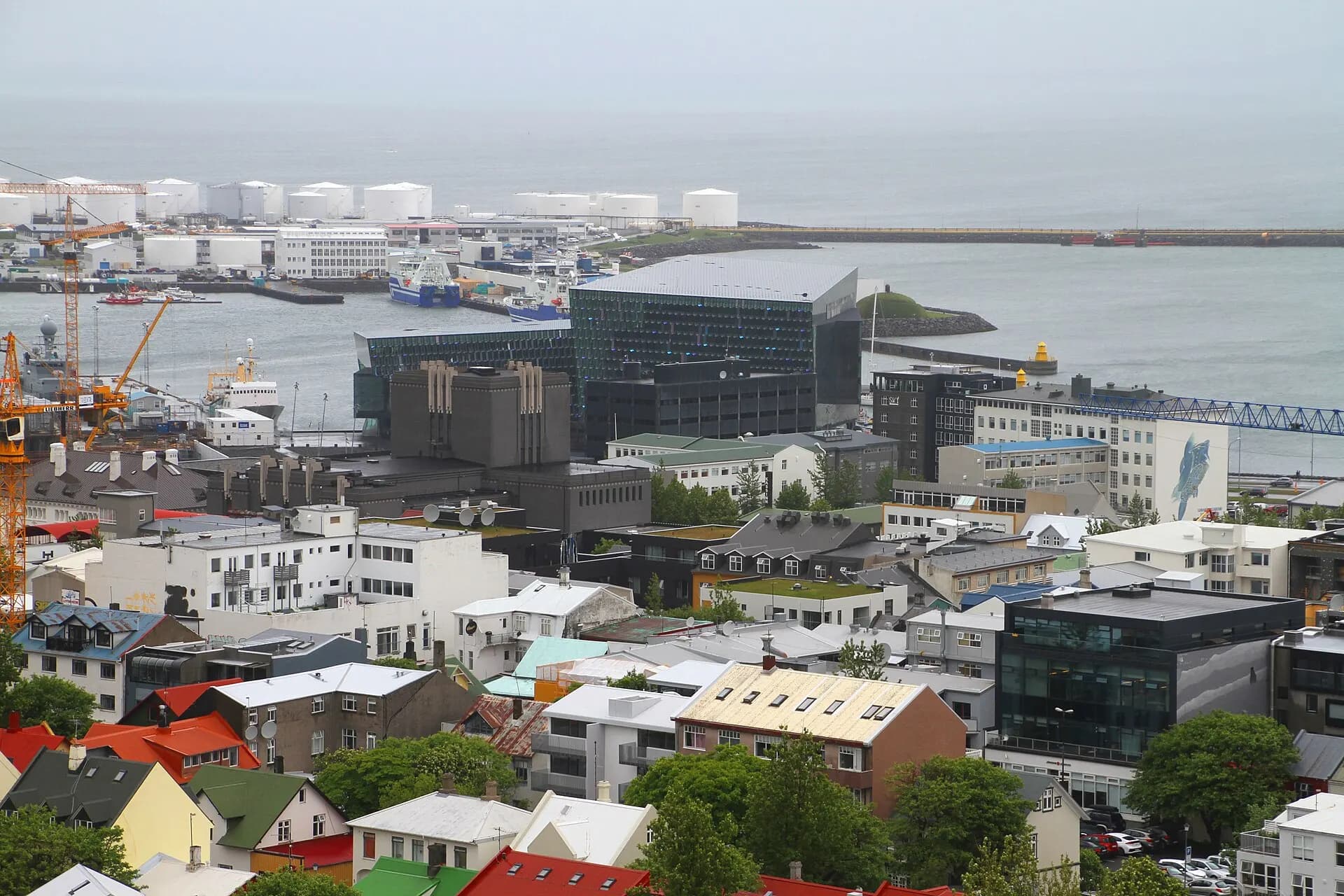
A concert hall on the waterfront, its facade of geometric glass panels by the artist Ólafur Elíasson glittering in changing colours. It's home to the Iceland Symphony Orchestra and the Icelandic Opera, and its foyers are free to wander.
- 3
The Old Harbour
Photo: Richard Bartz, CC BY-SA 3.0, via Wikimedia Commons
A working harbour with seafood restaurants, museums and whale-watching boats. Tours head out into Faxaflói Bay to look for minke whales, dolphins and, in summer, puffins on nearby islands. From here, the shoreline path leads east to the Sun Voyager, a steel sculpture of a dream boat facing Mount Esja across the bay, a lovely walk at sunset.
TipDress far more warmly than you think you need on the boat; the wind on the open sea is cold even in July.
- 4
Laugavegur and the city centre
Photo: Ray Swi-hymn from Sijhih-Taipei, Taiwan, CC BY-SA 2.0, via Wikimedia Commons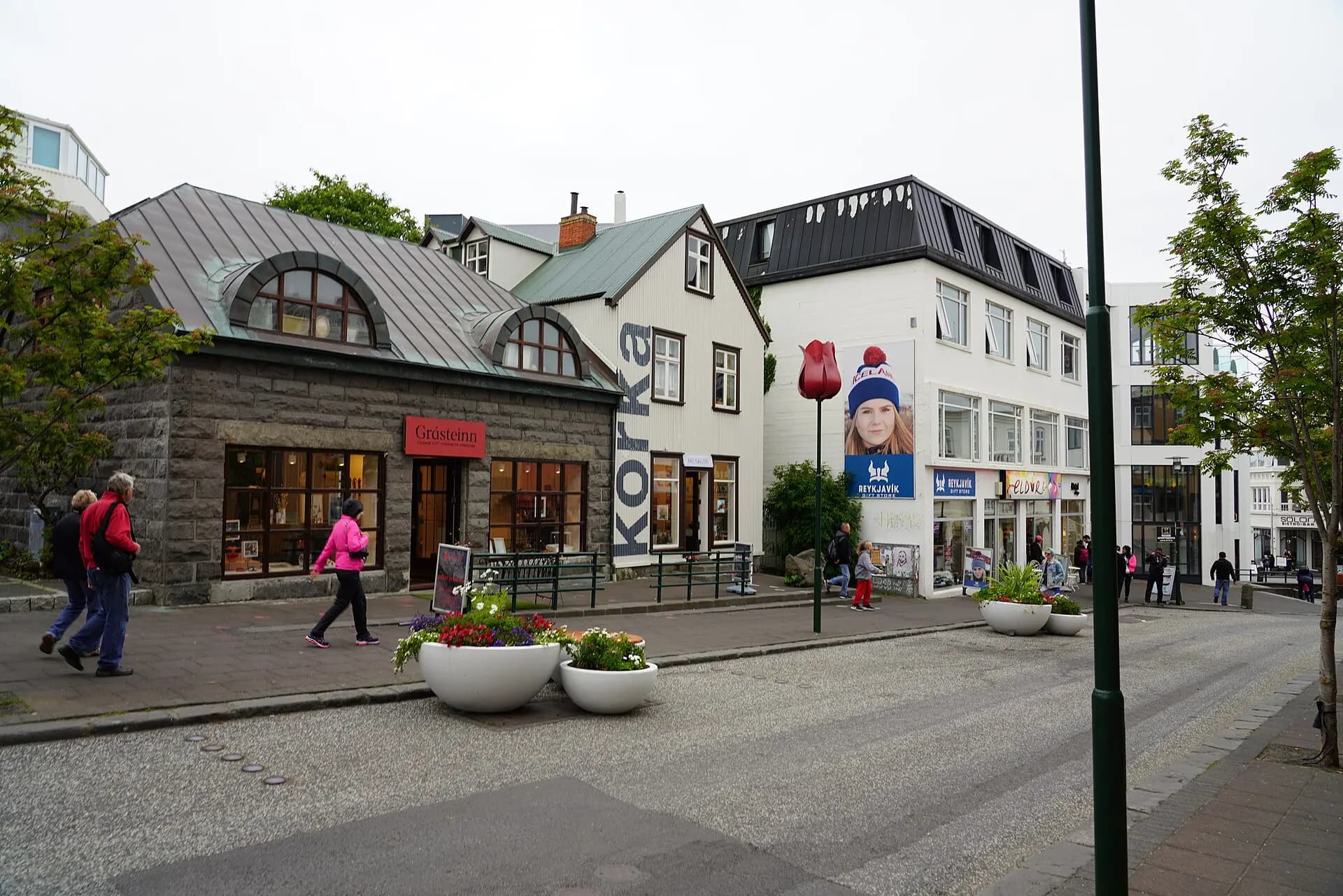
Reykjavík's main shopping street and its side streets are lined with independent shops, galleries, bookshops, bakeries and bars. Nearby, the National Museum of Iceland tells the story of the nation from the Viking settlement onwards.
- 5
Perlan
Photo: Diego Delso, CC BY-SA 4.0, via Wikimedia Commons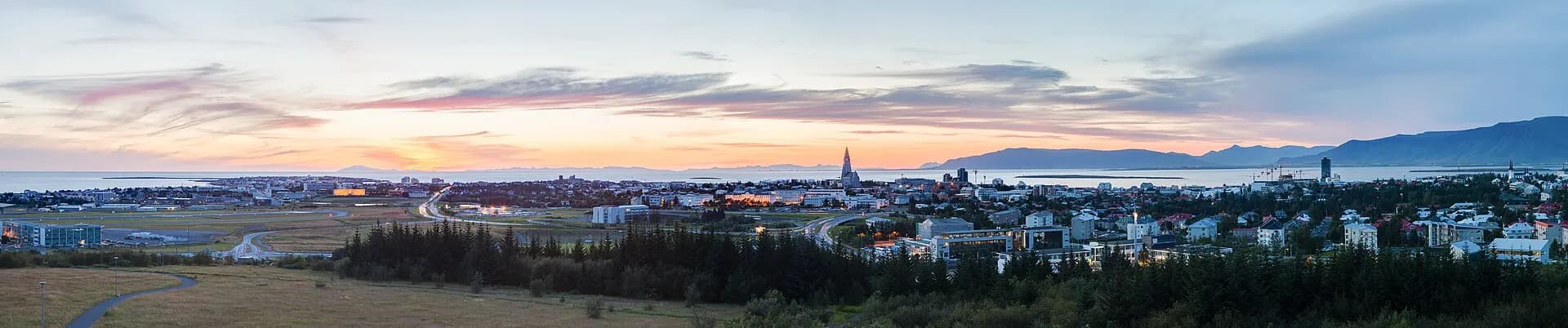
A glass dome on top of the city's hot-water tanks, on a wooded hill. It houses a museum about Iceland's natural wonders, including an indoor ice cave, a planetarium show about the northern lights and an observation deck with a 360-degree view.
- 6
The city's swimming pools
Photo: Christian Bickel fingalo, CC BY-SA 2.0 de, via Wikimedia Commons
Geothermal swimming pools are the heart of Icelandic social life, where people meet in hot tubs ("hot pots") all year round, even in snow. Sundhöll Reykjavíkur, near Hallgrímskirkja, and Laugardalslaug, the largest, are good places to start.
TipShowering thoroughly without a swimsuit before entering the pool is required and strictly enforced.
- 7
The Golden Circle
Photo: Diego Delso, CC BY-SA 4.0, via Wikimedia Commons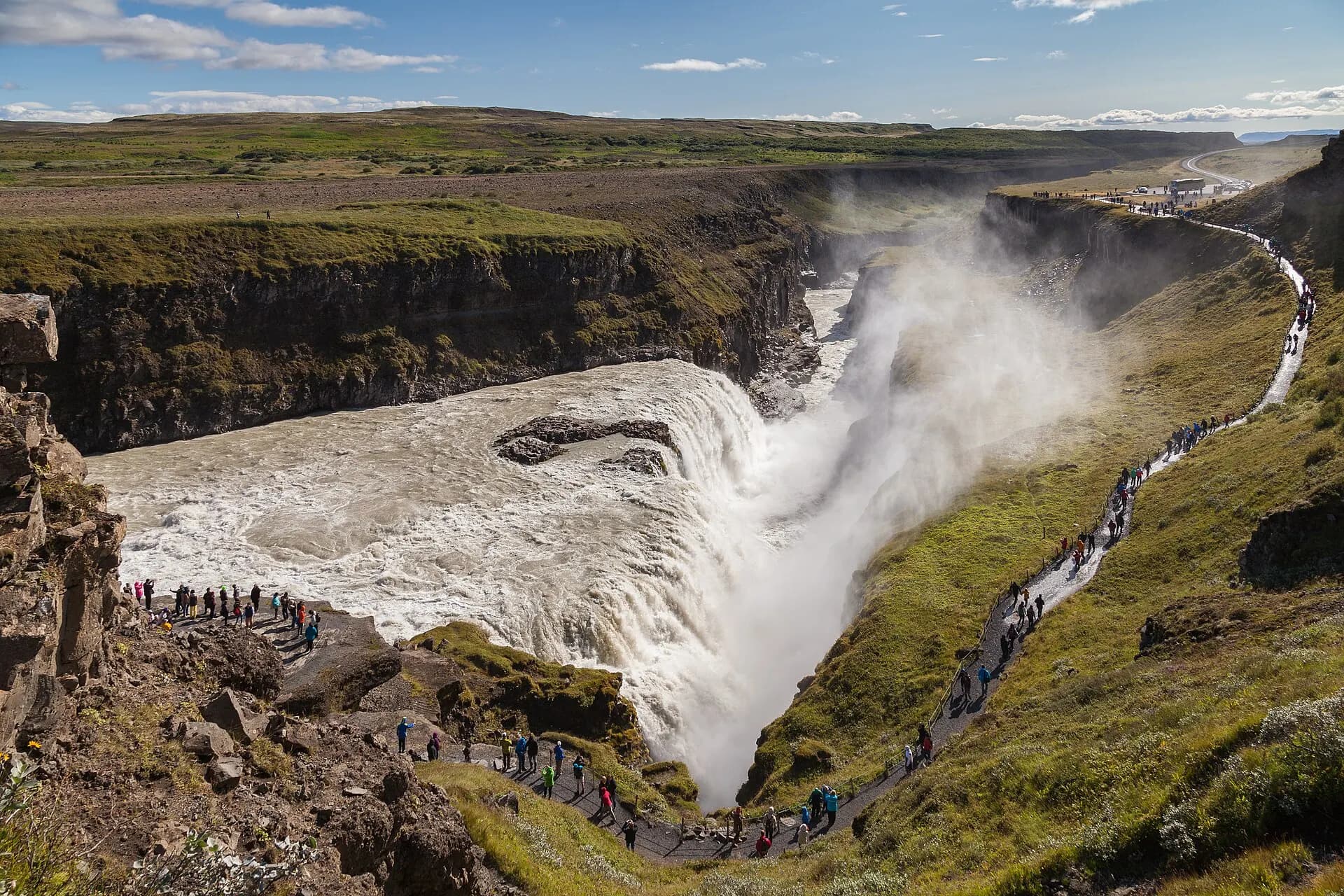
The classic day-trip loop from Reykjavík. Þingvellir National Park, where Iceland's parliament first met around 930 and where the North American and Eurasian tectonic plates pull apart, is followed by the geothermal area of Geysir, where the Strokkur geyser erupts every few minutes, and the thundering two-tiered waterfall of Gullfoss.
TipStart early to beat the tour buses, or drive the loop in reverse.
- 8
The Blue Lagoon and the Reykjanes peninsula
Photo: Jakub Hałun, CC BY-SA 4.0, via Wikimedia Commons
The famous milky-blue geothermal spa lies in a lava field near Keflavík Airport, convenient on the way to or from a flight. The Reykjanes peninsula has seen a series of volcanic eruptions in recent years, so check the latest safety information before visiting.
TipBook ahead; Sky Lagoon, on the edge of Reykjavík, is a popular alternative with a sea view.
When to go
Summer, from June to August, brings mild temperatures and almost endless daylight, with the midnight sun around the solstice, ideal for road trips and hiking. Winter is cold, dark and stormy at times, with only a few hours of daylight in December, but from September to March it's the season for the northern lights, best seen away from city lights on clear nights. Spring and autumn are quieter and cheaper.
Getting around
The centre is easily walkable. City buses, run by Strætó, reach the suburbs and pools. To explore beyond the city, join a tour or rent a car; in winter, roads can be icy and closed in storms, so check the road and weather conditions every day.
Keflavík International Airport is about forty-five minutes from the city by road; the Flybus and other coaches connect with every flight.
Local tips
- Check the weather and the Safetravel website before any trip outside the city; conditions change fast.
- Iceland is expensive: supermarkets, bakeries and hot-dog stands help keep costs down.
- Tap water is excellent: there's no need to buy bottled water.
- Tipping isn't expected.
- Never walk on moss, and stay on marked paths at geothermal areas, where the ground can be scalding.
- In winter, bring crampons or ice grips for your shoes.
Eat and drink
Icelandic food is built on lamb and seafood. Try lamb soup, fresh fish, Arctic char and langoustine, and skyr, a thick dairy product, for breakfast. The hot dogs from the famous stand Bæjarins Beztu Pylsur are a local institution. Adventurous eaters can try fermented shark, washed down with Brennivín, a caraway spirit. Reykjavík has a lively café and craft-beer culture, and happy hours help with the high price of drinks.
Further afield
The south coast, a long day trip or better an overnight trip, has some of Iceland's most famous sights: the waterfalls of Seljalandsfoss, which you can walk behind, and Skógafoss; the black sand beach at Reynisfjara, near Vík, where sudden powerful waves are a real danger, so keep well back from the water; and glaciers you can explore with a guide. To the north-west, the Snæfellsnes peninsula, often called "Iceland in miniature", has fishing villages, lava fields, beaches and a glacier-capped volcano. On a longer trip, the Ring Road circles the whole island.