Ghana
Coastal castles with a hard history, Asante kings and kente looms, rainforest walkways, savannah elephants and some of West Africa's warmest welcomes.
- Best time to go
- November to March, the main dry season; January to April is best for wildlife at Mole
- Local time
- –
- Currency
- Ghanaian Cedi (GHS)
- Reading time
- 17 min
- Language
- English

Ghana packs a remarkable amount into a country about the size of the United Kingdom. Its Atlantic coast is lined with palm-fringed fishing villages and with the forts and castles that European powers built to trade gold and, for more than three centuries, enslaved people. Inland, the rainforest rises to the old Asante kingdom around Kumasi, where royal ceremony and kente weaving are living traditions, and further north the land opens into dry savannah with elephants, mud-built mosques and a different rhythm of life. In 1957 Ghana became the first colony in sub-Saharan Africa to win independence, and that pride, together with a famously easy-going hospitality, shapes the whole experience.
For first-time visitors, English as the official language, good long-distance buses and a well-trodden circuit make Ghana one of the more approachable countries in West Africa. A loop of two to three weeks covers most of the highlights below, which are listed in route order: Accra, then west along the coast to Cape Coast, Elmina and the surf beaches, north to Kumasi and the Asante heartland, on to Mole in the savannah, and back south through the green hills of the Volta Region to Accra. With ten days, concentrate on Accra, the coast and Kumasi.
The top 20 in Ghana
- 1
Jamestown and the lighthouse
Photo: Gereon K., CC BY-SA 4.0, via Wikimedia Commons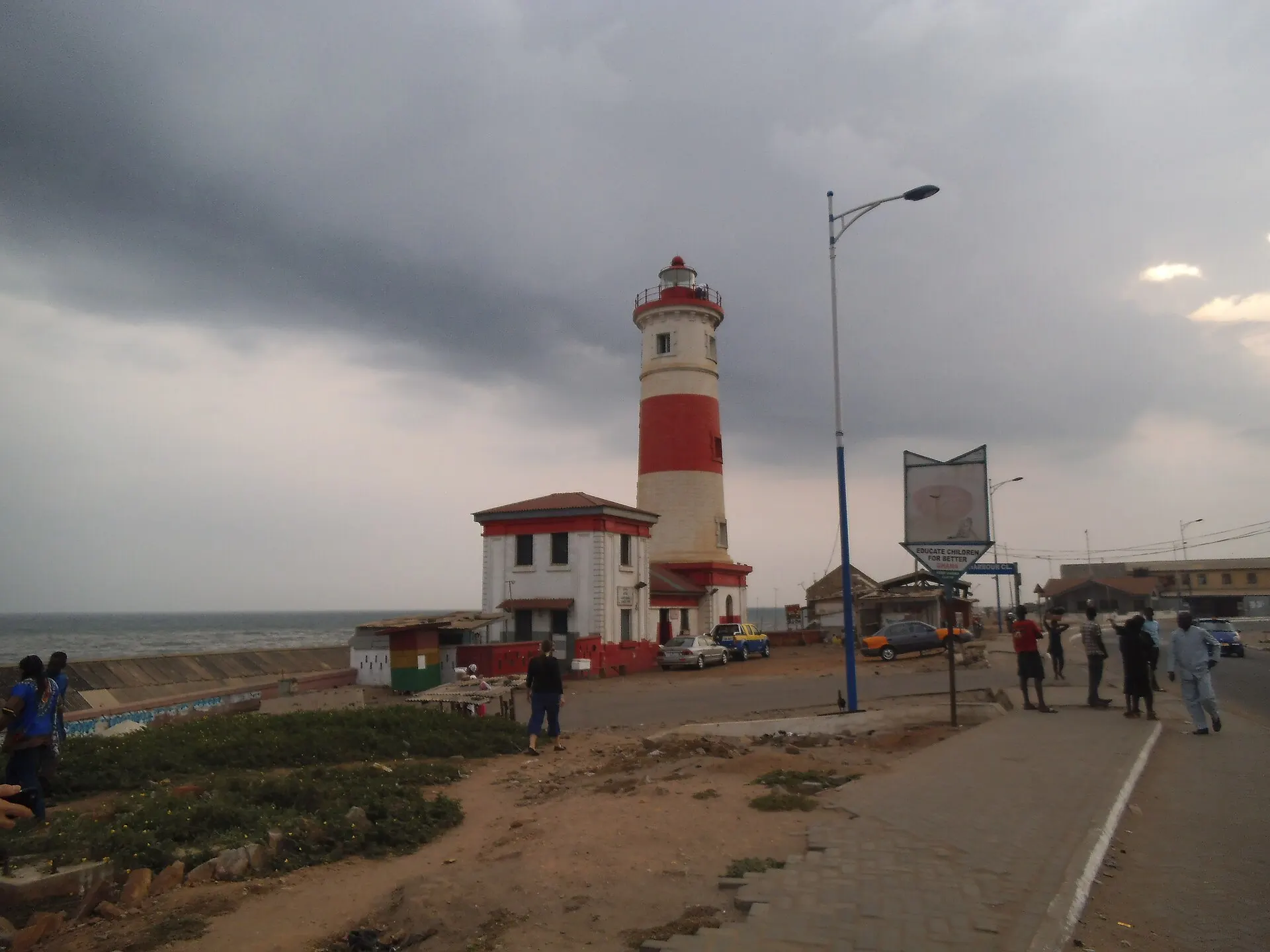
Jamestown is the oldest part of Accra, a dense Ga fishing community that grew up around James Fort, a British trading post of the seventeenth century, with the Dutch-built Ussher Fort a short walk away. The red-and-white lighthouse, rebuilt in the 1930s on the site of an older one, looks down over a harbour crowded with painted wooden canoes, smoking fish and boat builders at work. Climbing to the top gives the best view in the city across the rooftops and the surf. The neighbourhood is also famous for its boxing gyms, which have produced world champions, and every August it hosts the Chale Wote street art festival, when murals, music and performance take over the lanes.
TipGo with a guide from one of the local community tour groups; they explain the history, smooth the way with residents and the lighthouse keeper, and your fee goes back into the neighbourhood. Ask before photographing people.
- 2
Makola Market
Photo: Benggriff, CC BY-SA 3.0, via Wikimedia Commons
Accra's great central market spreads across several blocks of the old commercial district, a maze of stalls, warehouses and pavement traders where you can find almost anything: wax-print fabric by the yard, beads, shea butter, pyramids of tomatoes and peppers, dried fish and plastic housewares. It is run, overwhelmingly, by women traders, the famous market queens whose networks have long been a force in Ghana's economy. It is hot, loud and crowded, and best treated as an experience rather than a shopping trip, although it is the place to buy cloth if you want something made by a tailor.
TipMornings are calmer and cooler. Carry small notes, keep valuables out of sight, and step aside for the porters carrying huge loads on their heads.
- 3
Kwame Nkrumah Memorial Park
Photo: Maame1Yaa, CC BY 4.0, via Wikimedia Commons
On the old polo ground where Kwame Nkrumah declared independence at midnight on 6 March 1957, a landscaped park now holds the mausoleum of Ghana's first president and his wife, Fathia. The mausoleum, clad in marble and designed to evoke an upturned sword, a symbol of peace among the Akan, is surrounded by water and fountains, and a statue of Nkrumah points forward towards the future. The museum alongside displays his books, photographs and personal belongings and tells the story of the independence struggle and his pan-African vision, as well as his later fall from power. The park has been extensively refurbished in recent years.
- 4
Independence Arch and Black Star Square
Photo: Matti Blume, CC BY-SA 4.0, via Wikimedia Commons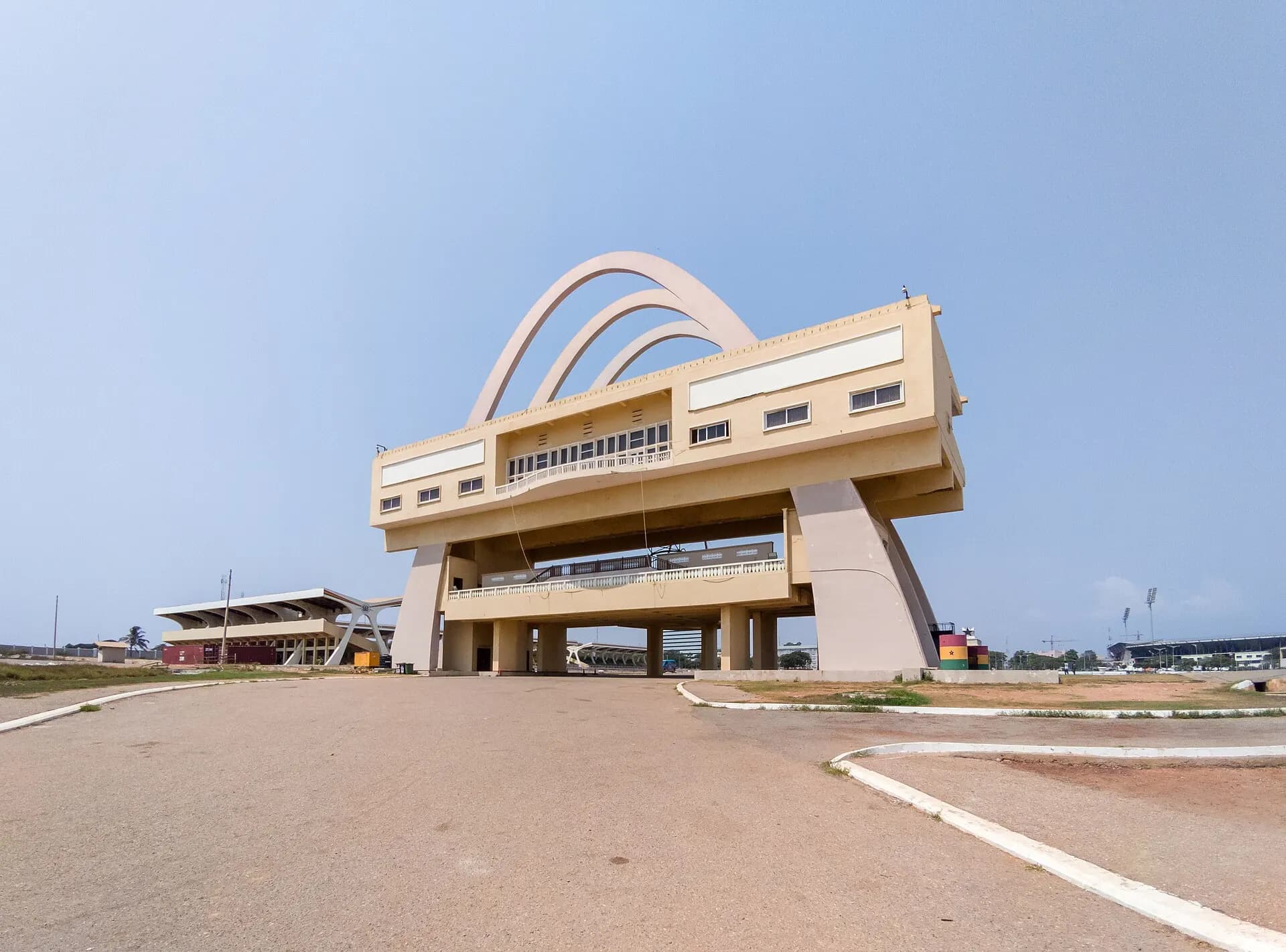
Built soon after independence, the Independence Arch stands at the edge of a vast parade ground facing the ocean, crowned with the black star that also sits at the centre of Ghana's flag. Black Star Square is where the national parades are held on Independence Day, and its grandstands can seat tens of thousands. The scale is the point: this was a monument to a new nation's confidence, and it remains the backdrop for state occasions. Nearby is the Christiansborg area, with the former Danish fort, later the seat of government, on the shore.
TipSoldiers guard the area and photography rules can change around official events; if in doubt, ask before taking pictures.
- 5
W.E.B. Du Bois Centre
Photo: OTFW, Berlin, CC BY-SA 3.0, via Wikimedia Commons
The American scholar and civil rights pioneer W.E.B. Du Bois moved to Ghana in 1961 at Nkrumah's invitation to work on an Encyclopedia Africana, took Ghanaian citizenship and died in Accra in August 1963, on the eve of the March on Washington. His house in the leafy Cantonments district is now a small memorial centre, with his study, library and robes, and his grave and that of his wife, the writer Shirley Graham Du Bois, lie in the grounds. It is a quiet, moving place, and an important stop for visitors of the African diaspora who come to Ghana to connect with its role in pan-Africanism.
- 6
Labadi Beach
Photo: Cca Raheem, CC BY 4.0, via Wikimedia Commons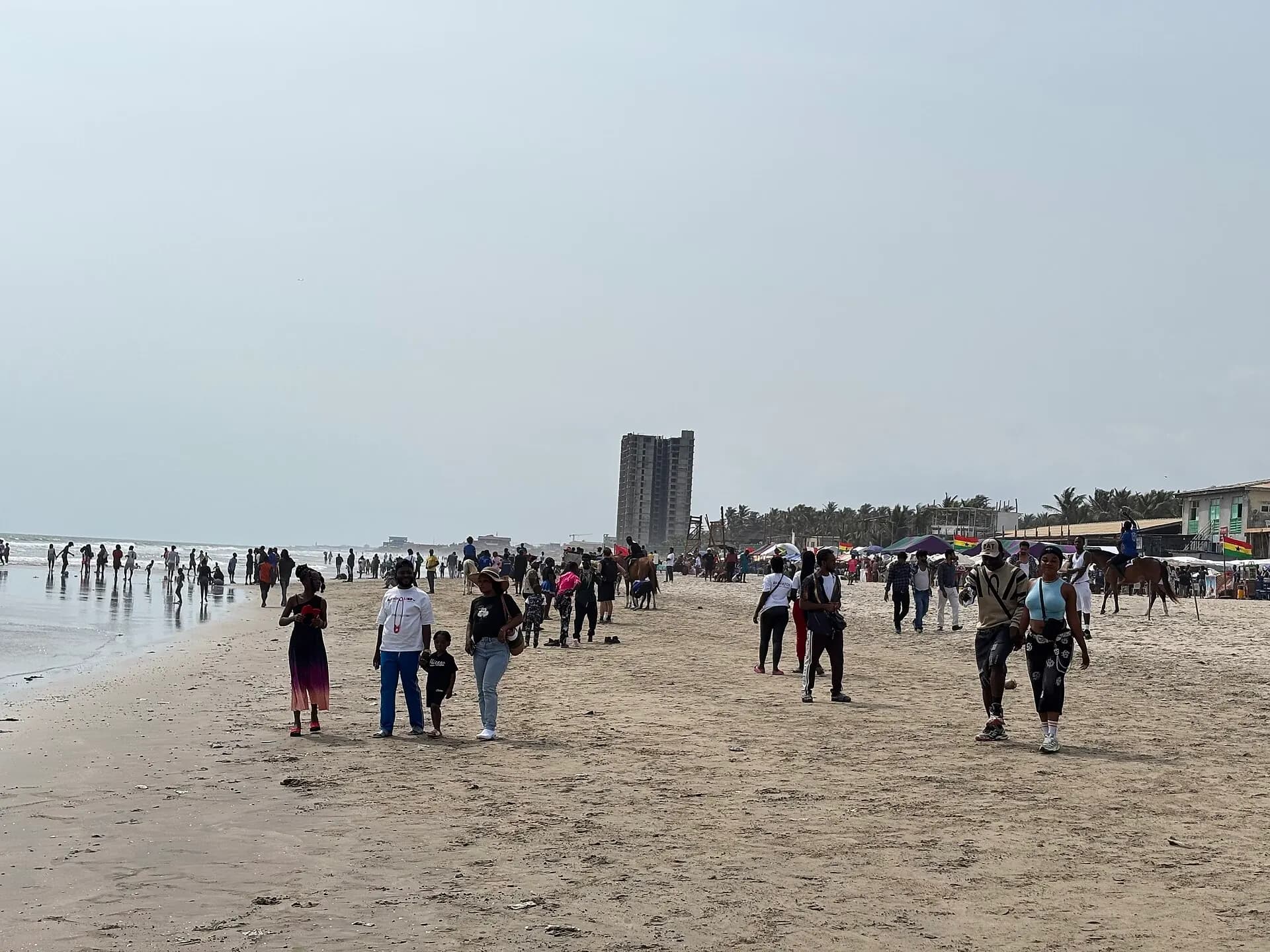
Accra's best-known city beach, officially La Pleasure Beach, fills up at weekends and on public holidays with families, drummers, dancers, horse riders and stalls selling grilled fish, kelewele and cold drinks. It is less about swimming than about the atmosphere, especially on Sunday afternoons when live music and reggae play out on the sand. On weekdays it is much quieter.
TipThere is usually a small entry fee. The Atlantic surf and undertow here are strong, so swim only where others do, and keep belongings close.
- 7
Cape Coast Castle
Photo: Dietmar Rabich, CC BY-SA 4.0, via Wikimedia Commons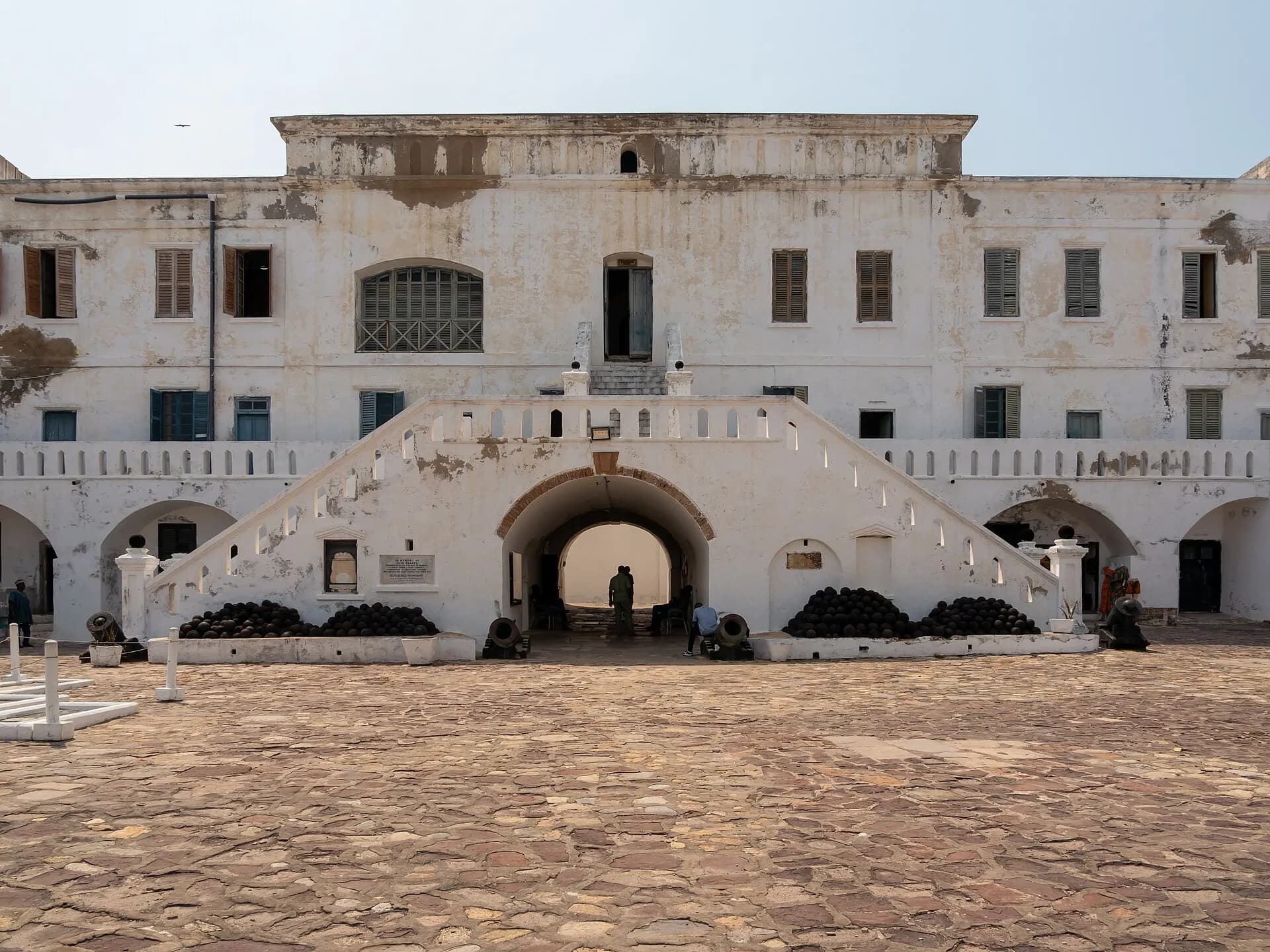
The great white castle on the rocks at Cape Coast began as a Swedish timber lodge in the 1650s and was expanded by the British into their headquarters on the Gold Coast. For nearly two centuries, enslaved Africans were held in its dark, airless dungeons beneath the governor's elegant apartments and the chapel above, before being forced through the "Door of No Return" onto ships bound for the Americas. Guided tours, included with entry, lead you through the male and female dungeons, the condemned cell and the courtyard, and the museum explains the trade and its legacy. Together with Elmina and other coastal forts, the castle is part of a UNESCO World Heritage Site.
Visiting is a sombre, often overwhelming experience, and for many descendants of the diaspora a deeply personal pilgrimage. Wreaths and offerings are laid in the dungeons, and on the seaward side the door now carries a second inscription for those returning home. Allow time afterwards to sit quietly on the ramparts.
TipTours run throughout the day; go early to avoid the largest groups. Dress modestly, keep voices low in the dungeons, and do not take selfies in them.
- 8
Kakum canopy walkway
Photo: daSupremo, CC BY-SA 4.0, via Wikimedia Commons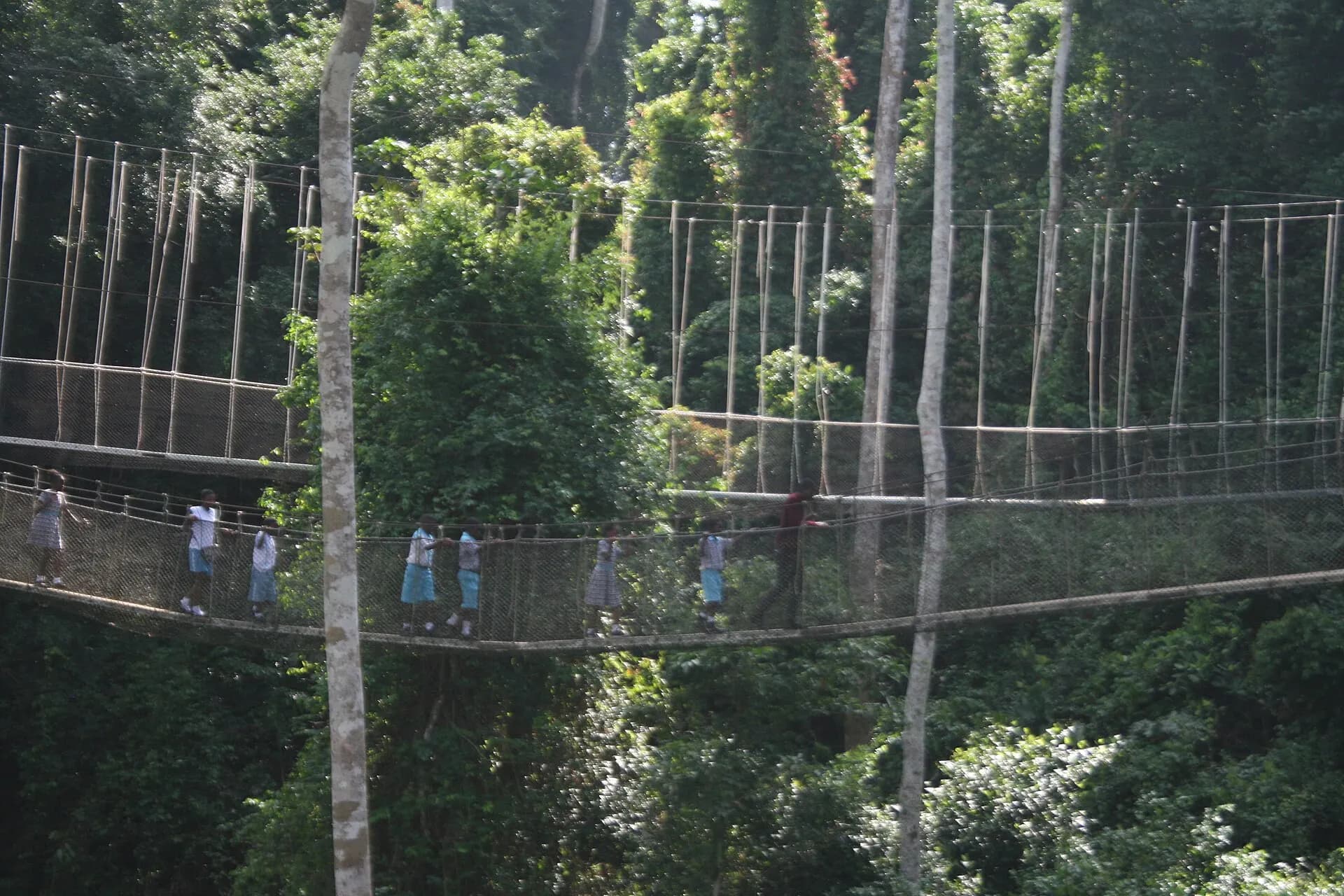
About half an hour's drive north of Cape Coast, Kakum National Park protects one of the last large tracts of tropical rainforest in southern Ghana, home to forest elephants, monkeys, duikers and hundreds of bird and butterfly species. Most visitors come for the canopy walkway, a chain of narrow rope-and-plank bridges strung between giant trees, around 350 metres long and as much as 40 metres above the forest floor. The sway takes a few steps to get used to, but the view into the treetops is unforgettable. Guides also lead short nature walks explaining the medicinal uses of forest plants.
TipArrive at opening time for the best chance of birds and the fewest crowds. The animals are elusive; this is about the forest itself.
- 9
Elmina Castle
Photo: Matti Blume, CC BY-SA 4.0, via Wikimedia Commons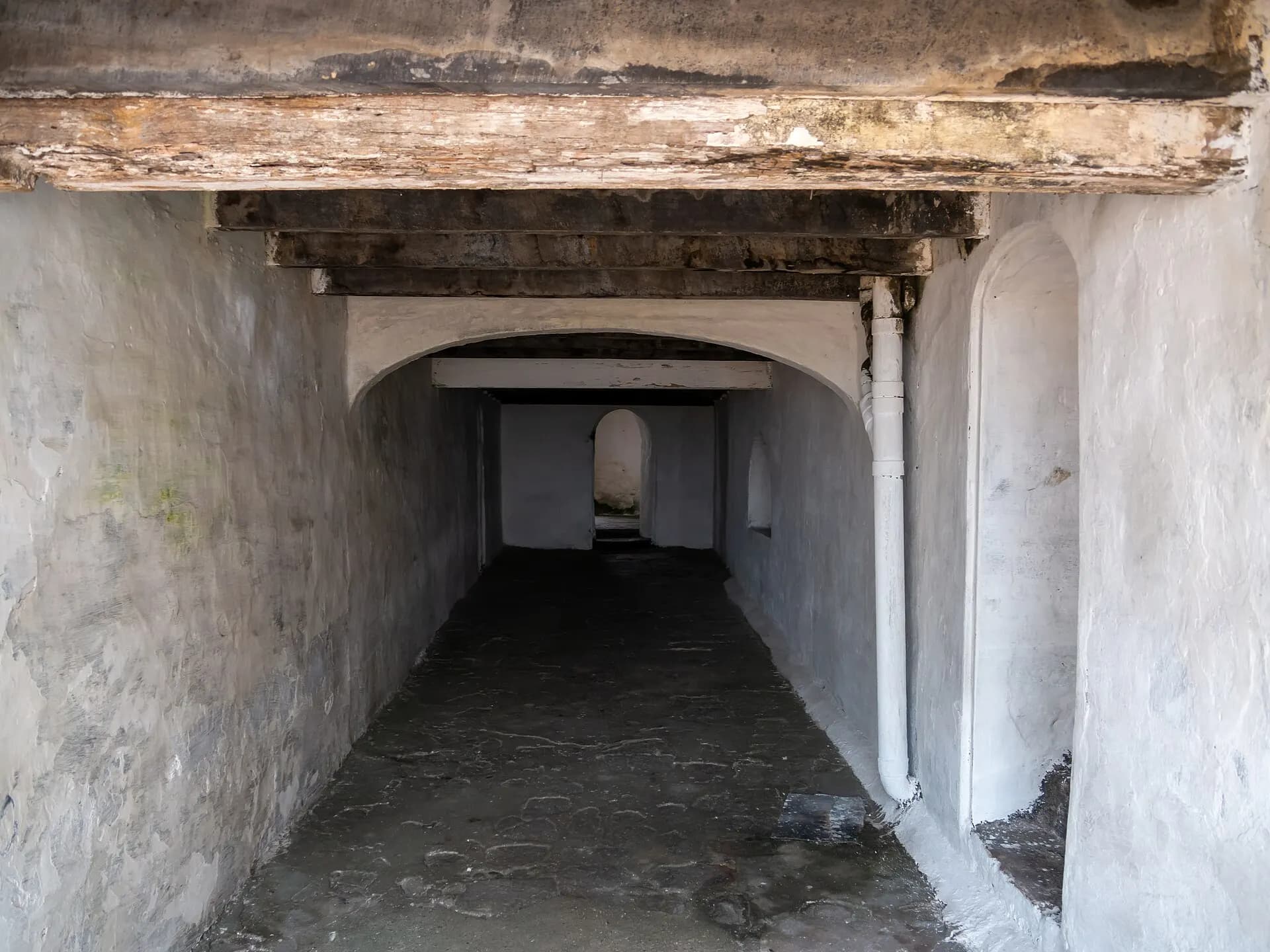
St George's Castle at Elmina was built by the Portuguese in 1482, making it the oldest European building in sub-Saharan Africa. Designed to control the gold trade that gave the Gold Coast its name, it was seized by the Dutch in 1637 and became a major centre of the transatlantic slave trade. The guided tour covers the female dungeon, the trapdoor through which the governor chose women from the courtyard, the condemned cells and the Door of No Return, and like Cape Coast it is hard but essential to see.
Outside the walls, Elmina is one of the most vivid fishing towns on the coast. Hundreds of brightly painted canoes jostle in the lagoon harbour beneath Fort St Jago on the hill opposite, and the old town has a series of posuban shrines, the elaborately decorated houses of the Fante military companies.
TipVisiting both castles on one day can be draining. Many travellers spread them over two days, with Kakum in between.
- 10
Busua
Photo: Tom Lubbe, CC BY-SA 3.0, via Wikimedia Commons
Busua is the most relaxed of the beach villages on the western coast, a long curve of sand with gentle surf, a cluster of guesthouses and beach bars, and a surf scene that has grown up around local schools offering lessons and board rental. It makes a perfect pause after the castles. Walks along the shore lead west to Dixcove and its small British fort, Fort Metal Cross, and east over the headland to the fishing village of Butre, where the ruins of a Dutch fort overlook the bay.
TipFurther west, the stilt village of Nzulezo, reached by dugout canoe across a lagoon from Beyin, makes a memorable day trip.
- 11
Manhyia Palace Museum
Photo: Collins Twum-Yeboah, CC BY-SA 4.0, via Wikimedia Commons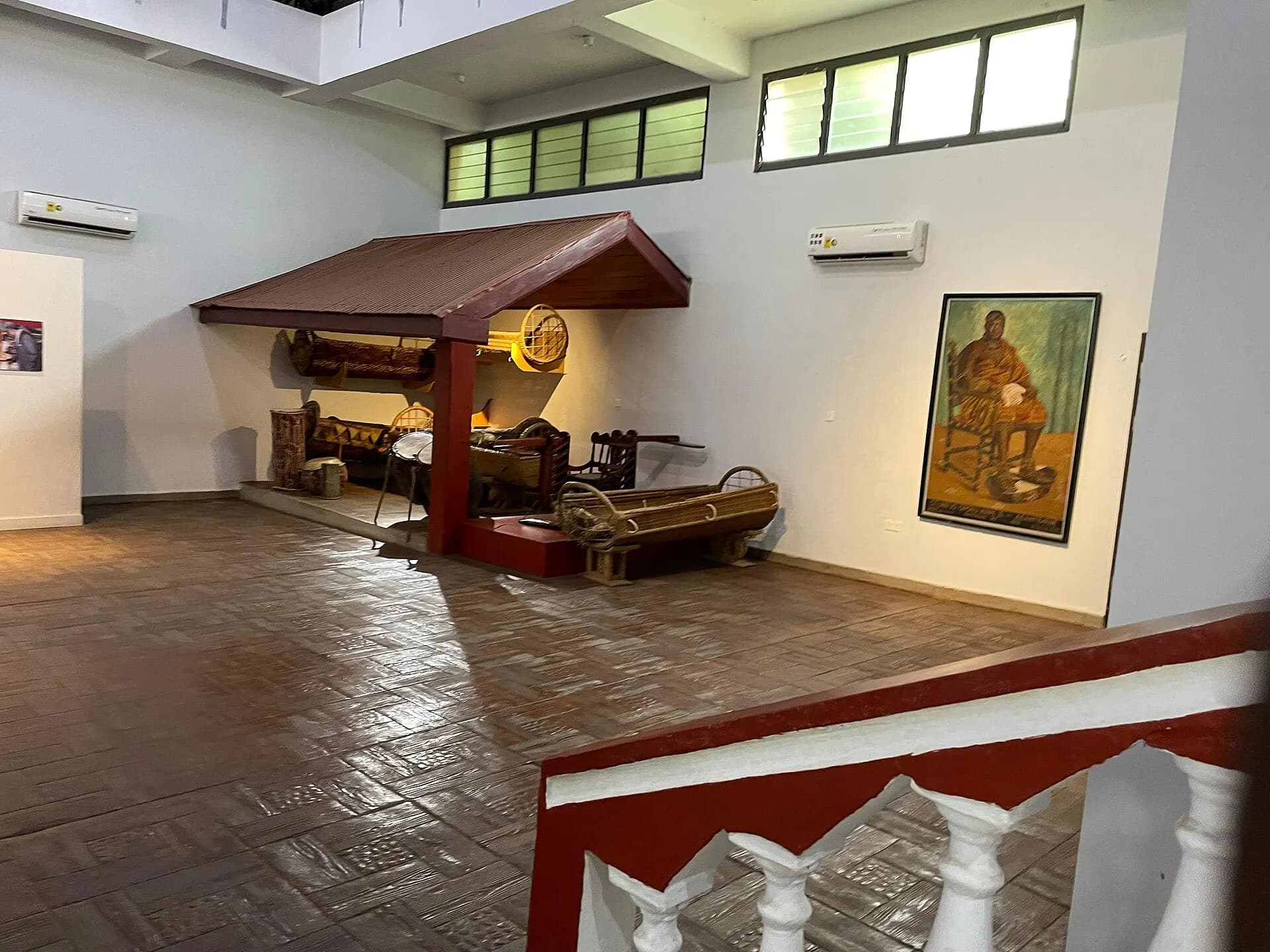
Kumasi was the capital of the Asante Empire, one of the most powerful states in West African history, and the Asantehene, the Asante king, still reigns here today. The old Manhyia Palace was built by the British in 1925 for Prempeh I on his return from exile in the Seychelles, and was used by the royal family until the 1990s. Now a museum, it displays royal furniture, regalia and photographs, along with lifelike figures of past kings and queen mothers, and guides tell the story of the Golden Stool, the sacred symbol of the Asante nation.
TipTry to time your visit for an Akwasidae festival, held roughly every six weeks, when the Asantehene receives chiefs and the public in a colourful durbar of drums, umbrellas and gold. Dates are posted locally and by the palace.
- 12
Kejetia Market
Photo: Afus199620, CC0, via Wikimedia Commons
Kumasi's central market district is one of the largest in West Africa, a sprawling city of stalls where Asante traders deal in everything from yams and snails to kente, beads, sandals and herbal medicines. Part of it now sits in a large modern market complex, while the older lanes of the Central Market tumble around it. It is a sensory overload, but also the best place to feel the commercial energy that has always driven Kumasi.
TipGo with a local guide if you want to find specific crafts; it is very easy to get lost. Keep a firm hand on bags.
- 13
Lake Bosomtwe
Photo: Amuzujoe, CC BY-SA 4.0, via Wikimedia Commons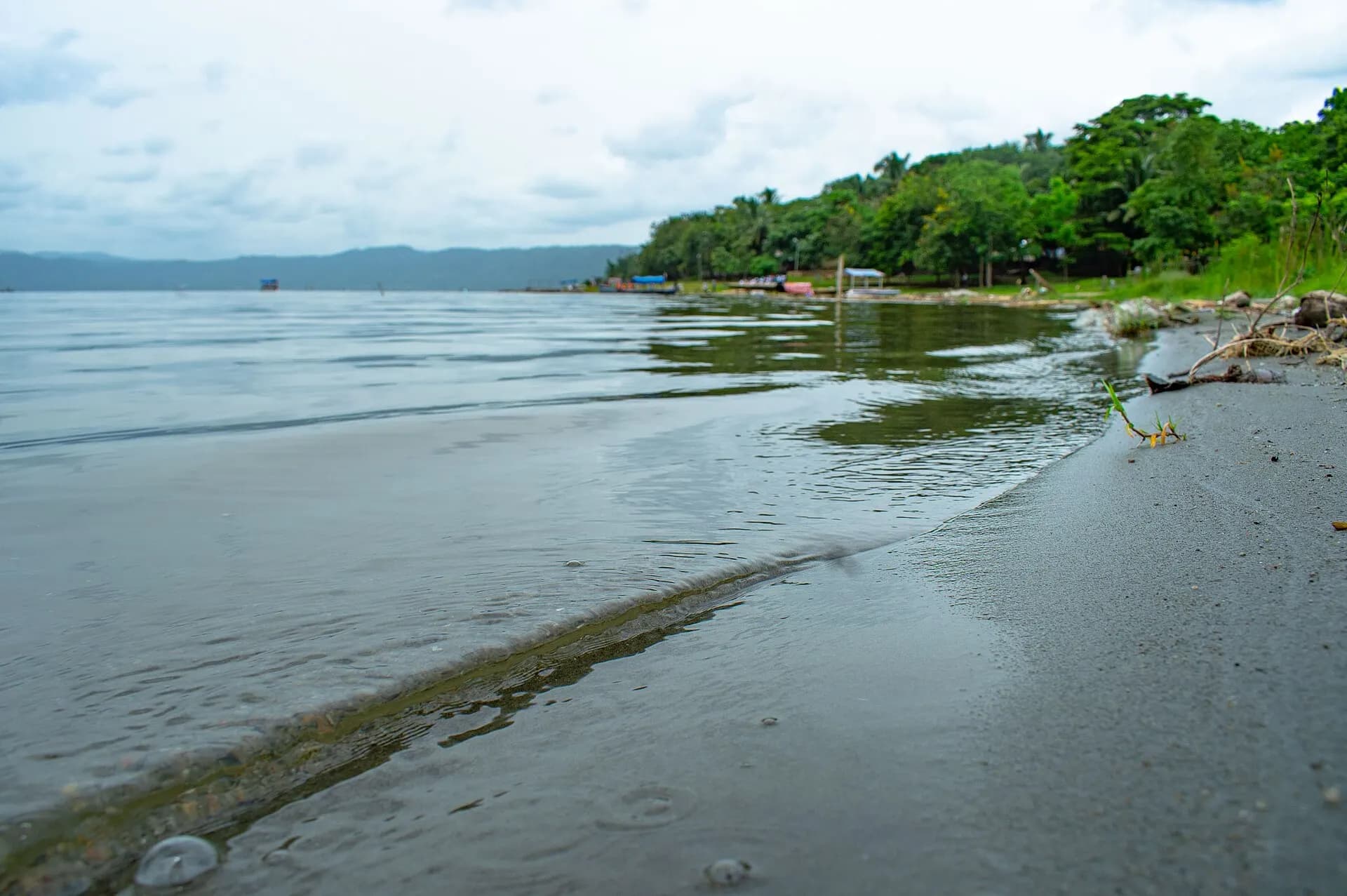
About an hour south-east of Kumasi, Lake Bosomtwe fills a near-circular meteorite impact crater around a million years old, ringed by forested hills. It is sacred to the Asante, who believe souls come here to bid farewell to the god Twi, and local tradition long forbade metal boats; fishermen still paddle flat wooden planks called padua. Lakeside lodges near the village of Abono offer swimming, hikes up the crater rim, bike rides through the farming villages and a welcome escape from the city heat.
- 14
Bonwire kente village
Photo: Sadads, CC BY-SA 4.0, via Wikimedia Commons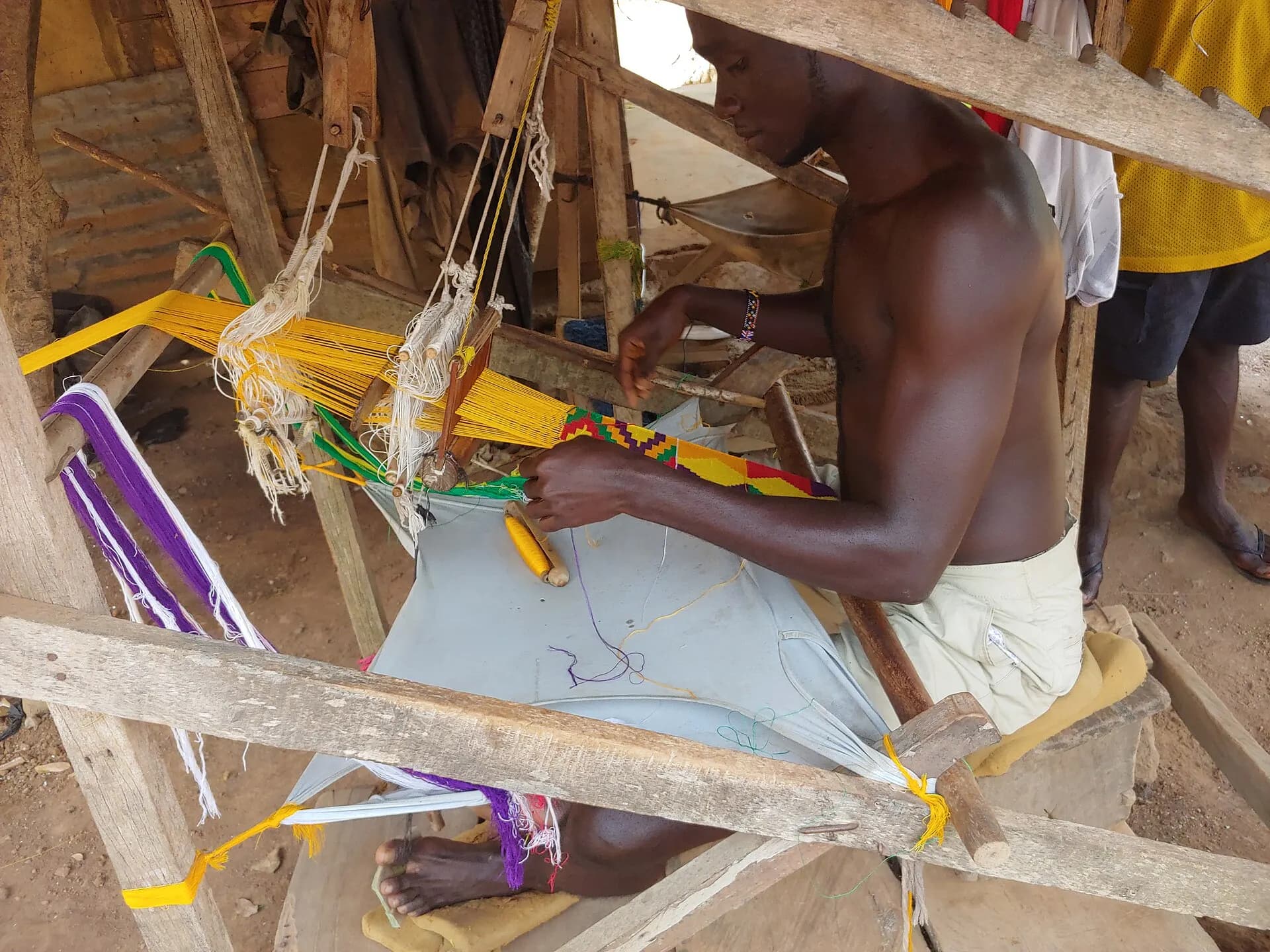
Kente, the bold, interwoven silk and cotton cloth that has become a symbol of Ghana and of the wider African diaspora, has been woven in Bonwire for generations, and the village claims to be its birthplace. In the weaving centre and family workshops, men work narrow strip looms with remarkable speed, and each pattern has a name and a meaning, often a proverb or historical reference. Visitors can watch, try the loom and buy directly from the weavers. Nearby Adanwomase runs a community tourism programme with weaving and village walks, and Ntonso is known for adinkra cloth stamped with symbols.
TipReal hand-woven kente takes days or weeks to produce and is priced accordingly. Buying in the village supports the weavers directly.
- 15
Larabanga Mosque
Photo: Amuzujoe, CC BY-SA 4.0, via Wikimedia Commons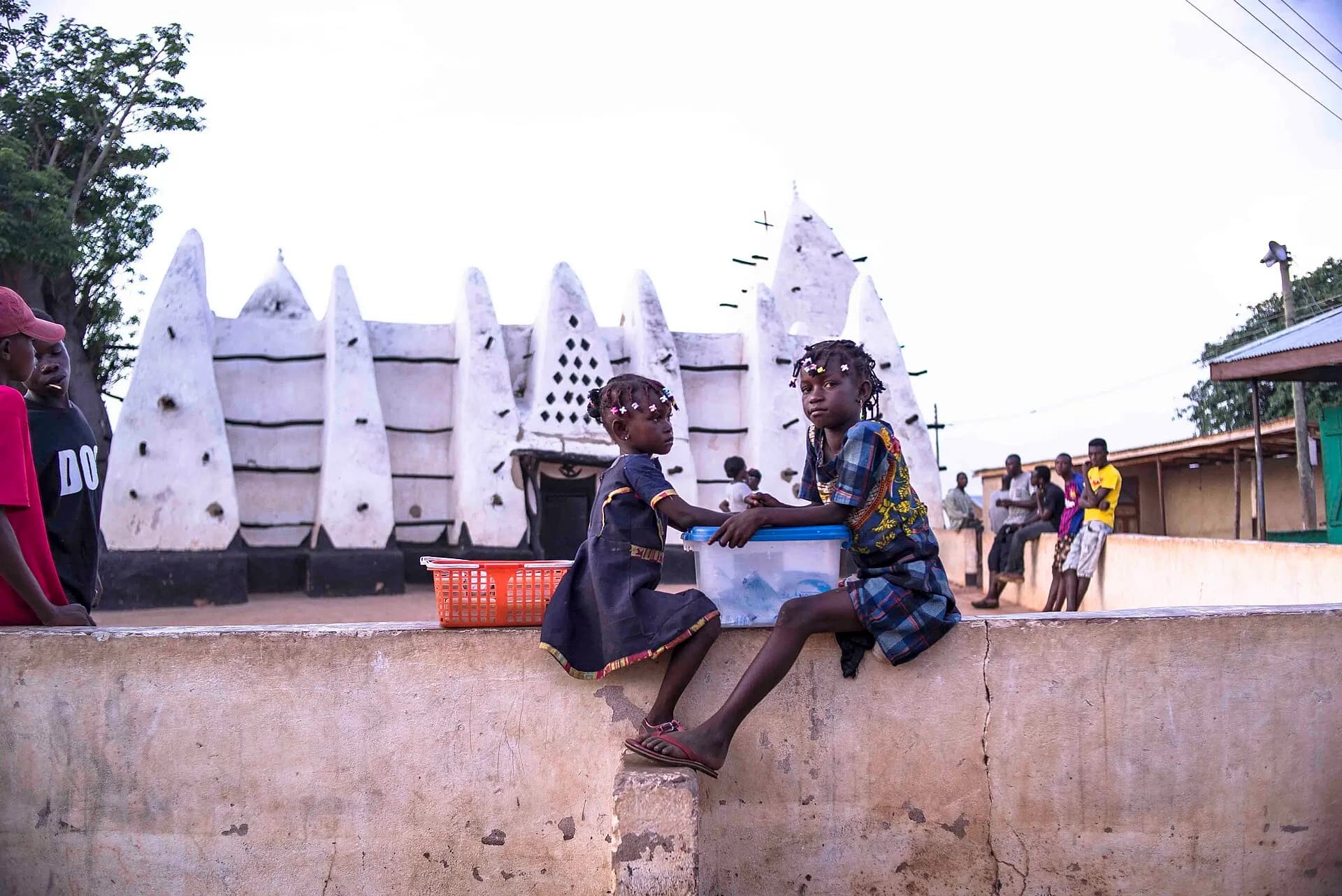
In the dry north, on the road to Mole, the small whitewashed mosque at Larabanga is one of the finest examples of Sudano-Sahelian mud architecture in West Africa, its buttresses and pointed towers bristling with wooden beams. Local tradition dates it to the fifteenth century, which would make it one of the oldest mosques in the country, and it was restored with international support in the early 2000s. The village also shows visitors the Mystic Stone, said to return to its place whenever it is moved.
TipNon-Muslim visitors are generally not allowed inside, but can view the mosque from outside with a local guide. Agree any fee at the start and dress modestly.
- 16
Mole National Park
Photo: Matti Blume, CC BY-SA 4.0, via Wikimedia Commons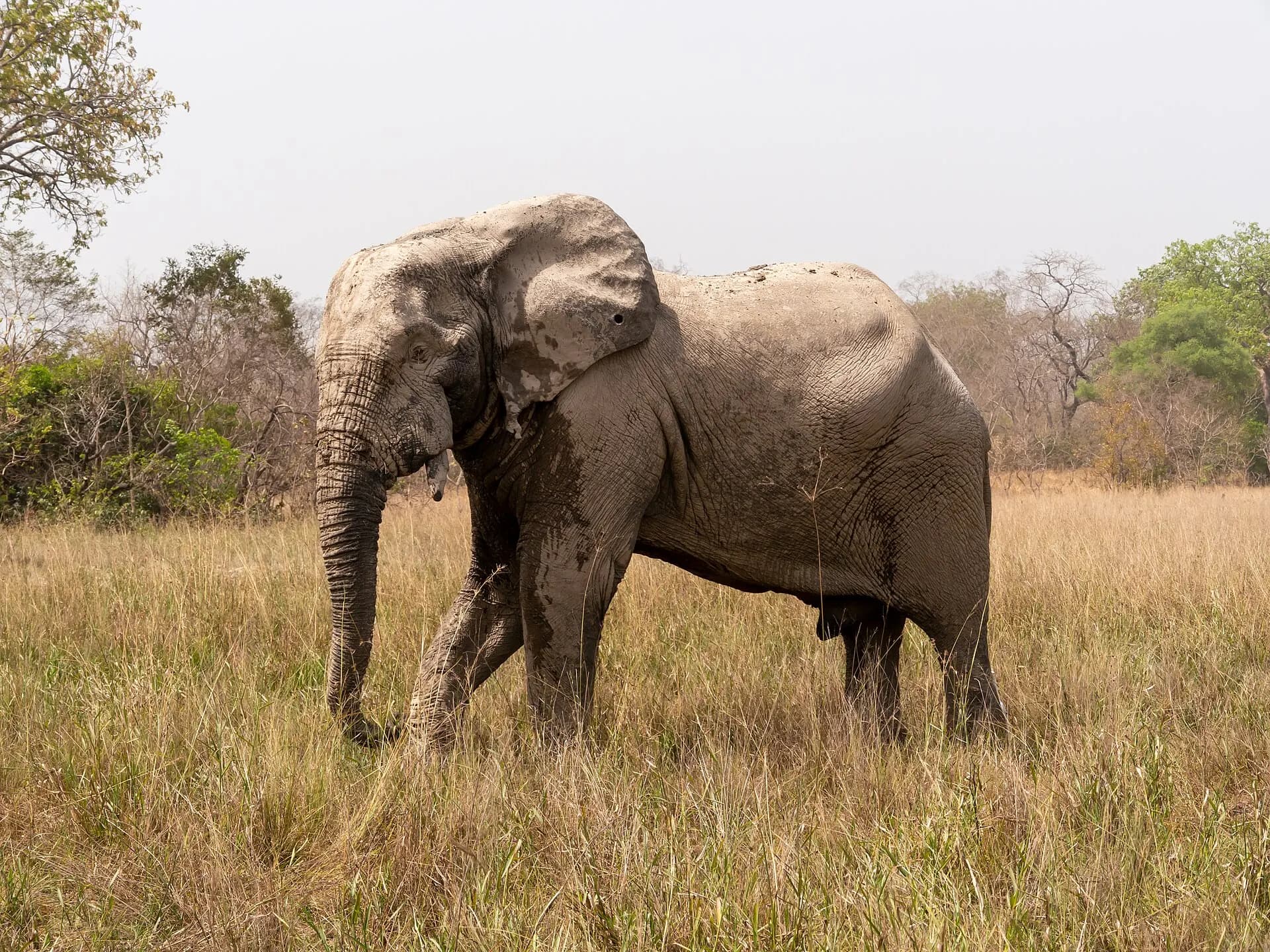
Ghana's largest national park covers a huge stretch of savannah woodland, and its headquarters, on an escarpment above a pair of waterholes, offer one of Africa's more unusual sights: elephants wandering past the swimming pool. Rangers lead walking safaris in the early morning and late afternoon, often bringing visitors remarkably close to elephants, along with antelopes such as kob, roan and hartebeest, warthogs, baboons and a long list of birds. Jeep safaris and night drives are also available. This is not big-cat country, but the intimacy of the encounters makes up for it.
TipWalking and drive safaris run in morning and afternoon slots and are booked at the park's information centre; you are always escorted by an armed ranger. Bring long trousers and closed shoes for the bush.
- 17
Wli Falls
Photo: AbbeythanAnai, CC BY-SA 4.0, via Wikimedia Commons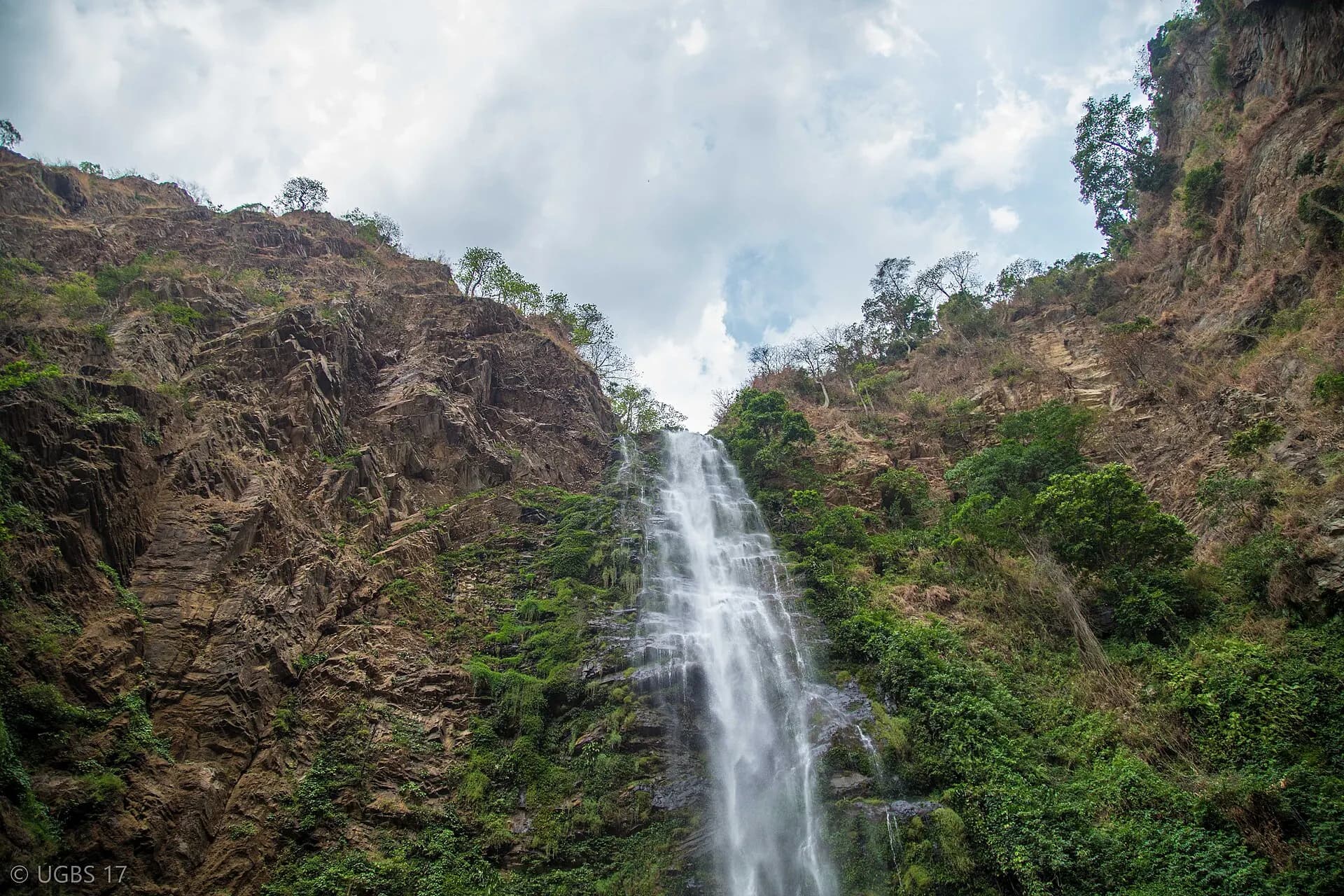
In the far east of the Volta Region, close to the border with Togo, Wli Falls plunges down a sheer cliff into a pool surrounded by forest, and is usually described as Ghana's highest waterfall. An easy walk of under an hour from the visitor centre, crossing streams on small bridges, leads to the lower falls, where a large colony of fruit bats roosts on the cliff face. A much tougher guided hike climbs steeply to the upper falls. The falls are at their most powerful during and just after the rains.
- 18
Mount Afadja
Photo: Mike Norton (on Flickr), CC BY 2.0, via Wikimedia Commons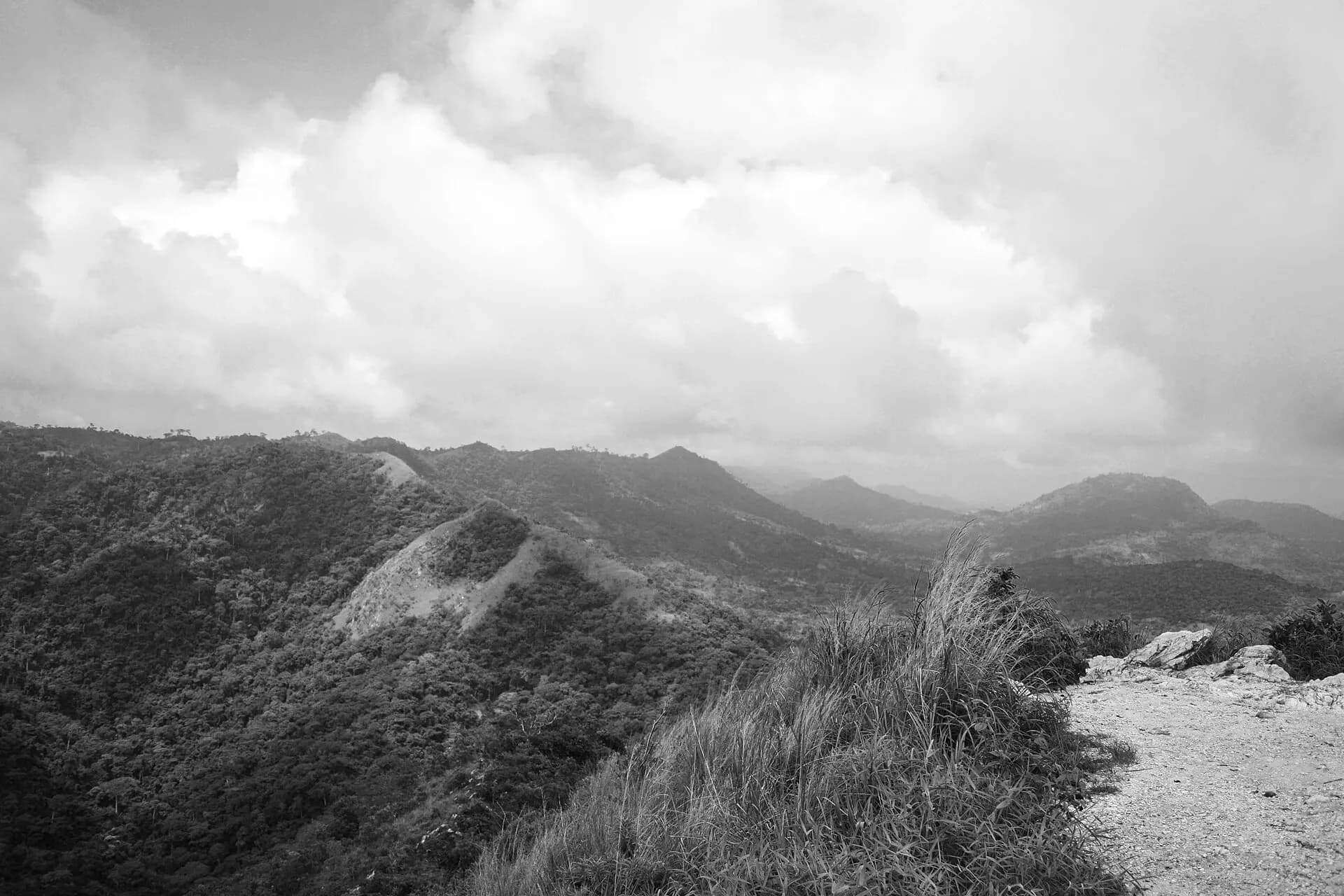
A short drive from Wli, Mount Afadja, often called Afadjato and long billed as Ghana's highest peak, rises above the village of Liati Wote. The climb is short but steep, and the summit gives wide views across the forested Volta hills into Togo. Local guides from the village lead the hike and can combine it with Tagbo Falls nearby. The surrounding area, with mountain villages such as Amedzofe and the cooler air of the highlands, is one of the most appealing parts of the country for walkers.
- 19
Tafi Atome Monkey Sanctuary
The villagers of Tafi Atome have long regarded the Mona monkeys in their forest as sacred, and their community-run sanctuary protects the troop while bringing income to the village. Guides lead visitors into the patch of forest where the monkeys come down from the trees, and village walks and stays can be arranged. It is a fine example of the community tourism projects scattered across the Volta Region.
TipFollow the guides' lead on feeding; the project's rules are there to keep the monkeys healthy and wild.
- 20
Aburi Botanic Gardens
Photo: Matti Blume, CC BY-SA 4.0, via Wikimedia Commons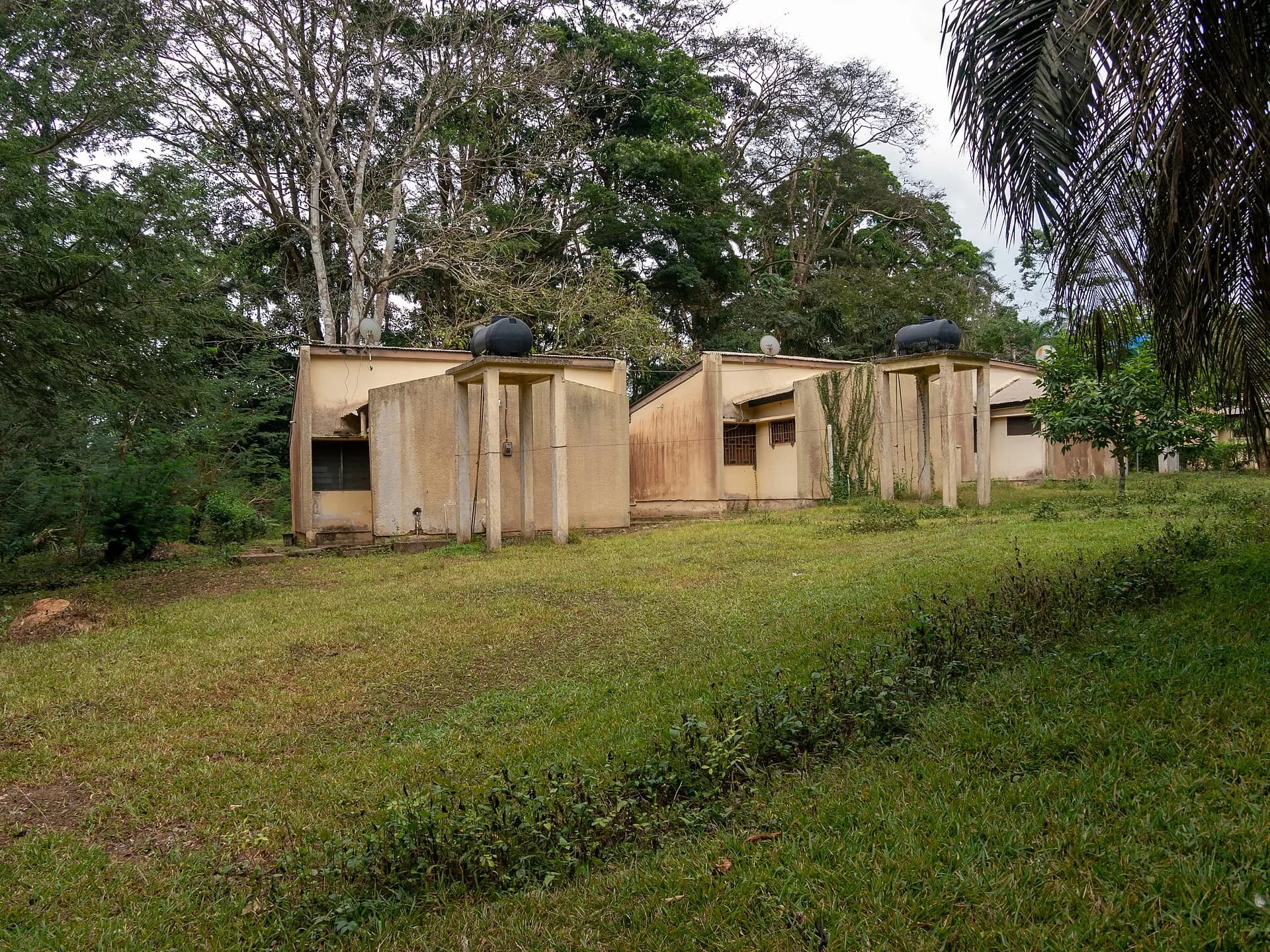
On the Akuapem ridge just north of Accra, where the air is noticeably cooler, the Aburi Botanic Gardens were laid out in 1890 around a former colonial sanatorium. Avenues of royal palms, giant silk-cotton trees, spice plants and shady lawns make it a popular escape for Accra families at weekends. On the way up, the roadside woodcarvers' stalls at Aburi sell masks, drums and furniture, and the ridge-top villages around make a gentle end to the loop before you drop back down to the city.
When to go
Ghana is hot and humid all year on the coast, with temperatures mostly in the high twenties to low thirties Celsius, so the seasons are defined by rain. In the south, the main rainy season runs from around April to June, with a shorter, lighter one in September and October; the north has a single wet season from roughly May to October. The best time for most trips is November to March, when roads are easiest and the beaches are at their best. From December to February the harmattan wind blows dust down from the Sahara, bringing hazy skies and cooler nights, especially in the north.
For wildlife at Mole, the late dry season from January to April is ideal, as animals gather near the waterholes and the grass is short. Waterfalls such as Wli are most impressive in the wet months. Festivals can be a reason to time a visit: Independence Day on 6 March, Emancipation Day around 1 August, Chale Wote in Jamestown and the Ga harvest festival of Homowo in August, Cape Coast's Fetu Afahye in September, and the biennial PANAFEST, which draws visitors from across the diaspora. December, when many Ghanaians abroad come home for the holidays, is the busiest and priciest month in Accra.
Getting around
Kotoka International Airport in Accra is the main gateway. Domestic airlines fly from Accra to Kumasi, Tamale (the gateway to Mole) and Takoradi on the western coast, which can save long days on the road. For buses, the state-owned STC and private companies such as VIP run air-conditioned coaches between the main cities, including Accra to Kumasi, Cape Coast and Tamale. Book a day ahead at busy times.
For shorter hops, tro-tros, the ubiquitous shared minibuses, go almost everywhere for very little, leaving when full from lorry parks in every town. Shared taxis follow fixed routes, and private taxis can be hired by the hour or day. In Accra and Kumasi, ride-hailing apps are widely used and save haggling. Many visitors on a tight schedule hire a car with a driver for some or all of the loop, which makes the Volta Region and the castles far easier. Self-driving is possible but demanding, with heavy traffic, potholes and livestock, and night driving is best avoided.
Accra traffic can be severe, so allow plenty of time for airport runs. To reach Mole by public transport, travel via Tamale, from where buses and shared transport head west towards Larabanga and the park gate; schedules are limited, so check locally the day before.
Local tips
- Entry: Rules vary by nationality. Citizens of many African countries can enter visa-free, while most others need a visa; for many nationalities this can be applied for online through the official Ghana eVisa portal. Check the Ghana Immigration Service before you travel. Proof of yellow fever vaccination is required on arrival.
- Health: Malaria is present throughout the country, so take advice on prophylaxis, use repellent and sleep under a net where provided. Drink bottled or filtered water.
- Money: The currency is the Ghana cedi. Cards work in larger hotels and restaurants, but cash rules elsewhere, and ATMs are common in towns. Mobile money is used for almost everything locally.
- Greetings matter. Always greet people before asking a question or starting a transaction; launching straight into business is considered rude. Use your right hand to give, receive, eat and shake hands.
- Visiting chiefs and villages: In rural areas it is courteous to greet the chief or elders on arrival, sometimes with a small gift or donation, and a guide will explain the protocol.
- Photography: Ask before photographing people, particularly in markets and fishing communities, and avoid photographing military sites and officials.
- Dress: Ghanaians dress smartly. Light, modest clothing is respected away from the beach, especially in the largely Muslim north and in religious buildings.
- Time: "Ghana Man Time" is real. Build slack into your days, keep your humour and enjoy the conversations along the way.
Eat and drink
Ghanaian food is hearty, spicy and built around starchy staples served with rich soups and stews. Fufu, pounded cassava and plantain, is eaten with the fingers alongside light soup, groundnut soup or palm nut soup; banku, a fermented corn and cassava dough, comes with grilled tilapia and fiery pepper sauce; and kenkey, a sour corn dumpling wrapped in leaves, is the coastal favourite with fried fish and shito, the black pepper sauce found on every table. Jollof rice, spiced and tomato-red, inspires fierce rivalry with Nigeria. Waakye, rice and beans cooked with sorghum leaves, is the classic breakfast, and red red, black-eyed bean stew with fried plantain, is an easy vegetarian choice.
Street food is excellent: kelewele, ginger- and chilli-spiced fried plantain sold at night; chichinga, spicy kebabs; and roasted plantain with groundnuts. For the most authentic meals, look for a chop bar, a simple local eatery where the day's dishes are cooked in big pots. Drink sobolo, an iced hibiscus and ginger drink, fresh coconut water, local beers, and palm wine, tapped fresh in the villages. Ghana is one of the world's biggest cocoa producers, and a growing number of local chocolate makers turn it into bars worth taking home.
Where to base yourself
In Accra, Osu and Labone have the liveliest mix of restaurants, bars and guesthouses, while Airport Residential and Cantonments are quieter and more upmarket. On the coast, Cape Coast and Elmina both make good bases for the castles and Kakum, with beach resorts strung along the shore between them; Busua and its neighbours are the place to slow down. In Kumasi, stay central for the palace and markets, or by Lake Bosomtwe for peace. At Mole, the lodge and motel inside the park put you within sight of the waterholes, and there are community guesthouses in nearby Larabanga and Mognori. In the Volta Region, Hohoe and the village guesthouses at Wli, Liati Wote and Amedzofe are well placed for walking.
A short history
Long before Europeans arrived, the region was a crossroads of trade, with gold from the forest moving north across the Sahara. Successive Akan states rose in the forest belt, and in the late seventeenth century the Asante united under Osei Tutu and the Golden Stool, building an empire centred on Kumasi. From 1482, when the Portuguese built Elmina, European powers competed along the coast, and the Portuguese, Dutch, British, Danes, Swedes and Germans built dozens of forts. At first the trade was in gold, but it was soon dominated by enslaved people, millions of whom were shipped from West Africa to the Americas.
Britain gradually took control, fighting a series of wars with the Asante before declaring the Gold Coast a colony and annexing Asante at the start of the twentieth century. After the Second World War, demands for self-rule grew, led by Kwame Nkrumah, and on 6 March 1957 the Gold Coast became independent as Ghana, named after an ancient Sahelian empire. Nkrumah became a leading voice of pan-Africanism before being overthrown in 1966, and decades of coups followed. Since the return to multi-party rule in 1992, Ghana has become known as one of Africa's most stable democracies, with peaceful transfers of power between rival parties.
Visiting the castles with respect
The forts and castles of the Ghanaian coast are places of memory, not just historic monuments. For many visitors of African descent, a tour of Cape Coast or Elmina is the emotional heart of their trip, and Ghana has actively invited the diaspora to return, most notably during the Year of Return in 2019. Whatever your background, approach these sites as you would a memorial. Listen to the guides, who tell the history carefully and powerfully; keep phones away in the dungeons; let others have space if they are grieving or praying; and leave flowers or offerings undisturbed. Reading something about the transatlantic slave trade before you go, and talking with local people about how it is remembered, will make the visit more meaningful.
Responsible travel
Ghana's tourism is still small enough that your choices make a difference. Use local guides at markets, villages and parks, buy crafts directly from makers in places like Bonwire, Ntonso and Aburi, and look for the community-run projects in the Volta Region and around Mole, where fees go to schools and conservation. On walking safaris, keep quiet and follow the ranger's instructions; never encourage guides to approach elephants too closely. Plastic waste is a serious problem on the beaches and in the towns, so carry a refillable bottle with a filter, and refuse plastic bags where you can. Finally, never buy products made from ivory, turtle shell or wild animals.