Bora Bora
A jagged volcanic peak rising from one of the most famous lagoons on Earth, ringed by palm-covered motu and a coral reef.
- Best time to go
- May to October, the drier and slightly cooler season
- Local time
- –
- Currency
- CFP Franc (XPF)
- Reading time
- 7 min
- Language
- French

Bora Bora lies in the Leeward Islands of French Polynesia, about 260 kilometres northwest of Tahiti. The island itself is small, the worn-down remains of an ancient volcano, but it sits inside a wide lagoon of startling blues and greens, enclosed by a barrier reef and a necklace of sandy islets, the motu. Above it all rise the twin summits of Mount Otemanu and Mount Pahia, the backdrop of countless photographs.
Around 10,700 people live here, mostly in the villages of Vaitape, Faanui and Anau along the single coastal road, and life on the main island is more ordinary and more Polynesian than the honeymoon brochures suggest. Most of what makes Bora Bora special is on and under the water, so plan your days around the lagoon, and accept that this is one of the most expensive places in the world to travel.
The top 7 in Bora Bora
- 1
Vaitape
Photo: Balou46, CC BY-SA 4.0, via Wikimedia Commons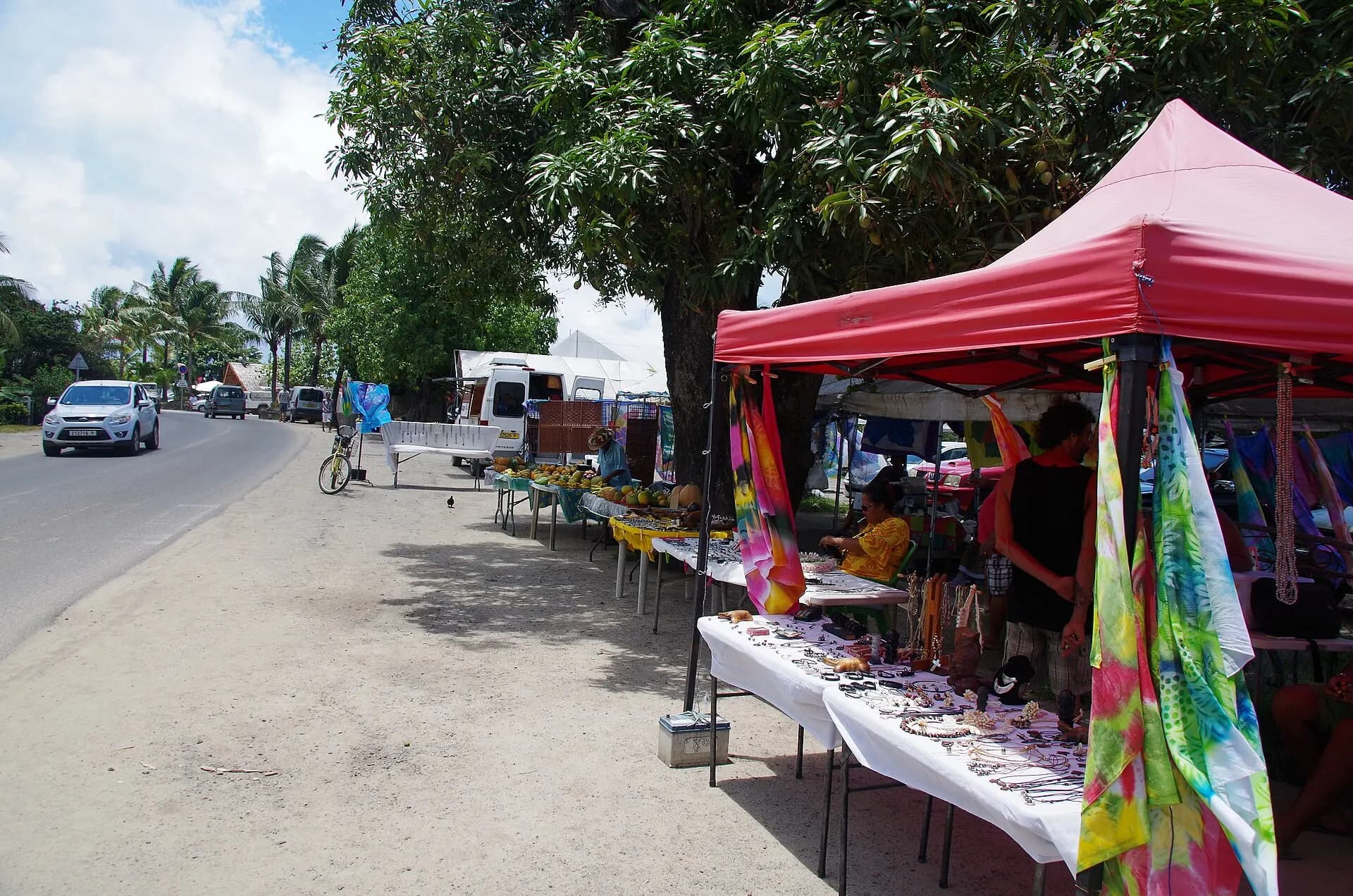
The main village and the island's front door, where the boat from the airport docks. It has the town hall, a Protestant church, shops selling black pearls and pareu (sarongs), a small market and the roulottes, food trucks that come alive in the evening. It's the easiest place to book lagoon tours, hire a bicycle or car, and pick up Le Truck, the island's informal bus.
- 2
The lagoon
Photo: Michelle Maria, CC BY 3.0, via Wikimedia Commons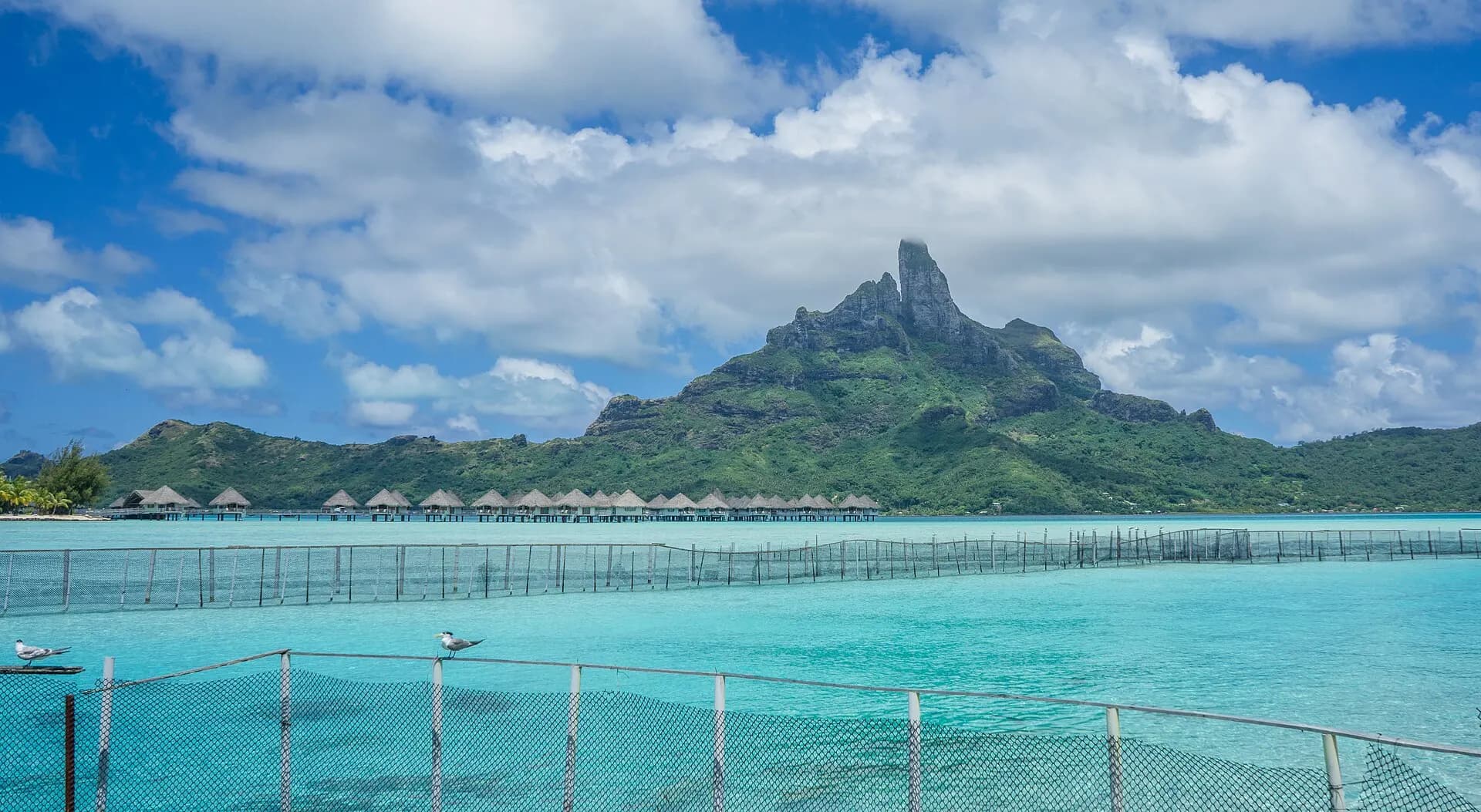
The heart of any visit. Half-day and full-day boat tours, many leaving from Vaitape or collecting guests from hotels, typically stop at a coral garden full of reef fish, a shallow sandbank where southern stingrays glide around your legs, and a spot where blacktip reef sharks patrol the sand. The sharks are timid and harmless if left alone. Divers can see manta rays, lemon sharks and grey reef sharks at sites inside the lagoon and near the Teavanui Pass, the lagoon's only deep-water opening to the ocean.
TipChoose a small operator that doesn't feed the animals, and go in the morning, when the water is calmest and clearest.
- 3
Mount Pahia
Photo: Balou46, CC BY-SA 4.0, via Wikimedia Commons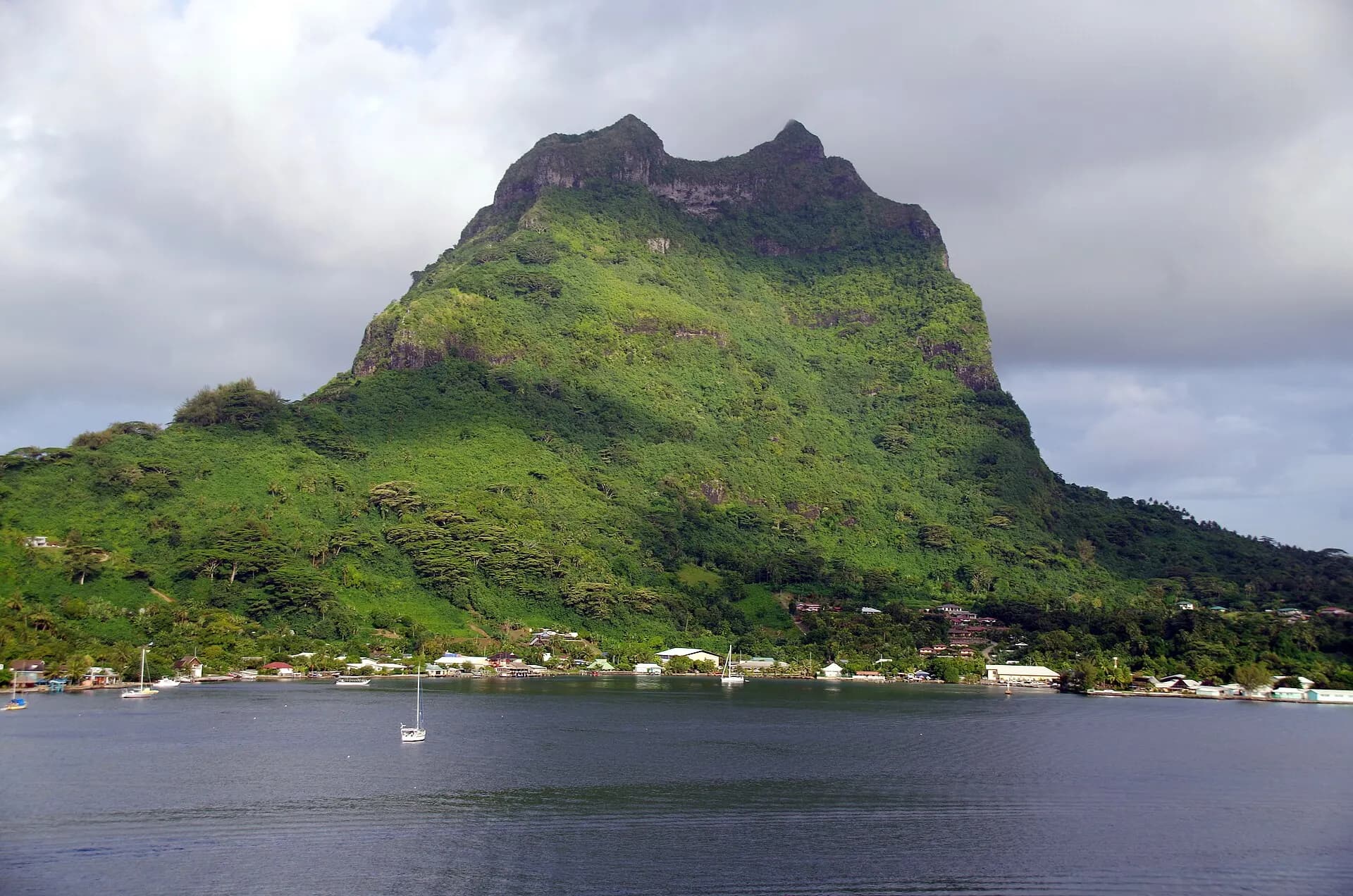
At 661 metres, the island's second peak rises right behind Vaitape. A steep trail through forest and over rocky, rooty ground leads up towards the summit ridge, with views over the lagoon and the motu. The path is unmarked in places, slippery after rain and takes about half a day; go with a local guide, who can be booked through your accommodation or in Vaitape.
- 4
Faanui Bay
Photo: Makemake at de.wikipedia, CC BY-SA 3.0, via Wikimedia Commons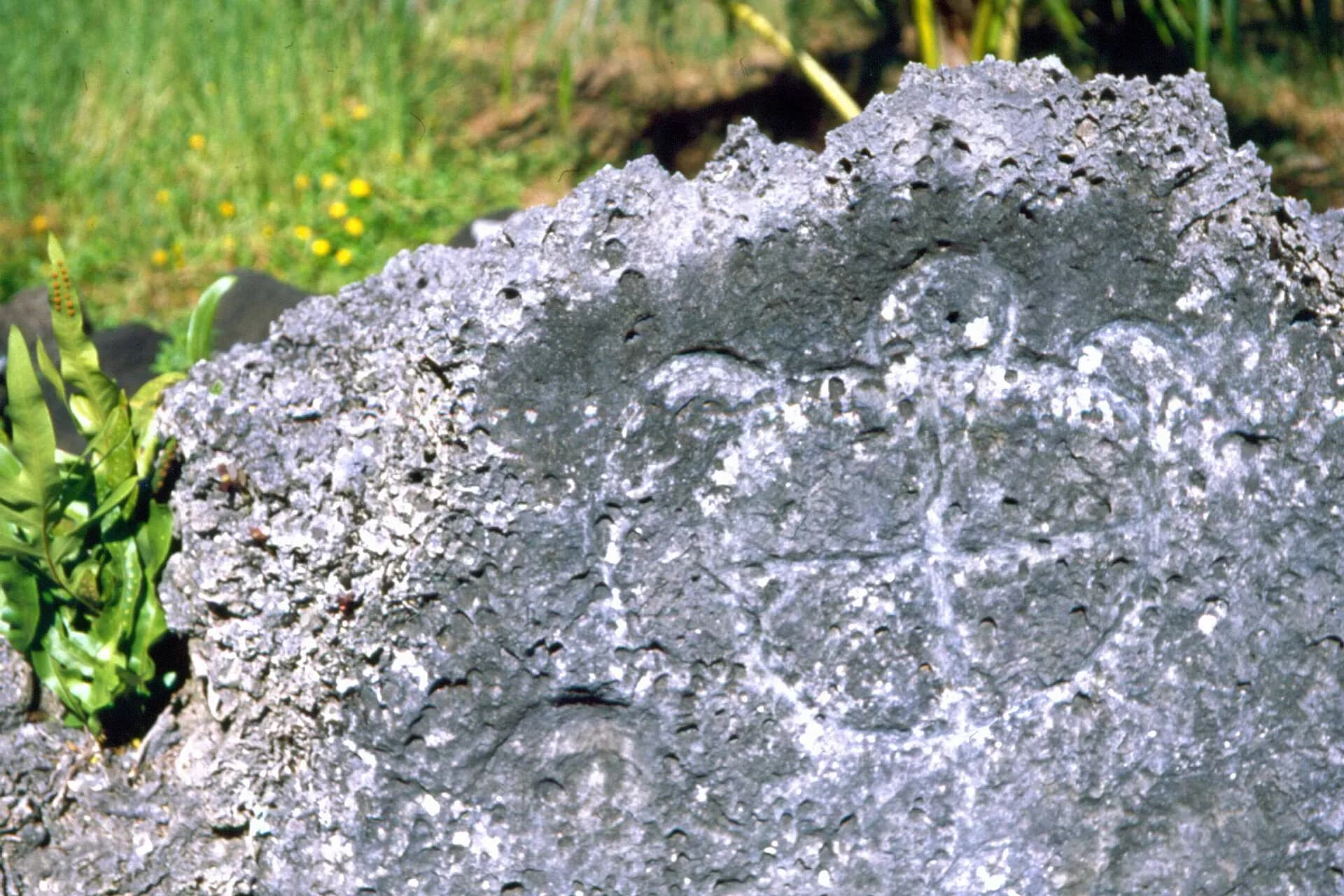
A deep bay on the northwest coast, the island's old harbour. By the roadside stands Marae Fare-Opu, a sacred stone platform whose slabs are carved with turtle petroglyphs. On the ridges above the bay are relics of the Second World War, when the United States turned Bora Bora into a supply base, including coastal guns and an old lookout. The guns are hard to find without help, and the tracks are best reached on a guided 4x4 tour.
- 5
Mount Otemanu
Photo: Borabora.jpg: User:Taka-0905 derivative work: Alvaro qc (talk), CC BY-SA 3.0, via Wikimedia Commons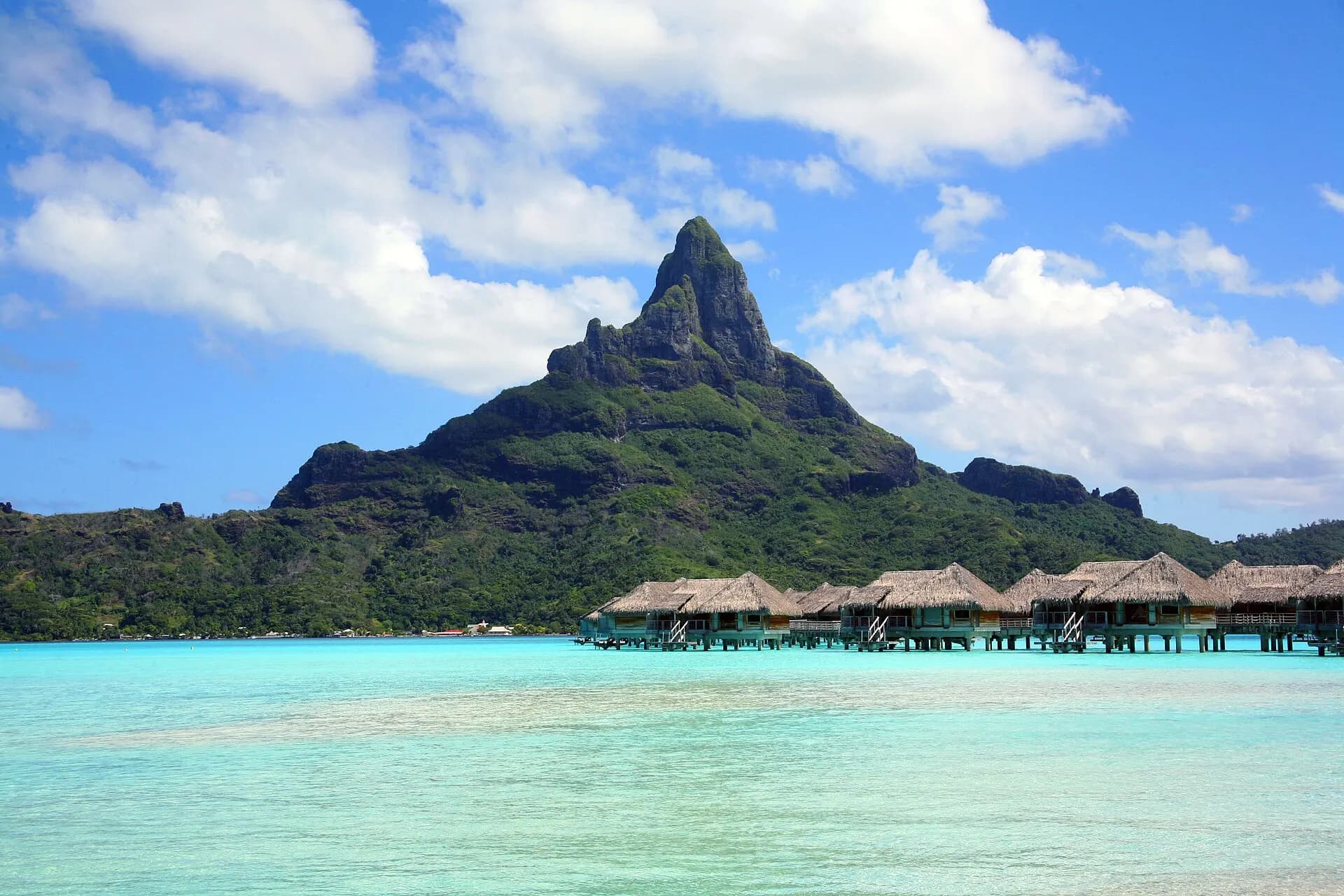
The black, sheer-sided core of the old volcano, 727 metres high, is Bora Bora's emblem. Its crumbling rock has defeated climbers, and the summit is not a hiking goal, so enjoy it from below. Some of the best views are from the coastal road on the east side, from the motu across the lagoon, and from the 4x4 tracks into the interior. A helicopter flight, offered from the airport, shows it towering above the lagoon.
- 6
Matira Beach
Photo: The original uploader was Sba2 at English Wikipedia., CC BY 2.5, via Wikimedia Commons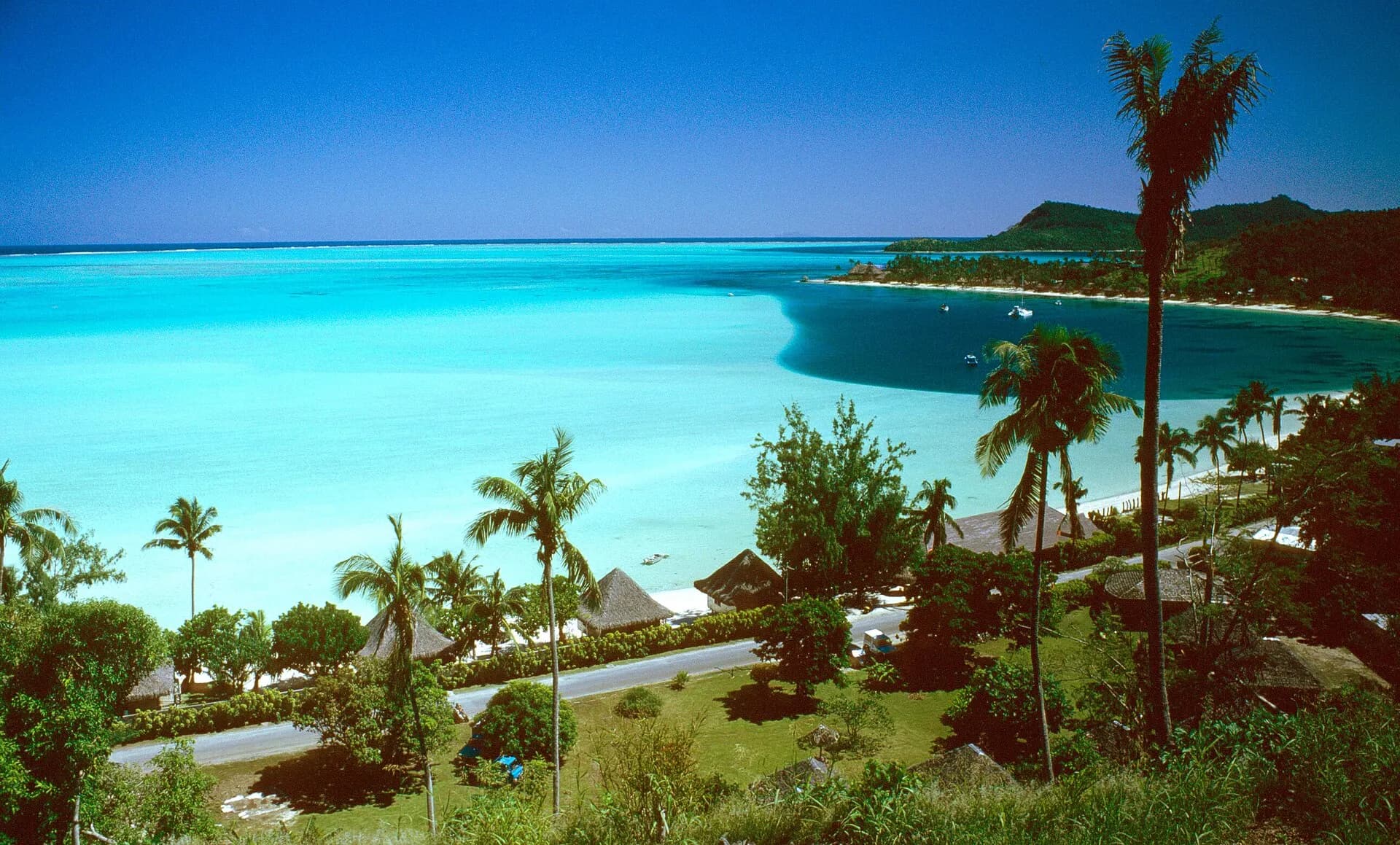
The finest public beach on the main island, a long curve of white sand near Matira Point at the southern tip, with calm, shallow water you can wade out into. It's free, has trees for shade and is close to snack bars and pensions, and it faces west for sunsets over the lagoon.
TipWear reef shoes or watch your step; stonefish are rare, but they do live in shallow lagoons.
- 7
The motu and the eastern lagoon
Photo: The TerraMar Project, CC BY 2.0, via Wikimedia Commons
The long islets on the eastern side of the lagoon, such as Motu Piti A'au, hold most of the large resorts and their overwater bungalows. Beyond them lies the shallow, sandy turquoise water and the outer reef, with the open Pacific crashing against it. Many lagoon tours include a picnic on a motu, often with fish cooked over coals and a demonstration of how to open a coconut or tie a pareu.
When to go
Bora Bora is warm all year, with water around the high twenties Celsius. From May to October, the drier season, days are a little cooler and less humid, with steady trade winds, and this is the most popular time. From November to April, the warm wet season brings heavier, often short-lived showers, higher humidity and a small risk of tropical cyclones, mainly from December to March; check forecasts with Météo-France Polynésie. Christmas, New Year and the July and August holidays fill up quickly, and the Heiva festival in July brings music, dance and sports competitions across French Polynesia.
Getting around
Most visitors fly into Faa'a International Airport on Tahiti, then take an Air Tahiti flight of about fifty minutes to Bora Bora. Air Tahiti also links Bora Bora with Moorea, Huahine, Raiatea and Maupiti, and multi-island air passes can work out cheaper than separate tickets. Bora Bora's airport is on Motu Mute, a flat islet on the northern reef, built as an airstrip during the war, so every arrival continues by boat: resorts send their own launches, and a shuttle boat runs to Vaitape for everyone else. The scenery is spectacular on the flight in, so try for a window seat. Cargo ships on the Leeward Islands route carry some passengers, slowly; check schedules locally.
On the main island, a single road of about 32 kilometres runs around the coast. Bicycles, electric bikes, scooters, small cars and two-seater buggies can be hired in Vaitape and Matira, and Le Truck runs irregularly along the road. To reach the motu or the reef, you'll need a hotel boat, a tour or a rented boat.
Local tips
- Greet people with "Ia ora na" (hello) and thank them with "Māuruuru". Tipping is not customary, though it is appreciated.
- The local currency is the CFP franc (XPF), tied to the euro. Cards are widely accepted at hotels and larger shops, but carry cash for roulottes and small pensions.
- Book flights and accommodation well ahead for the dry season and holidays.
- Bring reef-safe sunscreen, a hat and a rash vest; the sun is fierce on the water.
- Use insect repellent, as dengue occurs in French Polynesia.
- Sundays are quiet, with many shops closed and families at church or at the beach.
- Supermarkets in Vaitape help keep costs down if your room has a kitchen.
Eat and drink
The national dish is poisson cru, or i'a ota, raw tuna marinated in lime and mixed with coconut milk and vegetables. Look out for mahi-mahi, parrotfish and tuna; po'e, a sweet pudding of fruit and starch with coconut cream; uru, breadfruit; and firifiri, a twisted doughnut eaten at breakfast. The roulottes in Vaitape serve generous plates of grilled fish, steak frites and Chinese-Polynesian dishes at a fraction of resort prices. A ma'a Tahiti, a traditional feast cooked in an underground oven, the ahima'a, is sometimes offered at hotels and festivals. Hinano is the local beer.
Where to stay
The overwater bungalow was popularised in French Polynesia, and Bora Bora's luxury resorts, mostly on the motu, are why many people come. They're beautiful and private, with ladders straight into the lagoon, but they are very expensive, rates in high season often run to four figures a night, and meals, transfers and activities add up quickly on an island where almost everything is imported.
For a more affordable and more personal stay, look at pensions, family-run guesthouses, on the main island around Matira and Vaitape, and on a few motu. Rooms and bungalows are simple, sometimes with shared kitchens, and hosts often arrange tours, transfers and meals. Some travellers split their stay between the two. Tahiti Tourisme lists registered pensions and hotels.
Polynesian culture
Bora Bora's old name is often given as Pora Pora, "first born", and in Polynesian tradition it was home to powerful chiefs and warriors, part of a world of islands centred on the great sacred site of Taputapuātea on nearby Raiatea. The Reo Mā'ohi, the Polynesian languages, are still spoken alongside French, and a few words go a long way: "Ia ora na" for hello, "Māuruuru" for thank you, "Nana" for goodbye, "fare" for house and "motu" for islet. Dance, the ori Tahiti, drumming and tattoo, tatau, are living arts. The flower behind the ear also has meaning: by custom, behind the left ear signals you're taken, the right that you're single.
Bora Bora in the Second World War
In early 1942, weeks after Pearl Harbor, the United States landed several thousand troops and tonnes of equipment in what was code-named Operation Bobcat, turning Bora Bora into a fuel and supply base for the South Pacific. They built the airstrip on Motu Mute, roads, a seaplane base and coastal batteries of 7-inch naval guns, most of which still stand on the island's headlands. The island saw no fighting, and the base closed in 1946. The airstrip was French Polynesia's only international airport until Faa'a opened on Tahiti in 1960.
Neighbouring islands
Bora Bora combines easily with other Society Islands. Taha'a, the "vanilla island", and Raiatea, home to the UNESCO-listed Taputapuātea marae, share a lagoon to the southeast, and Moorea, with its jagged peaks and humpback whales from roughly July to November, is a short hop from Tahiti. Tiny Maupiti, to the west, gives a taste of Bora Bora as it was before the resorts. All are reached by Air Tahiti, and some by boat.
Responsible travel
Bora Bora's lagoon is fragile, and its coral has suffered from warming seas and bleaching. Never stand on or touch coral, keep your fins away from the reef, and use reef-safe sunscreen. Don't chase, touch or feed rays and sharks; French Polynesia protects sharks in all its waters, and choosing operators that keep a respectful distance helps keep the animals wild. Water and waste are a strain on a small island, so use refillable bottles and take rubbish back with you from the motu. Ask before photographing people or entering private land, and remember that marae are sacred sites: walk around them, not on the stones.