The Galápagos Islands
Volcanic islands where giant tortoises, sea lions and blue-footed boobies have no fear of people.
- Best time to go
- December to May for warm water and calm seas; June to November for richer marine life
- Local time
- –
- Currency
- US Dollar (USD)
- Reading time
- 4 min
- Language
- Spanish

The Galápagos Islands, about a thousand kilometres off the coast of Ecuador in the Pacific, are a volcanic archipelago whose isolation produced unique species, from giant tortoises and marine iguanas to Darwin's finches, which helped Charles Darwin develop his theory of evolution after his visit in 1835. The islands were the very first place inscribed on the UNESCO World Heritage List, in 1978, and most of the land is a national park, with the surrounding waters a marine reserve.
What makes the Galápagos extraordinary is that the animals are fearless: sea lions sleep on park benches, boobies dance at your feet, and turtles and sharks glide past as you snorkel. Visits are carefully controlled to protect the islands, so plan ahead and follow the rules.
The top 8 in The Galápagos Islands
- 1
Santa Cruz and Puerto Ayora
Photo: Victor Gleim, CC BY-SA 4.0, via Wikimedia Commons
The most populated island and the main hub, with the town of Puerto Ayora, restaurants, hotels and boats for day trips. The Charles Darwin Research Station explains conservation work, including the breeding of giant tortoises.
- 2
The Santa Cruz highlands and giant tortoises
Photo: E bailey, CC BY-SA 4.0, via Wikimedia Commons
In the green, misty highlands, at reserves such as El Chato, wild giant tortoises roam pastures and ponds. Nearby, lava tunnels and the twin pit craters of Los Gemelos are worth a stop.
- 3
Tortuga Bay
A long white-sand beach reached by a paved path from Puerto Ayora, with marine iguanas on the sand and a calm mangrove-fringed lagoon for swimming and kayaking.
- 4
Isabela Island
Photo: Charles J. Sharp, CC BY-SA 3.0, via Wikimedia Commons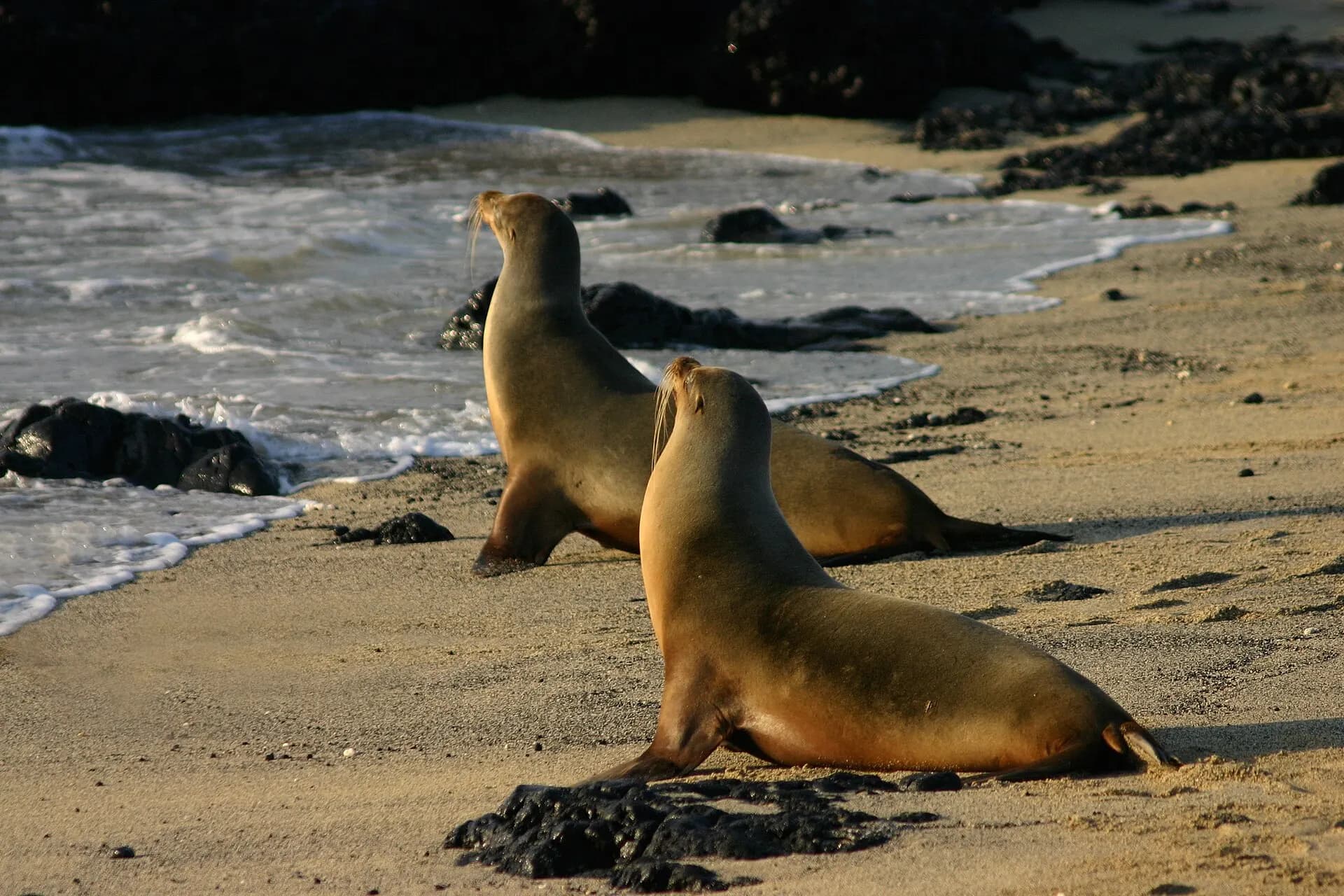
The largest island, formed from six volcanoes, with the village of Puerto Villamil, flamingo lagoons, a tortoise breeding centre and the hike to the rim of Sierra Negra, one of the world's largest volcanic calderas. Los Túneles, lava arches in the sea, are excellent for snorkelling with turtles and sea horses.
- 5
San Cristóbal Island
Photo: MusikAnimal, CC BY-SA 4.0, via Wikimedia Commons
The administrative capital, Puerto Baquerizo Moreno, has sea lions everywhere on its waterfront and beaches. Boat trips go to Kicker Rock (León Dormido), a split rock in the sea where you can snorkel among sharks, rays and turtles.
- 6
Española
Photo: E bailey, CC BY-SA 4.0, via Wikimedia Commons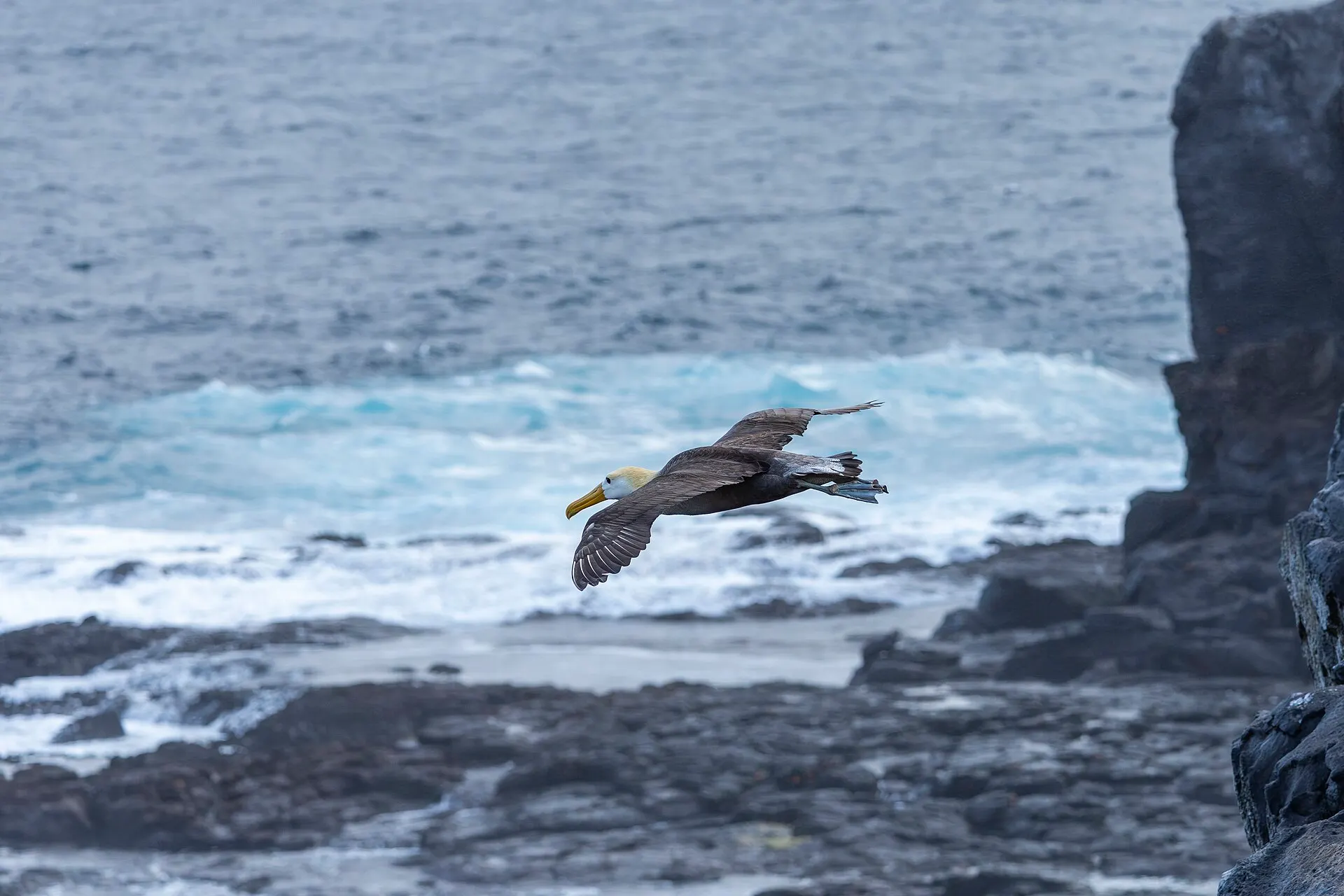
One of the oldest islands, reachable only on a cruise or guided day trip, where waved albatrosses nest from about April to December, along with colourful marine iguanas and blue-footed boobies at Punta Suárez.
- 7
North Seymour
Photo: Bernard Gagnon, CC BY-SA 4.0, via Wikimedia Commons
A small island near Baltra with colonies of blue-footed boobies performing their courtship dance and magnificent frigatebirds inflating their red throat pouches.
- 8
Bartolomé
Photo: Stephen Montgomery from Kallangur, Australia, CC BY-SA 2.0, via Wikimedia Commons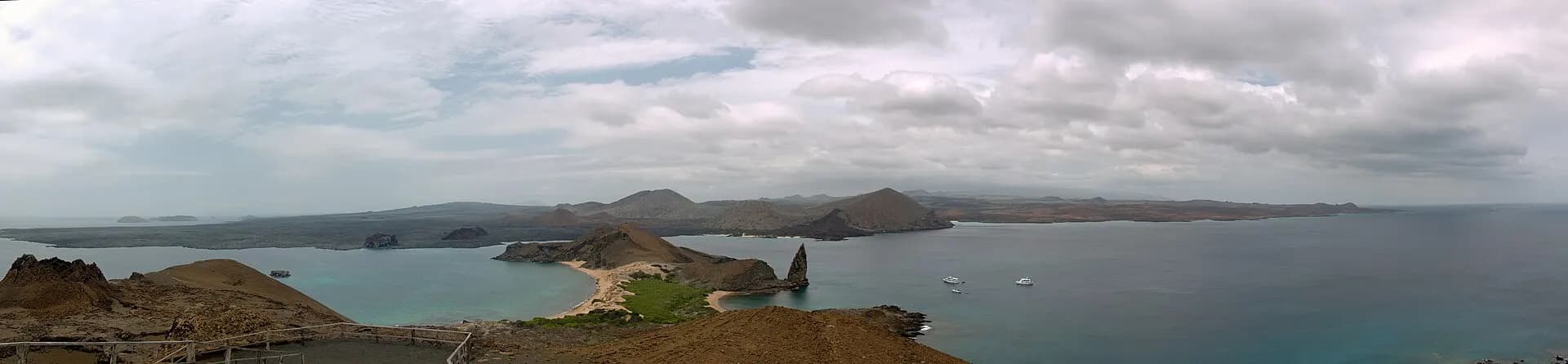
A volcanic island with a boardwalk climb to a viewpoint over Pinnacle Rock and two crescent beaches, one of the most famous views in the Galápagos, and snorkelling with penguins nearby.
When to go
The Galápagos can be visited year-round. From December to May, the water and air are warmer, seas are calmer and the landscape greener, with occasional showers. From June to November, the Humboldt Current brings cooler water, rich in nutrients, attracting more marine life, with mistier skies (garúa) and rougher seas. Many animals breed at particular times, so check what you most want to see.
Getting around
There are two ways to visit: a cruise on a small ship, which lets you reach remote islands and wake up at a new site each day, or a land-based trip, staying in towns on Santa Cruz, Isabela and San Cristóbal and taking day trips by boat. Inter-island ferries and small planes connect the inhabited islands. Flights from Quito and Guayaquil land on Baltra, near Santa Cruz, and on San Cristóbal.
Local tips
- Visitors must pay a national park entrance fee and buy a Transit Control Card before flying; check the current rules.
- Most visitor sites in the national park can only be visited with a licensed naturalist guide.
- Stay at least two metres from wildlife, never feed or touch animals, and don't use flash.
- Strict biosecurity checks apply to luggage: no fresh food, seeds or soil.
- Bring reef-safe sunscreen, a hat and seasickness remedies for boat trips.
- Carry cash in US dollars, Ecuador's currency.
- ATMs are limited to the main towns; bring enough cash for island-hopping.
- Book cruises well ahead for peak periods, such as Christmas and July to August.
- Water is cool in the second half of the year; a wetsuit makes snorkelling more comfortable.
- Pack a light rain jacket and layers for highland visits.
Eat and drink
Restaurants in Puerto Ayora and Puerto Baquerizo Moreno serve fresh seafood, especially ceviche, grilled fish and lobster in season, alongside Ecuadorian dishes such as encocado, fish in coconut sauce. Locally grown coffee from the Santa Cruz and San Cristóbal highlands is worth trying. In Puerto Ayora, the street known as Los Kioskos fills with open-air seafood stalls in the evening, a lively and affordable place to eat with locals.
Where to stay
Puerto Ayora has the widest choice of hotels; Isabela offers a quieter village atmosphere with beachfront guesthouses; and San Cristóbal is convenient for flights and diving. Cruises range from basic boats to luxury expedition ships.
Snorkelling and diving
Some of the best experiences in the Galápagos happen in the water: swimming with sea lions, which twist and play around snorkellers, gliding over reef sharks and turtles, and spotting penguins, the only ones living at the equator. Wolf and Darwin, the remote northern islands, are among the world's great dive sites, with schools of hammerhead sharks and, seasonally, whale sharks, visited only on liveaboard dive boats.
Conservation
The islands' unique ecosystems are fragile, threatened in the past by introduced species such as goats, rats and invasive plants, as well as overfishing. Long-running conservation programmes, including the eradication of goats from several islands and tortoise breeding projects, have helped some species recover. Visitor numbers, routes and boat itineraries are strictly managed, and your entrance fee helps fund this work.