Prague
A city of a hundred spires, Gothic bridges and baroque palaces, with some of the best beer in the world.
- Best time to go
- April to June and September to October, for mild weather; December for Christmas markets
- Local time
- –
- Currency
- Czech Koruna (CZK)
- Reading time
- 4 min
- Language
- Czech

Prague survived the twentieth century largely undamaged, and its historic centre is a remarkable panorama of Gothic towers, baroque domes and Art Nouveau facades along the River Vltava. It was the seat of Holy Roman Emperors and the capital of the Kingdom of Bohemia, and its castle complex is among the largest in the world.
The historic centre is compact and, outside the busiest streets, remarkably peaceful. The famous sights are best seen early in the morning, before the tour groups arrive. Then spend the rest of the day in the parks, beer gardens and neighbourhoods that most visitors never see.
The top 9 in Prague
- 1
Charles Bridge
Photo: Falk2, CC BY-SA 4.0, via Wikimedia Commons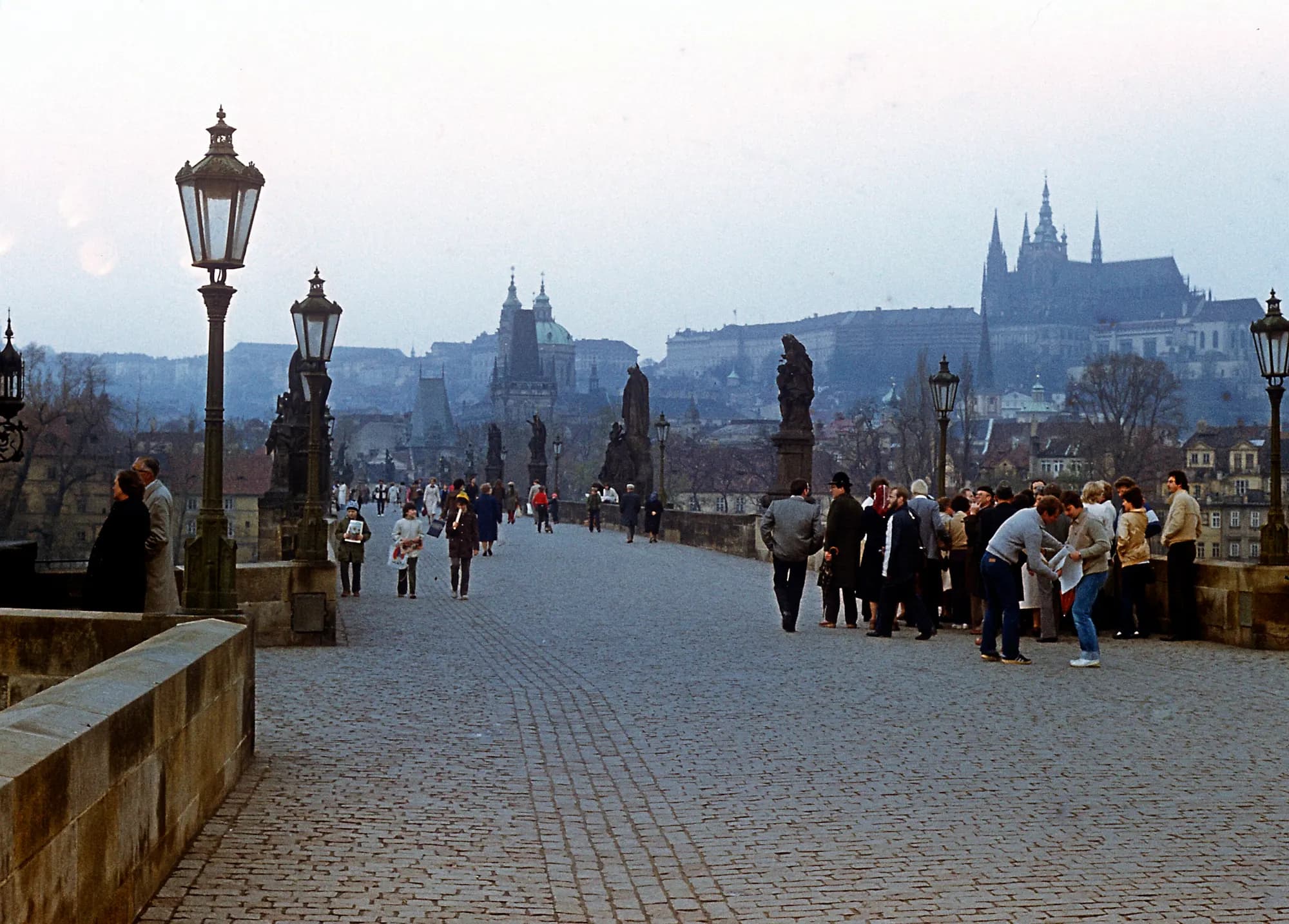
A stone bridge built in the fourteenth century under Emperor Charles IV, lined with thirty baroque statues of saints and guarded by towers at both ends. By day it is crowded with artists and buskers; at dawn it is magical and almost empty.
TipClimb the Old Town Bridge Tower for a view along the bridge to the castle.
- 2
Old Town Square and the Astronomical Clock
Photo: Tadeáš Gregor, CC BY-SA 4.0, via Wikimedia Commons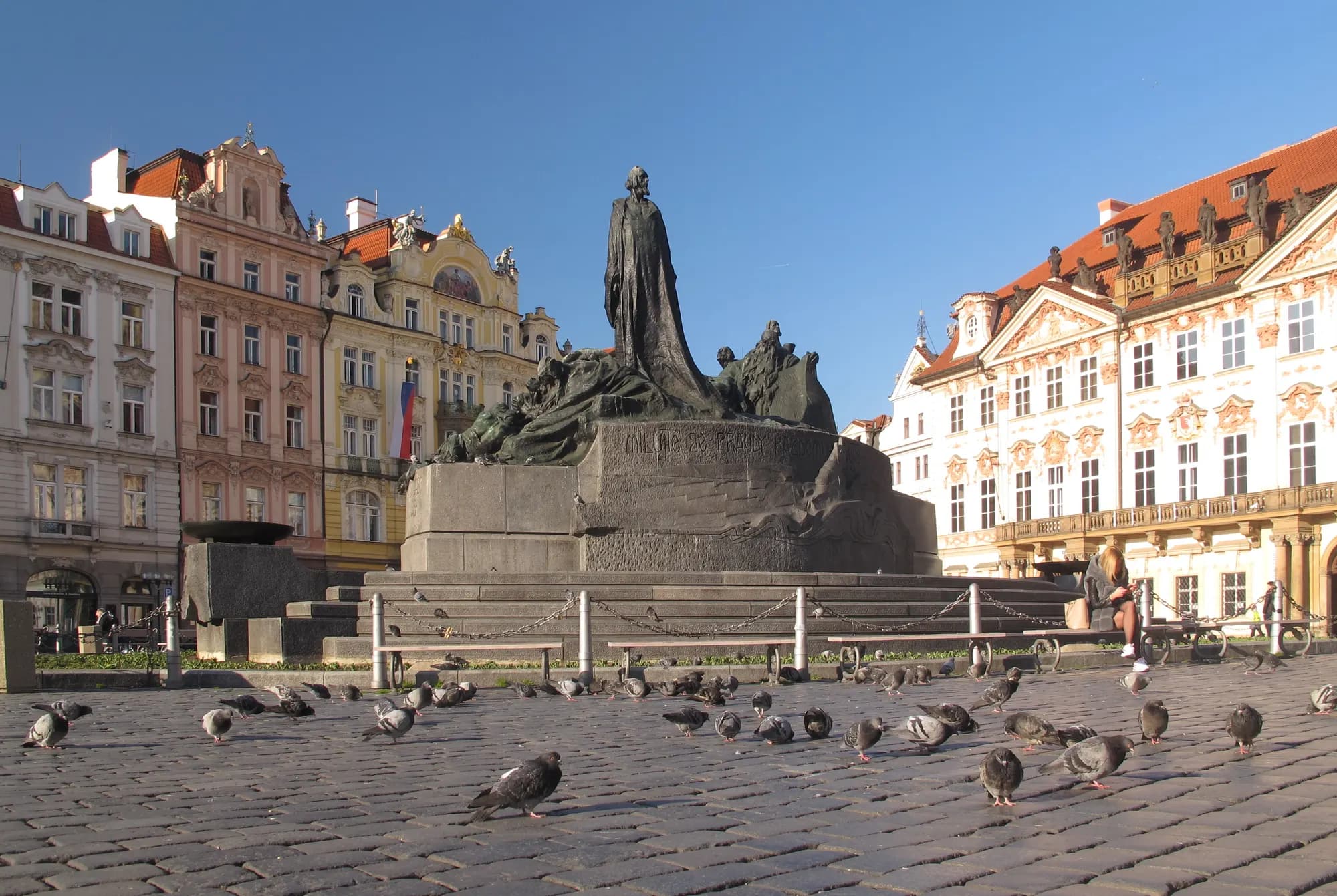
The heart of the old city, surrounded by pastel facades, the twin Gothic spires of the Týn Church and the Old Town Hall. The Astronomical Clock on the town hall's tower, first installed in 1410, shows the positions of the sun and moon; on the hour, its figures of the apostles parade past the windows.
TipClimb the town hall tower for a view over the square, rather than squeezing into the crowd below the clock.
- 3
Prague Castle and St Vitus Cathedral
Photo: Ricardo Liberato, CC BY-SA 2.0, via Wikimedia Commons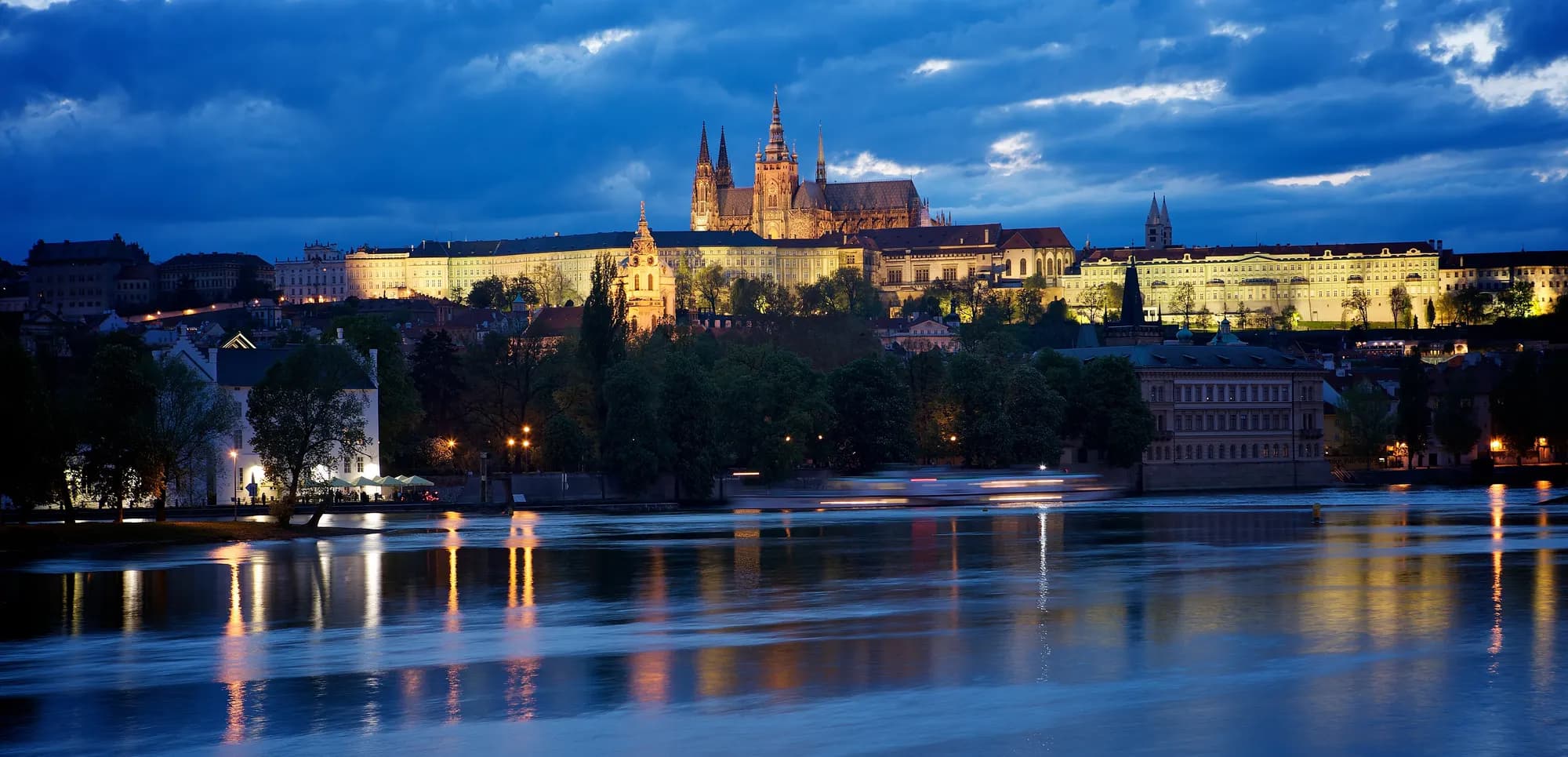
A vast complex of palaces, churches and courtyards on a hill above the river, the seat of Czech rulers for more than a thousand years and still the president's office. At its centre stands the Gothic St Vitus Cathedral, with stained glass by Alfons Mucha, and nearby are the Old Royal Palace and the tiny houses of Golden Lane.
TipThe castle grounds are free to enter; buy a circuit ticket for the interiors and come early.
- 4
Strahov Monastery
Photo: Jorge Royan, CC BY-SA 3.0, via Wikimedia Commons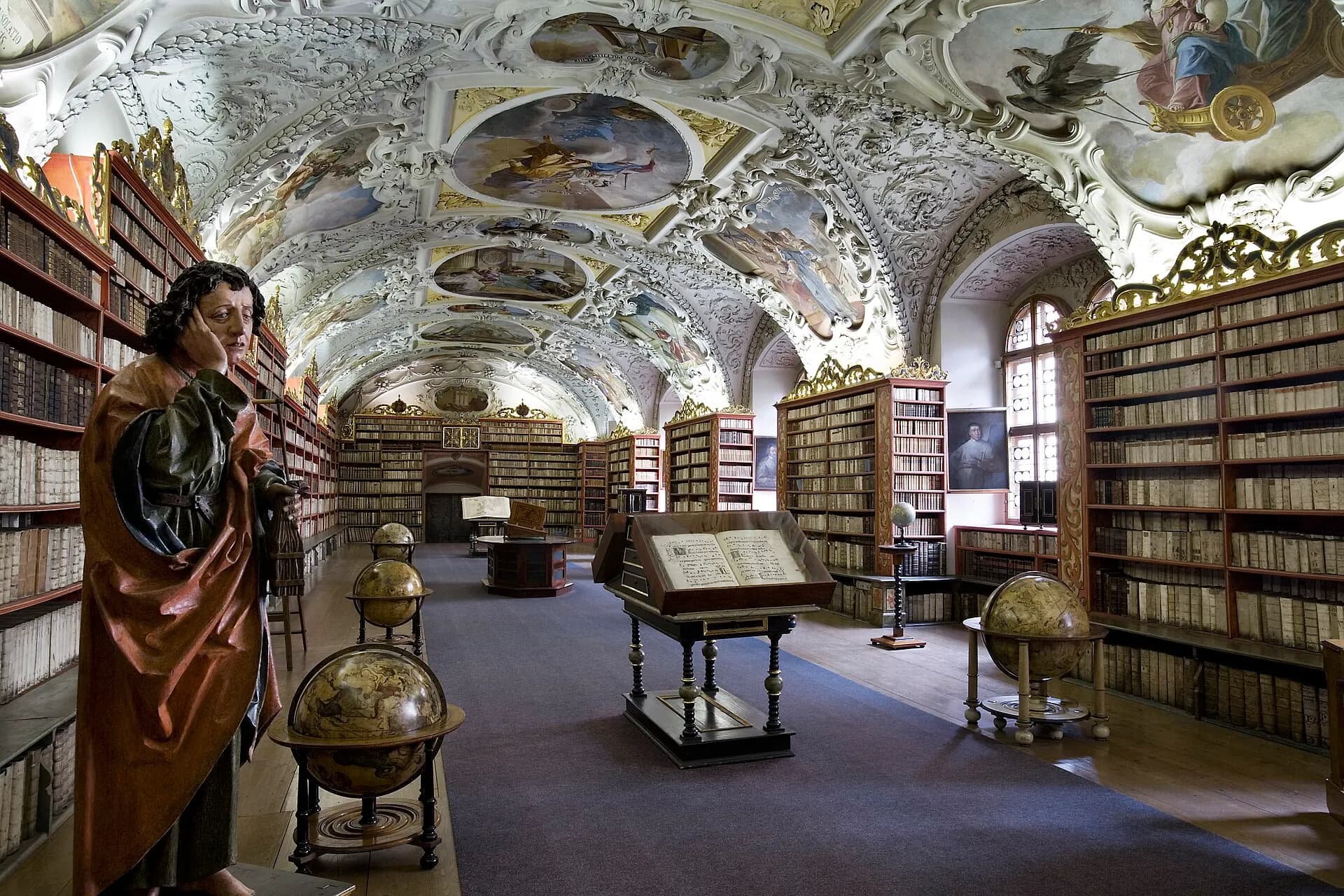
A Premonstratensian monastery above the castle district, famous for its baroque library halls, the Theological and Philosophical Halls, with painted ceilings and walnut shelves of ancient books, seen from the doorways. Its brewery and its garden terraces have wonderful views over the city.
- 5
Malá Strana
Photo: AVDLCZ, CC0, via Wikimedia Commons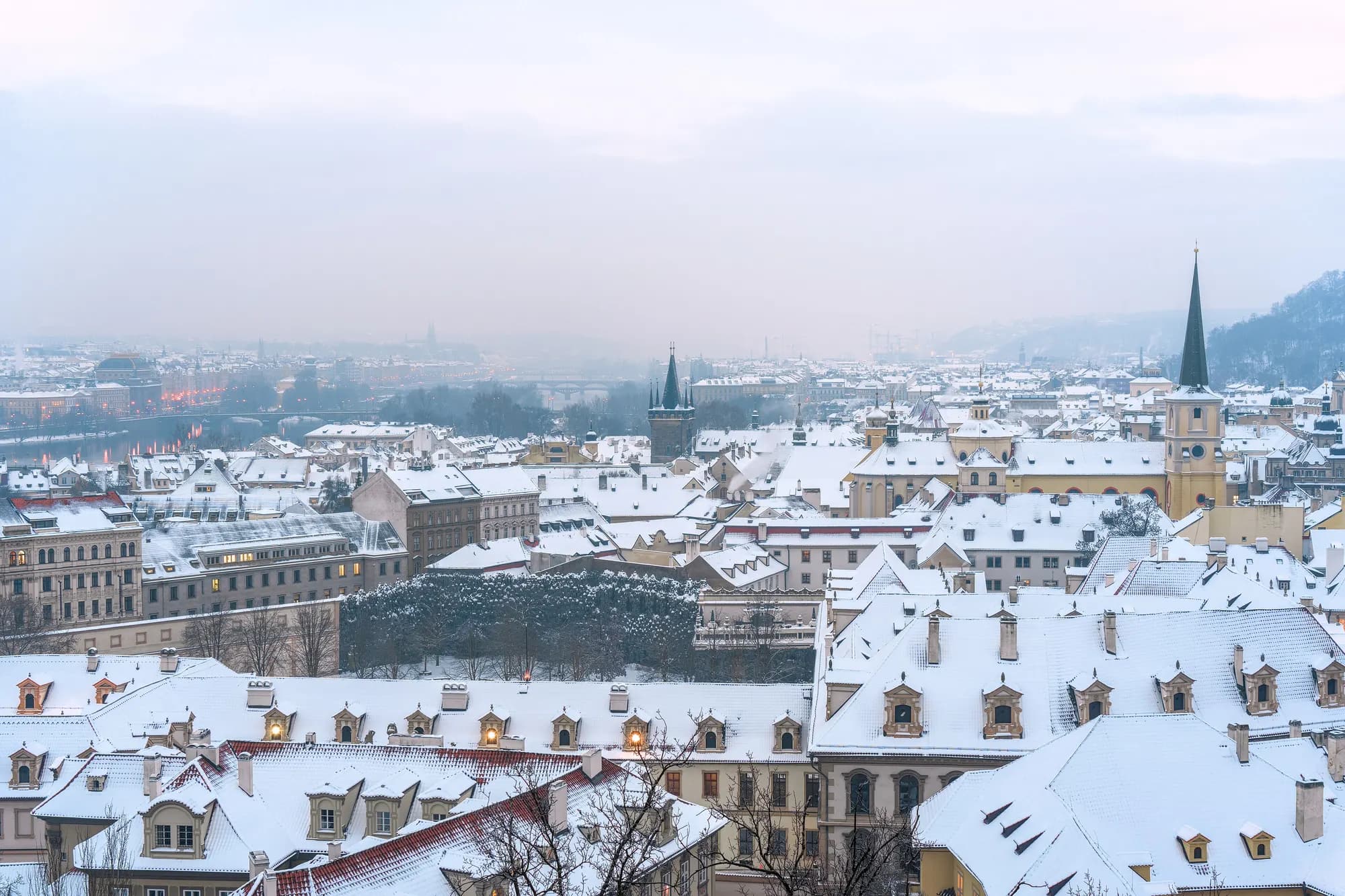
The "Lesser Town" below the castle is a quarter of baroque palaces, churches and gardens, with the great green dome of St Nicholas Church at its centre. Look for the John Lennon Wall, the hidden island of Kampa and the terraced palace gardens on the hillside.
- 6
Josefov, the Jewish Quarter
Photo: Uoaei1, CC BY-SA 4.0, via Wikimedia Commons
One of the oldest Jewish communities in Europe lived here for centuries. Its synagogues, including the Old-New Synagogue, still in use since the thirteenth century, and the Old Jewish Cemetery, where gravestones are crowded together in layers, are among the most moving sites in Prague. Most are visited on one ticket from the Jewish Museum.
TipThe sites are closed on Saturdays and on Jewish holidays.
- 7
Petřín Hill
Photo: Andrei Stroe, CC BY-SA 3.0, via Wikimedia Commons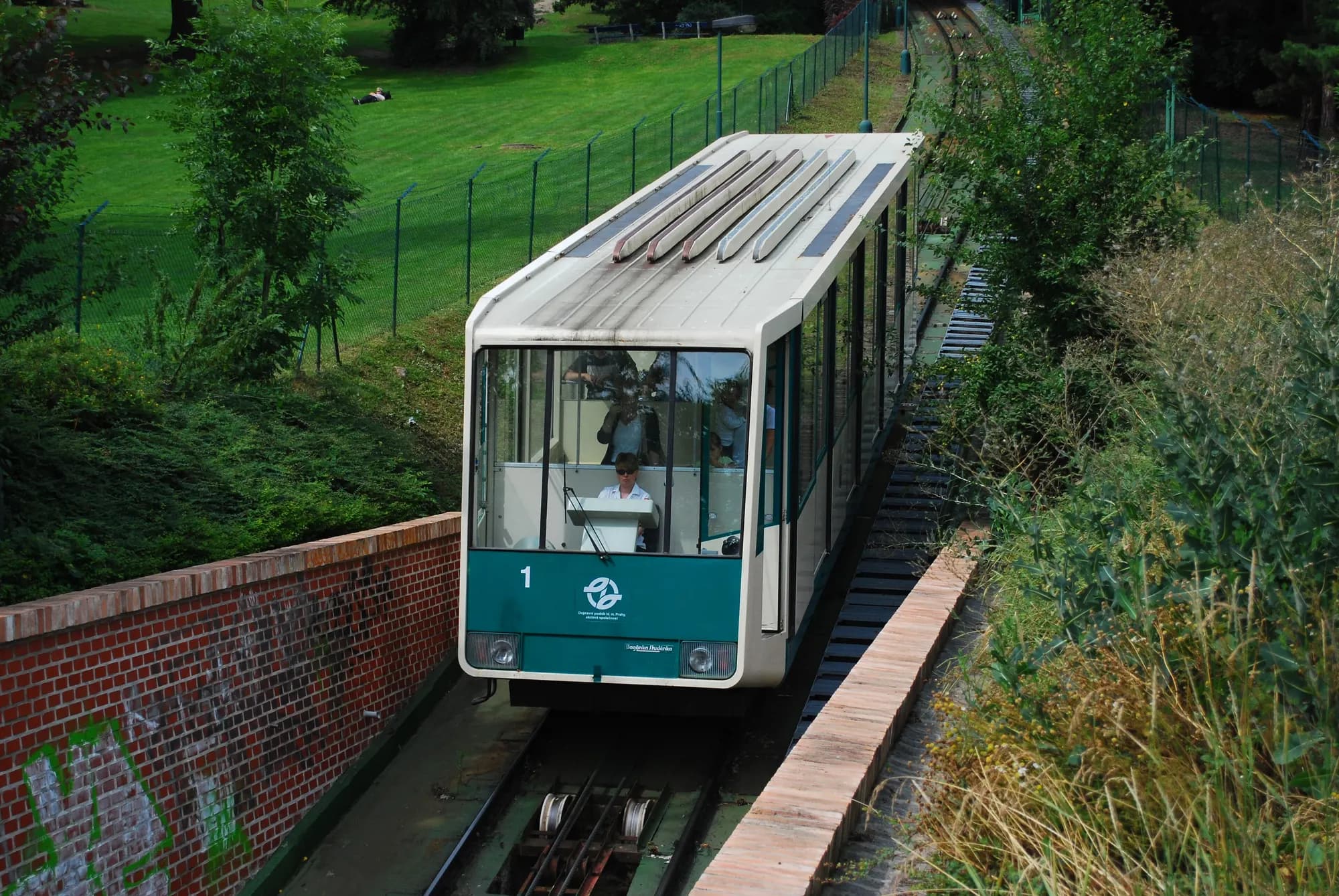
A wooded hill with orchards, rose gardens and an observation tower that looks like a small Eiffel Tower, built for an exhibition in 1891. A funicular railway runs up from Malá Strana when it is in service, and the walk down through the orchards to the castle is lovely.
- 8
Vyšehrad
Photo: Ввласенко, CC BY-SA 3.0, via Wikimedia Commons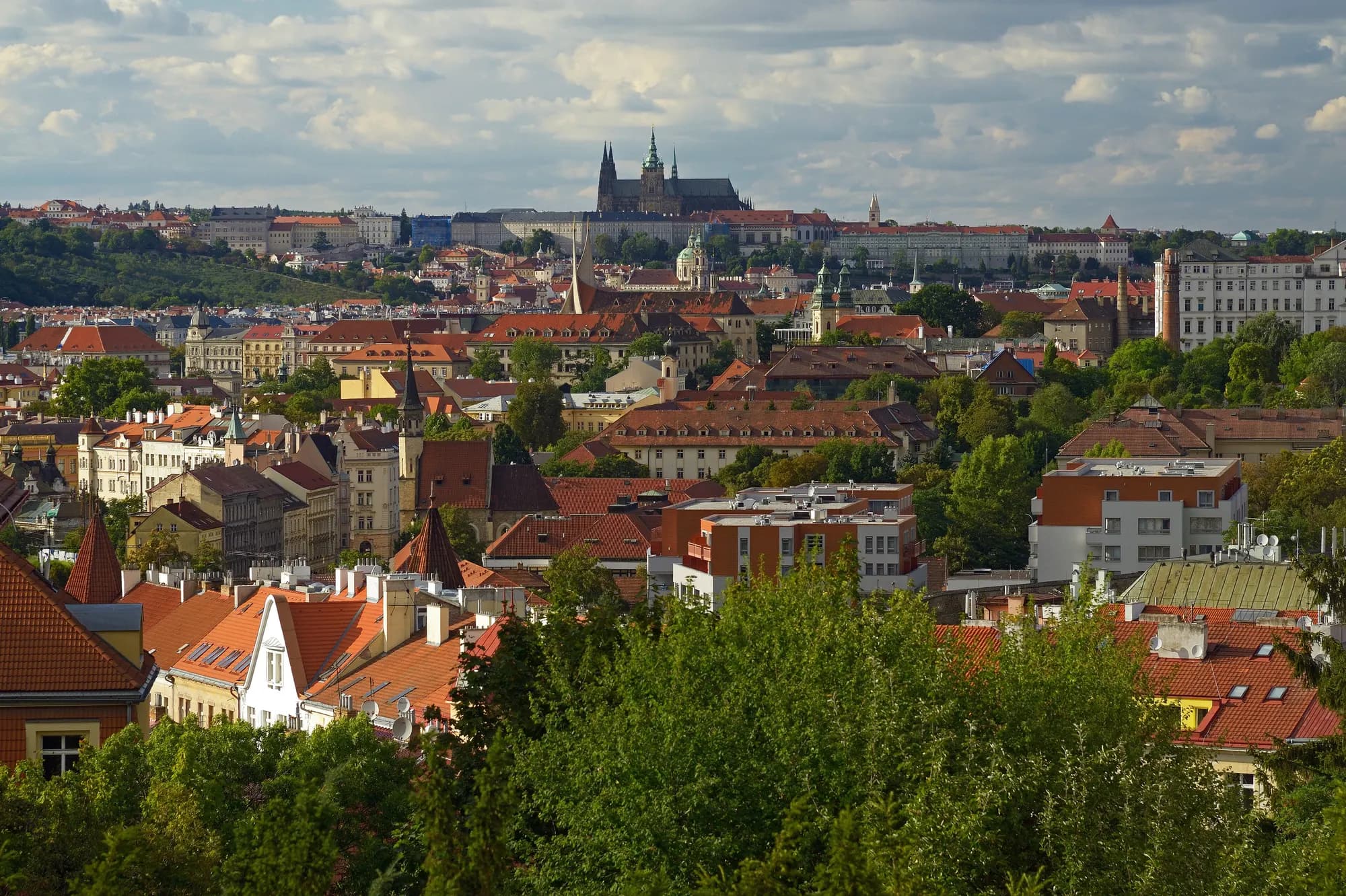
An old fortress on a rock above the river, south of the centre, with ramparts, gardens and the cemetery where many famous Czechs are buried, including the composers Dvořák and Smetana. It is quieter than the castle and has wonderful views up the river.
- 9
Letná Park
Photo: Dmitry A. Mottl, CC BY-SA 4.0, via Wikimedia Commons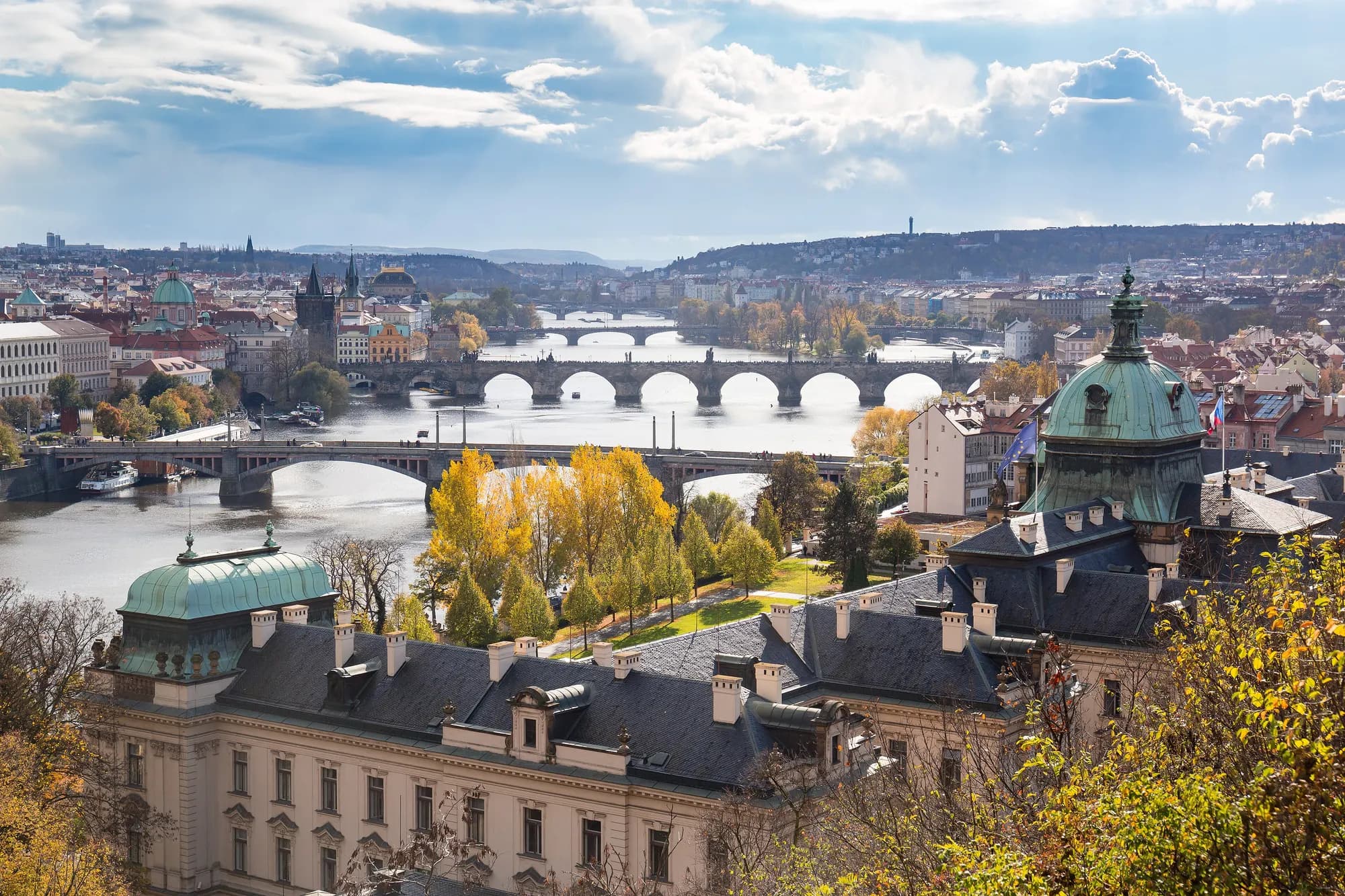
A park on a plateau above the river, with one of the best views over the bridges of Prague and a popular beer garden under the chestnut trees. It is where locals come on summer evenings.
When to go
Spring and autumn are the most pleasant times, with mild weather and fewer crowds than in summer, which is warm and busy. In December, Christmas markets fill Old Town Square and Wenceslas Square with stalls, mulled wine and a giant tree. Winter is cold, but snow on the rooftops makes the city beautiful.
Getting around
The centre is best explored on foot. Trams are frequent and run day and night, and the three metro lines are quick for longer distances. Tickets are valid on all public transport for a set time; buy them from machines at stops and stations, in the PID Lítačka app, or with a contactless card at the ticket machines inside many trams. Paper tickets must be stamped when you start your journey, and inspectors are common.
From the airport, buses connect with the metro, and an Airport Express bus runs to the main railway station. Trains link Prague with Vienna, Berlin, Budapest and other European cities.
Local tips
- The local currency is the Czech koruna; pay by card or withdraw cash from bank machines, and avoid exchange offices advertising "zero commission".
- When paying by card, choose to pay in korunas, not your home currency, to avoid a poor exchange rate.
- Use reputable taxi apps rather than hailing cabs on the street.
- Restaurants in the main tourist streets are often overpriced; walk a few streets away.
- Trdelník, the sugared spiral pastry sold everywhere, is a modern tourist snack rather than a local tradition.
- Tipping around 10% for good service is customary.
Eat and drink
Czech cooking is hearty: try svíčková (beef in a creamy vegetable sauce with dumplings), roast pork with sauerkraut, goulash and fried cheese. Beer is central to Czech life, and the country invented the pale lager; try it fresh from a tank in a traditional pub. Look out for the cafés of the old Habsburg tradition, and for open sandwiches (chlebíčky) at a delicatessen.
Day trips
Kutná Hora, about an hour away by train, was once a silver-mining town rich enough to rival Prague. Its Gothic Cathedral of St Barbara is spectacular, and the Sedlec Ossuary, decorated with the bones of thousands of people, is one of the strangest sights in Europe. Český Krumlov, in South Bohemia, is a perfectly preserved medieval town in a loop of the river below a huge castle, best visited overnight. Closer to Prague, the Gothic castle of Karlštejn, built by Charles IV to hold the crown jewels, rises above a wooded valley, a short train ride from the city.