Cartagena
A walled Caribbean city of bougainvillea balconies and colonial plazas, warm night air and salsa drifting from the bars.
- Best time to go
- December to April, the dry season, with sunny days and a sea breeze
- Local time
- –
- Currency
- Colombian Peso (COP)
- Reading time
- 4 min
- Language
- Spanish
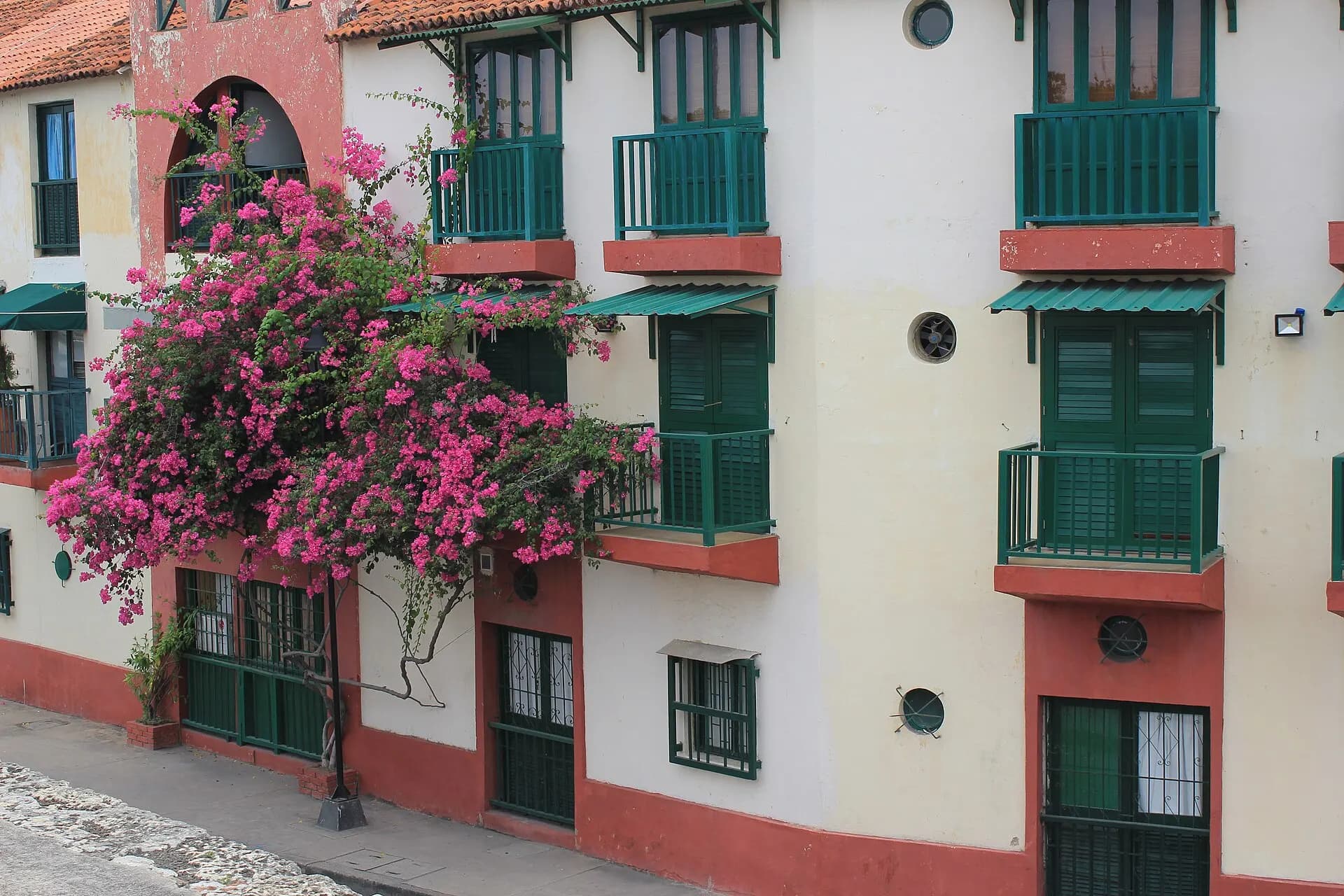
Founded by the Spanish in 1533, Cartagena became one of the richest ports in the Americas, where gold and silver from the colonies were shipped to Spain. To protect that wealth from pirates and rival empires, the city was ringed with massive stone walls and fortresses, which still stand. Inside them, the old town is a World Heritage Site of colourful colonial houses with wooden balconies draped in bougainvillea, shady plazas and church towers.
It's a city to enjoy at an easy pace, especially in the heat of the day. Explore in the morning and late afternoon, rest in the shade at midday, and come alive in the evening, when the plazas fill and the music starts. Beyond the walls, the islands of the Rosario archipelago offer white sand and clear water.
The top 8 in Cartagena
- 1
The walled city
Photo: Kamilokardona, CC BY-SA 3.0, via Wikimedia Commons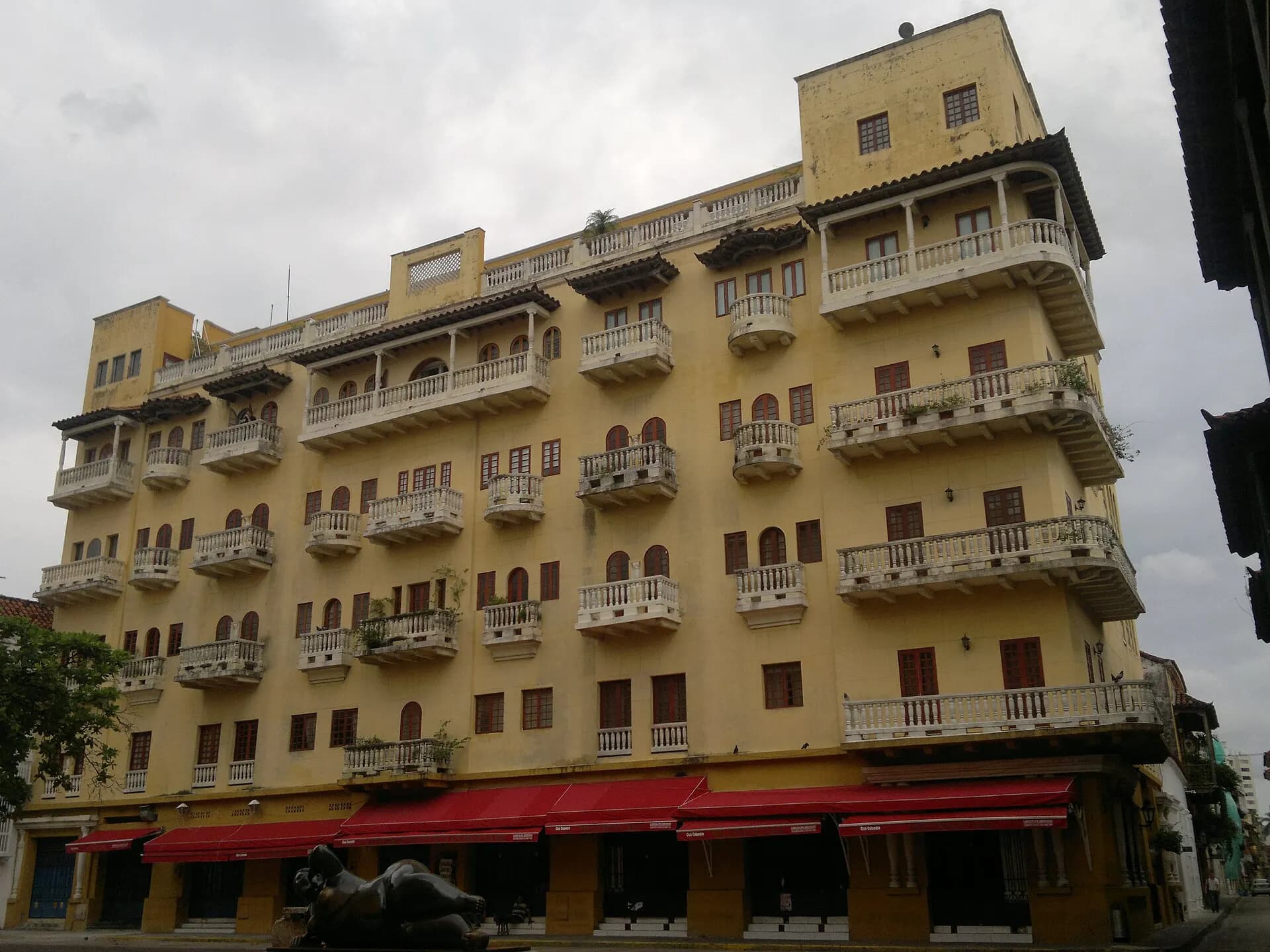
The heart of Cartagena, a grid of narrow streets lined with pastel houses, carved doorways with ornate knockers and balconies spilling with flowers. Wander its plazas, Plaza de Bolívar, Plaza Santo Domingo with its reclining Botero sculpture, and Plaza de San Diego, and stop in the Cathedral and the Church of San Pedro Claver.
TipWalk early in the morning, when the streets are quiet and the light is soft, and again at dusk.
- 2
The city walls
Photo: Bernard Gagnon, CC BY-SA 4.0, via Wikimedia Commons
Around eleven kilometres of stone walls, built over two centuries, encircle the old town. Walk along the top of them at sunset, when locals and visitors gather on the ramparts, especially at the Café del Mar bar on the Santo Domingo bastion, to watch the sun drop into the Caribbean.
- 3
The Clock Tower and Plaza de los Coches
Photo: Bernard Gagnon, CC BY-SA 4.0, via Wikimedia Commons
The main gate into the old city, the Puerta del Reloj, is crowned by a clock tower added in the nineteenth century. Behind it, the Plaza de los Coches was once a slave market, and the arcade of the Portal de los Dulces is lined with stalls selling traditional coconut and tamarind sweets.
- 4
The Palace of the Inquisition
Photo: JERRYE AND ROY KLOTZ MD, CC BY-SA 3.0, via Wikimedia Commons
A grand colonial building on Plaza de Bolívar that housed the Spanish Inquisition's tribunal for the region, now a museum about its history, with displays on the city's colonial past.
- 5
Getsemaní
A neighbourhood just outside the walls, once a working-class district, now the liveliest part of the city, with colourful murals, umbrellas strung above the streets and the Plaza de la Trinidad, where locals, street performers and food vendors gather every evening.
TipCome in the evening for street food and music, and stay for a salsa bar.
- 6
Castillo San Felipe de Barajas
Photo: Bernard Gagnon, CC BY-SA 4.0, via Wikimedia Commons
The largest Spanish fortress in the Americas, built on a hill above the city, with ramparts, tunnels and passageways designed so that attackers could be heard approaching. It held off a huge British attack in 1741.
TipGo in the early morning or late afternoon; there's little shade, and it gets very hot.
- 7
La Popa Monastery
Photo: Leon petrosyan, CC BY-SA 4.0, via Wikimedia Commons
A seventeenth-century convent on the highest hill in Cartagena, with a peaceful cloister full of flowers and the best panoramic view over the city, the bay and the coast. Take a taxi up; walking isn't recommended.
- 8
The Rosario Islands
Photo: Rosalba Tarazona, CC BY-SA 2.0, via Wikimedia Commons
A group of small coral islands about an hour away by boat, part of a national park, with white-sand beaches, clear turquoise water and snorkelling over the reefs. Day trips leave from the Muelle de la Bodeguita in the morning.
TipChoose a reputable operator; the cheapest trips are often crowded and rushed. Playa Blanca on Barú is reachable by road but very busy.
When to go
The dry season, from December to April, brings sunny days and a cooling breeze, but also the most visitors, especially around Christmas, New Year and Easter. The rest of the year is hotter and more humid, with afternoon showers, particularly from September to November. Cartagena is hot all year, with temperatures around 30 °C, so plan for the heat whenever you go.
Getting around
The walled city and Getsemaní are best explored on foot. Taxis are cheap but unmetered, so agree on the fare before getting in; ride-hailing apps are also used. Horse-drawn carriages tour the old town in the evening. Boats to the islands leave from the docks near the walled city.
Rafael Núñez International Airport is only about fifteen minutes from the old town by taxi.
Local tips
- Check entry requirements; travellers must complete the Check-MIG form online before arriving in Colombia.
- Street vendors are persistent; a firm "no, gracias" is enough.
- Drink plenty of water, wear sunscreen and a hat, and rest in the shade at midday.
- Carry some cash in pesos for small purchases and taxis.
- Don't buy from people offering drugs or "tours" on the street.
- Many restaurants add a 10% service charge, which you can decline if you wish.
Eat and drink
Cartagena's Caribbean cooking stars fresh seafood: try fried whole fish with coconut rice and patacones (fried plantain), ceviche, and seafood stews. Street food includes arepas de huevo, fried corn cakes with an egg inside, and fresh fruit from the palenqueras, women in colourful dresses who sell fruit in the old town. Cool down with fresh juices, lemonade with coconut (limonada de coco), and the local Aguila beer, and finish an evening with rum and salsa in Getsemaní.
Where to stay
The walled city puts you among the plazas and restaurants, in boutique hotels set in restored colonial mansions, often with courtyard pools to escape the heat; it's the most atmospheric choice and the most expensive. Getsemaní has smaller hotels and hostels and the best nightlife, so it can be noisy late. Bocagrande, a peninsula of high-rise hotels south of the old town, has a city beach and better value, a short taxi ride from the walls. For a quieter stay, consider a night or two on one of the Rosario Islands or on Barú.
Day trips
The mud volcano of El Totumo, about an hour north-east, lets you float in a crater of warm mud before washing off in a lagoon. San Basilio de Palenque, about an hour inland, was founded by escaped enslaved Africans in the seventeenth century and is recognised as the first free town in the Americas; its language, music and traditions are recognised by UNESCO.