Torres del Paine
Granite towers rising above turquoise lakes and glaciers in the wild, windswept heart of Patagonia.
- Best time to go
- November to March, the southern summer, for long days and open trails
- Local time
- –
- Currency
- Chilean Peso (CLP)
- Reading time
- 4 min
- Language
- Spanish
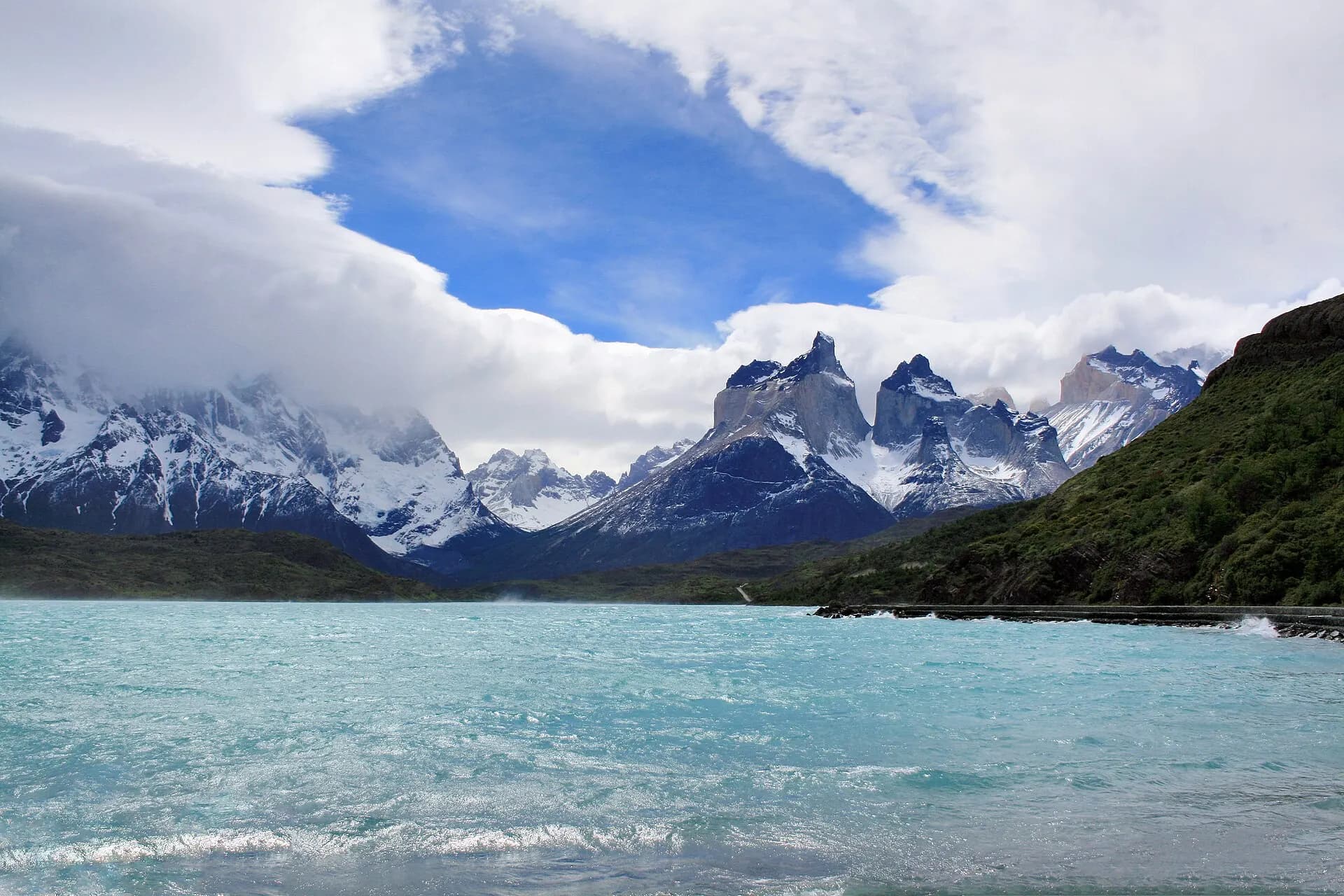
Torres del Paine National Park, in Chilean Patagonia near the southern tip of South America, protects a small mountain range of granite towers and horns that rise abruptly from the steppe, surrounded by glaciers, waterfalls and lakes of extraordinary blues and greens. It's a UNESCO Biosphere Reserve and one of the world's great trekking destinations.
The park can be visited in a day trip from Puerto Natales, but it's best experienced on foot over several days, on the famous W or O treks, staying in mountain refugios or campsites. Weather here is wild and unpredictable, with fierce winds and four seasons in a day, so come prepared.
The top 7 in Torres del Paine
- 1
Base of the Towers (Mirador Las Torres)
Photo: CARLOS TEIXIDOR CADENAS, CC BY-SA 4.0, via Wikimedia Commons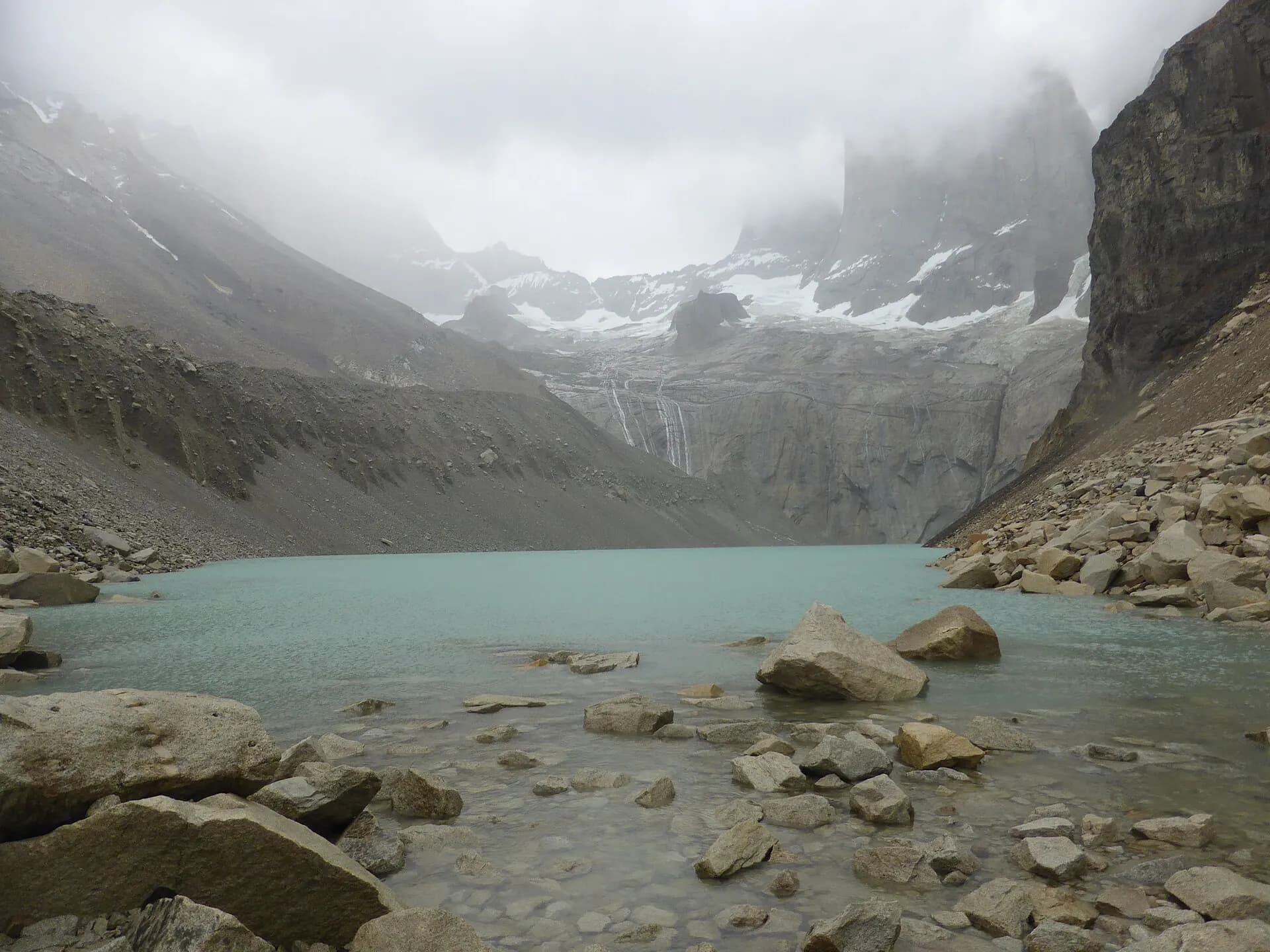
The park's iconic hike climbs through the Ascencio Valley and a steep moraine to a glacial lake beneath the three granite towers that give the park its name. It takes around eight to nine hours return and is the most demanding day of the W trek.
TipStart very early, or stay at a refugio nearby and hike up for sunrise, when the towers can glow red.
- 2
The French Valley (Valle del Francés)
Photo: CARLOS TEIXIDOR CADENAS, CC BY-SA 4.0, via Wikimedia Commons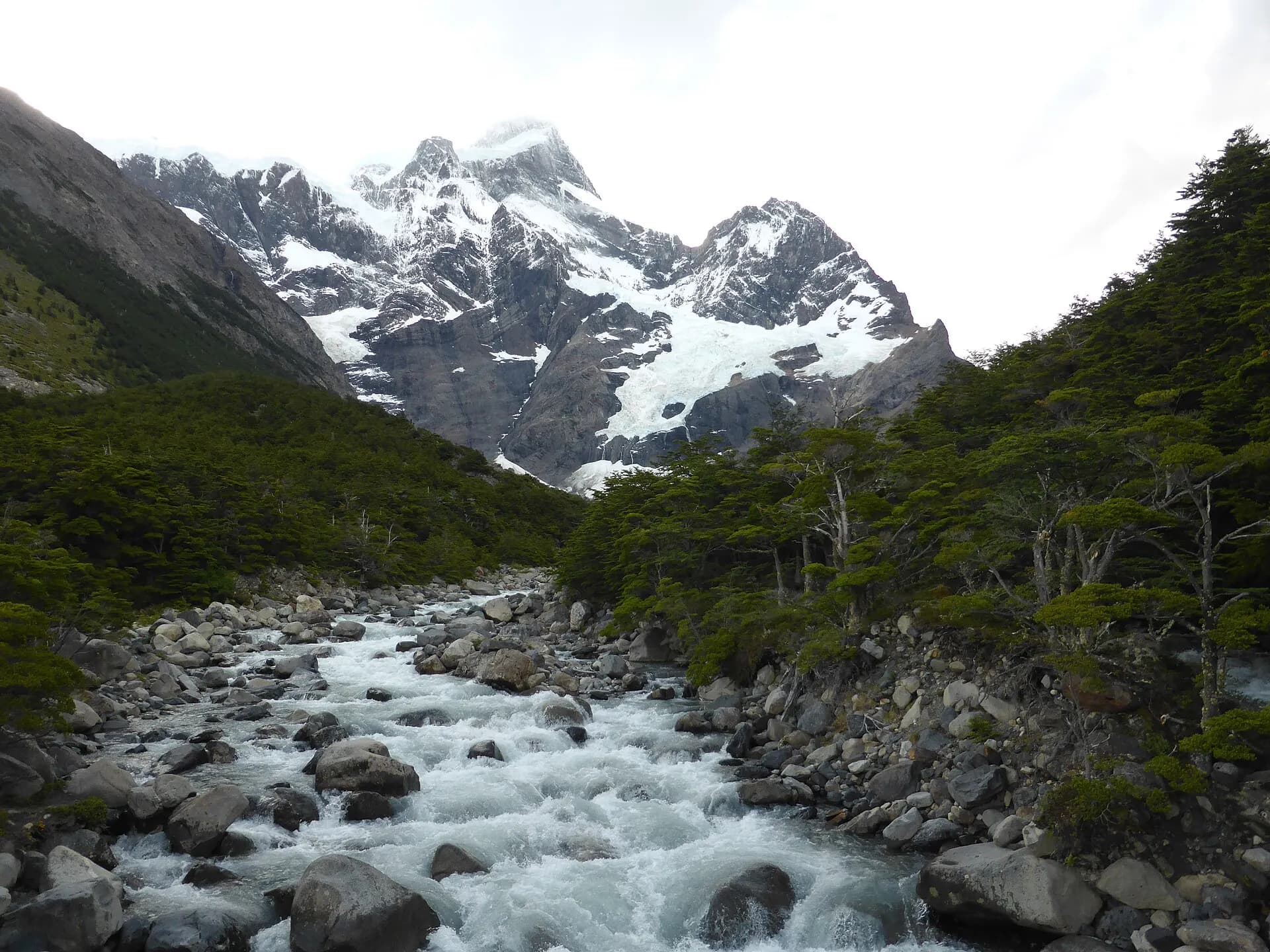
A valley between the Paine Grande massif and the Cuernos, where you hear and see avalanches crashing from hanging glaciers, and the trail climbs to a viewpoint surrounded by a ring of granite walls.
- 3
Grey Glacier
Photo: Diego Delso, CC BY-SA 3.0, via Wikimedia Commons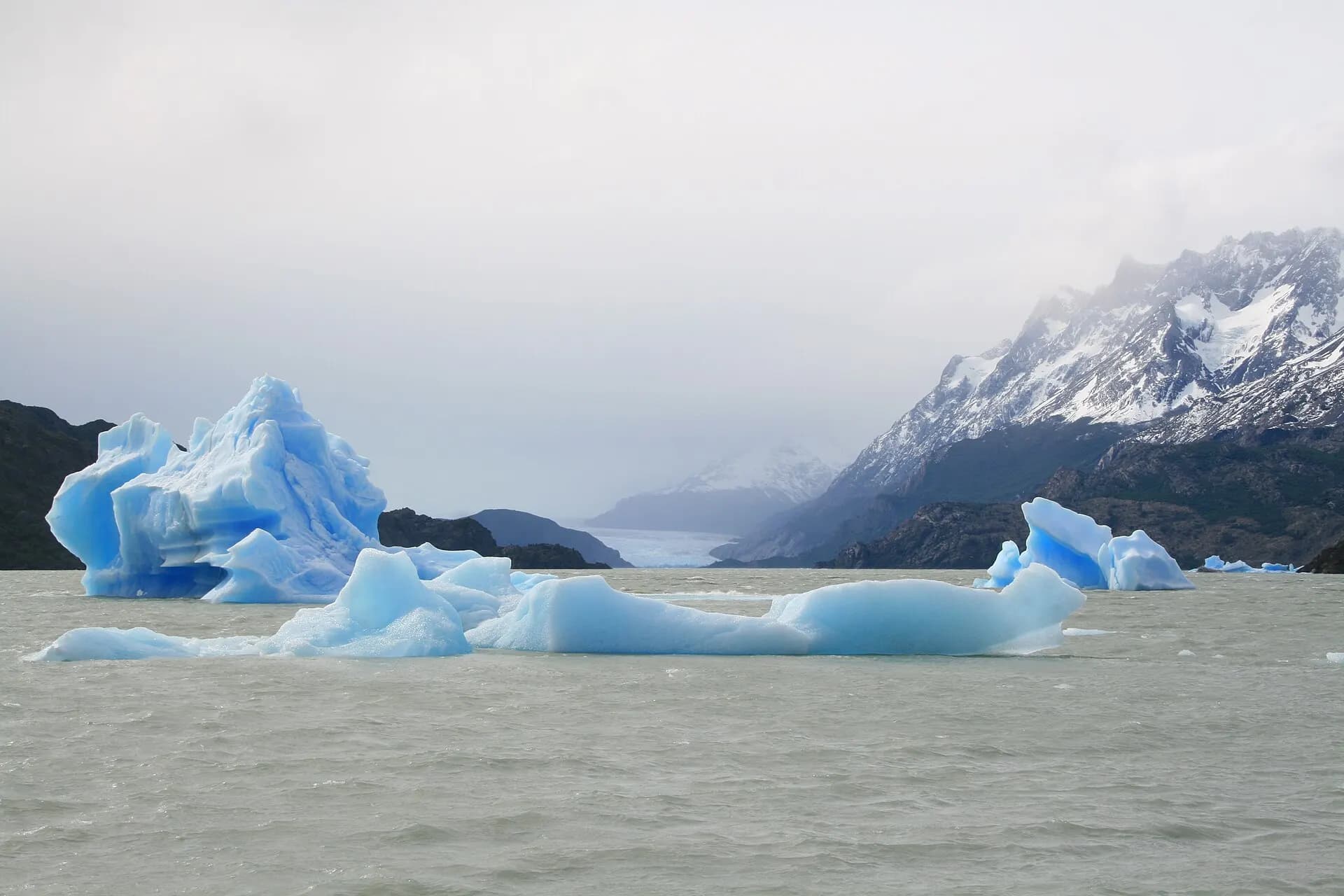
The end of a vast glacier flowing from the Southern Patagonian Ice Field, ending in a lake dotted with blue icebergs. Hike to viewpoints, take a boat across Lago Grey to the ice face, or kayak among the icebergs.
- 4
Lago Pehoé and the Cuernos del Paine
Photo: Elvis Boaventura, CC BY 3.0, via Wikimedia Commons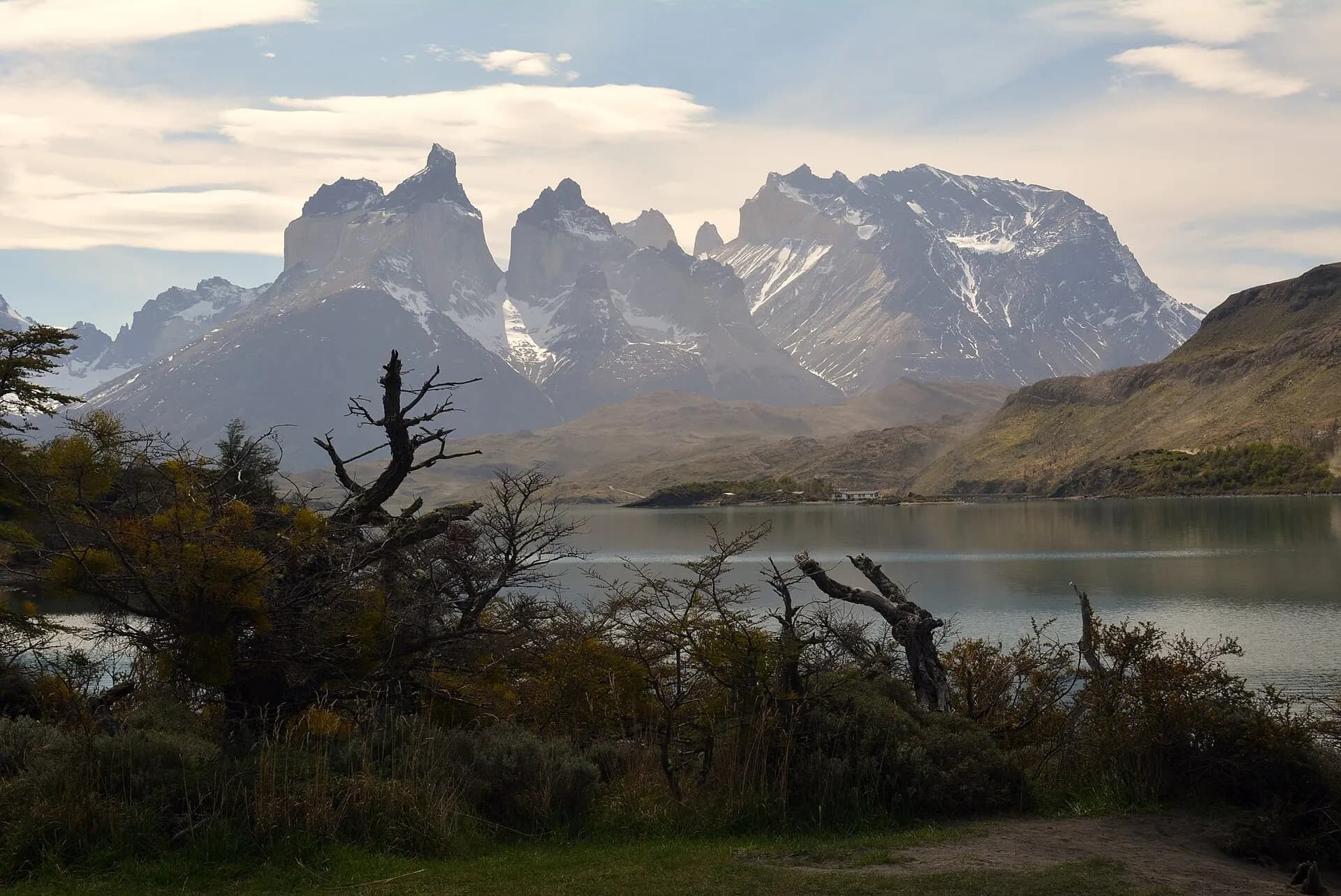
The turquoise Lake Pehoé lies beneath the dark-capped peaks of the Cuernos, the "Horns", one of the most photographed views in Patagonia. A catamaran crosses the lake to the Paine Grande refugio, a starting point for the W trek.
- 5
Salto Grande
Photo: Thomas Fuhrmann, CC BY-SA 4.0, via Wikimedia Commons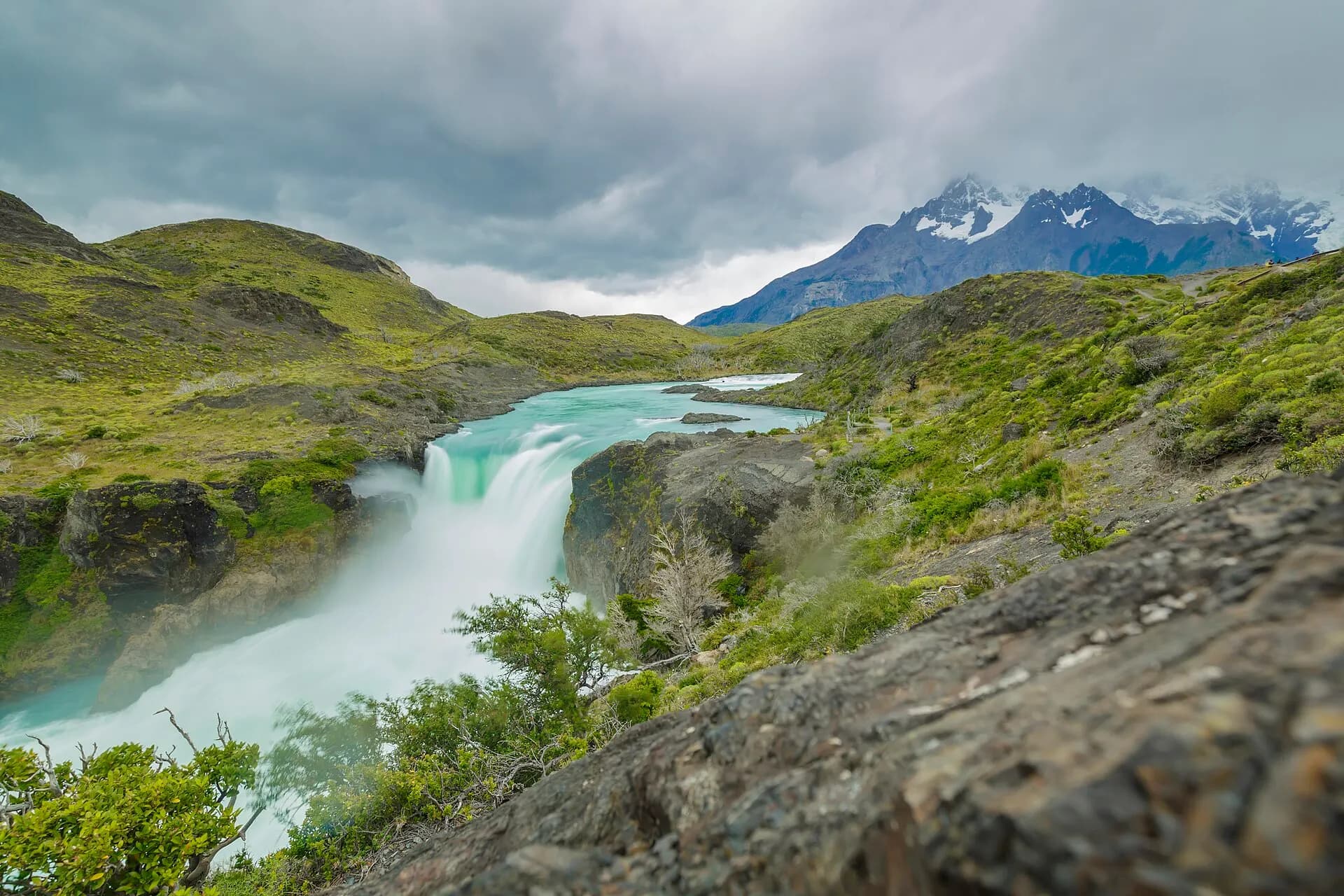
A powerful waterfall where the Paine River pours from Lake Nordenskjöld into Lake Pehoé, reached by a short, easy walk, with views of the Cuernos. The wind here can be strong enough to knock you over.
- 6
Mirador Cóndor and Lago Nordenskjöld
Photo: Martin Cígler, CC BY-SA 3.0, via Wikimedia Commons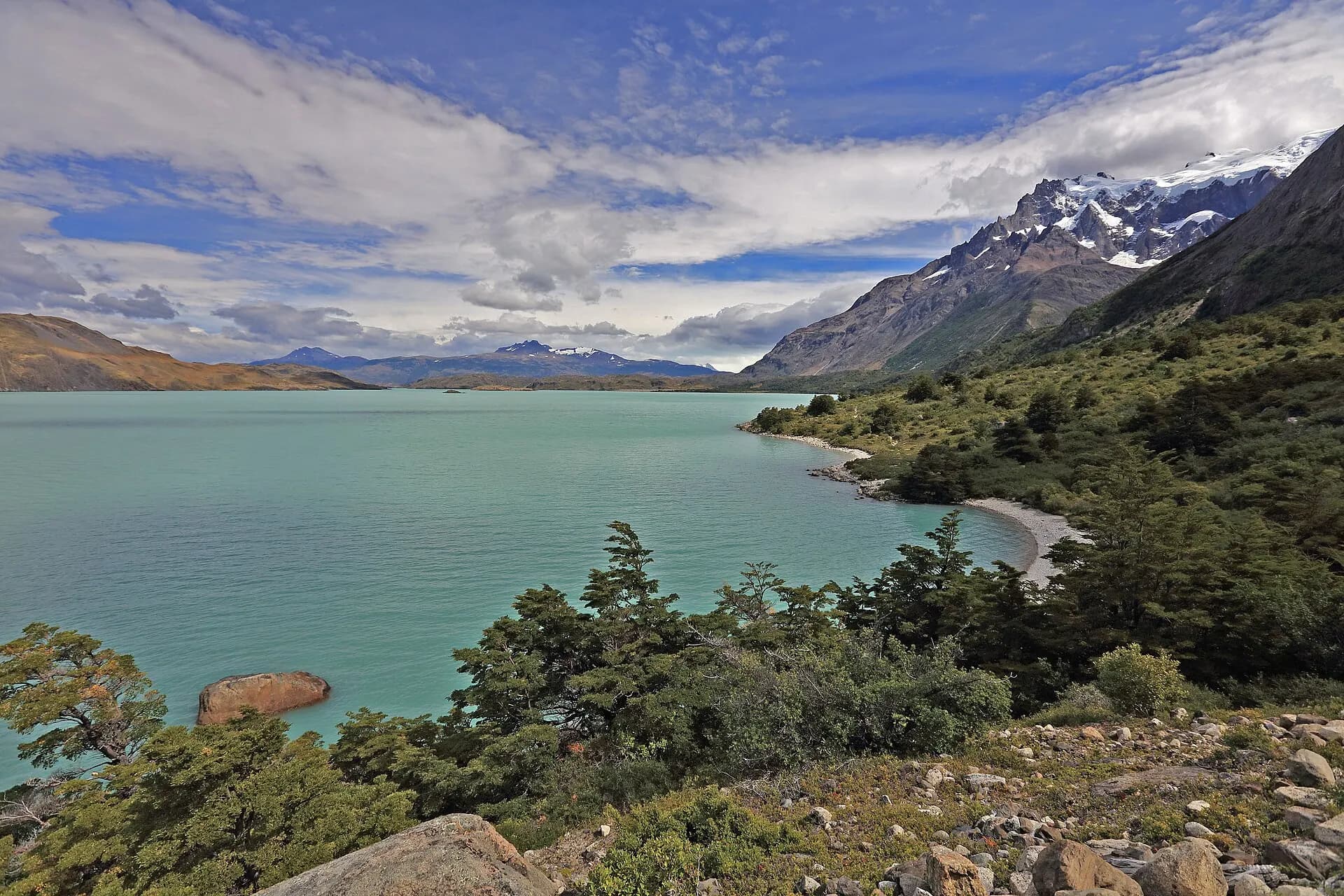
Short trails lead to viewpoints over the long, turquoise Lake Nordenskjöld, where condors are often seen soaring on the winds.
- 7
Laguna Amarga and the wildlife of the steppe
Photo: Diego Delso, CC BY-SA 3.0, via Wikimedia Commons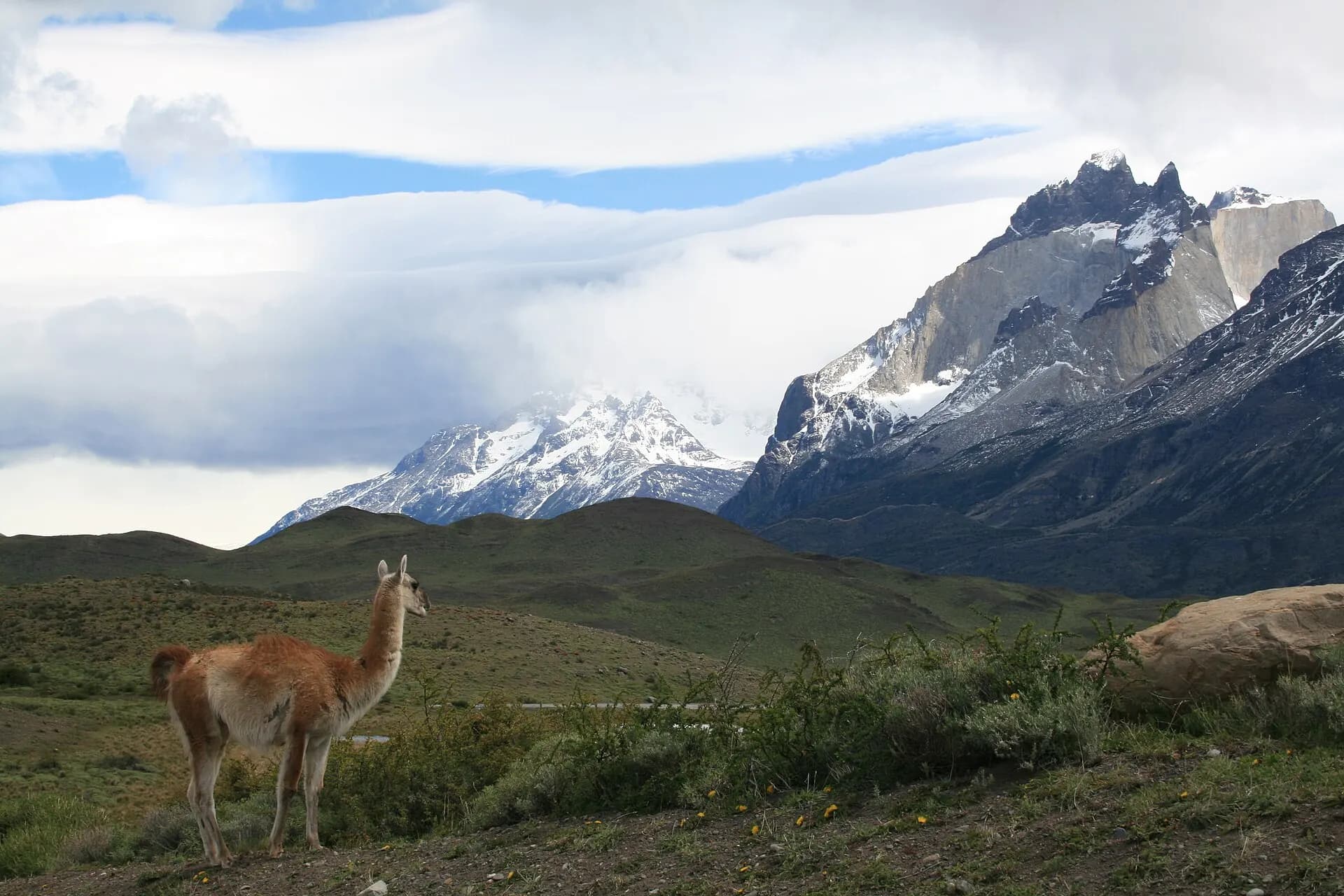
The open grasslands of the park's eastern entrance are home to herds of guanacos, Patagonian foxes, rheas and, more elusively, pumas. Guided wildlife tours have good chances of seeing pumas in the right season.
When to go
The southern summer, from November to March, brings long days, with up to around seventeen hours of daylight in December, and all trails and services open; it's also the windiest period and the busiest. Spring and autumn are quieter, with autumn colours in April. Winter, from June to August, is cold and snowy, with fewer services, but calm days can be beautiful, and puma sightings are often better.
Getting around
Most visitors travel from Puerto Natales, the gateway town about two hours away by road, with buses timed for the trekking routes and day tours. Within the park, catamarans and shuttle buses link key points. Self-driving is possible on gravel roads; drive carefully in the wind.
Puerto Natales has a small airport with summer flights from Santiago; Punta Arenas airport, about three hours further south, has year-round flights.
Local tips
- Buy your park entry online in advance, and book refugios and campsites for the W or O trek months ahead; you can't stay overnight without a reservation.
- Fires are strictly forbidden; past wildfires caused by visitors destroyed large areas of forest.
- Stay on marked trails, and carry out all your rubbish.
- Pack waterproof and windproof layers, gloves and a warm hat even in summer.
- The weather can change in minutes; check forecasts and allow spare days.
- Chile uses the peso; carry some cash for buses and small purchases.
- Mobile signal is patchy in the park; download maps before you go.
Eat and drink
Food inside the park is served at refugios and hotels, from simple set meals to fine dining at the lodges. In Puerto Natales, try Patagonian lamb roasted on a spit (cordero al palo), king crab (centolla), and calafate berries, which legend says will bring you back to Patagonia. A pisco sour is the national cocktail.
Treks and routes
The W trek, usually four or five days, links the Base of the Towers, the French Valley and Grey Glacier in a shape like the letter. The O circuit, around eight days, adds the remote northern side of the massif and the John Gardner Pass, with views over the Southern Patagonian Ice Field. Both require booked accommodation along the route. For those short on time, a full-day tour from Puerto Natales covers the main viewpoints by road.
Beyond the park
Across the border in Argentina, El Calafate is the base for the Perito Moreno Glacier, a giant wall of ice in Los Glaciares National Park, and El Chaltén is the trekking capital beneath Mount Fitz Roy. Bus connections run between Puerto Natales and El Calafate in summer.
Where to stay
Inside the park, options range from campsites and dormitory refugios along the trekking routes, where you can rent tents and buy meals, to comfortable hotels and luxury lodges with guided excursions, some with dramatic views of the massif. Beds inside the park are limited and fill months ahead in summer. Puerto Natales, a small port town on a fjord about two hours away, has a wide choice of hostels, guesthouses and hotels and is the main base for day trips.