Siem Reap and Angkor
The vast temple city of the Khmer Empire, with towers rising from the jungle and faces carved in stone.
- Best time to go
- November to February, the cool dry season
- Local time
- –
- Currency
- Cambodian Riel (KHR)
- Reading time
- 4 min
- Language
- Cambodian
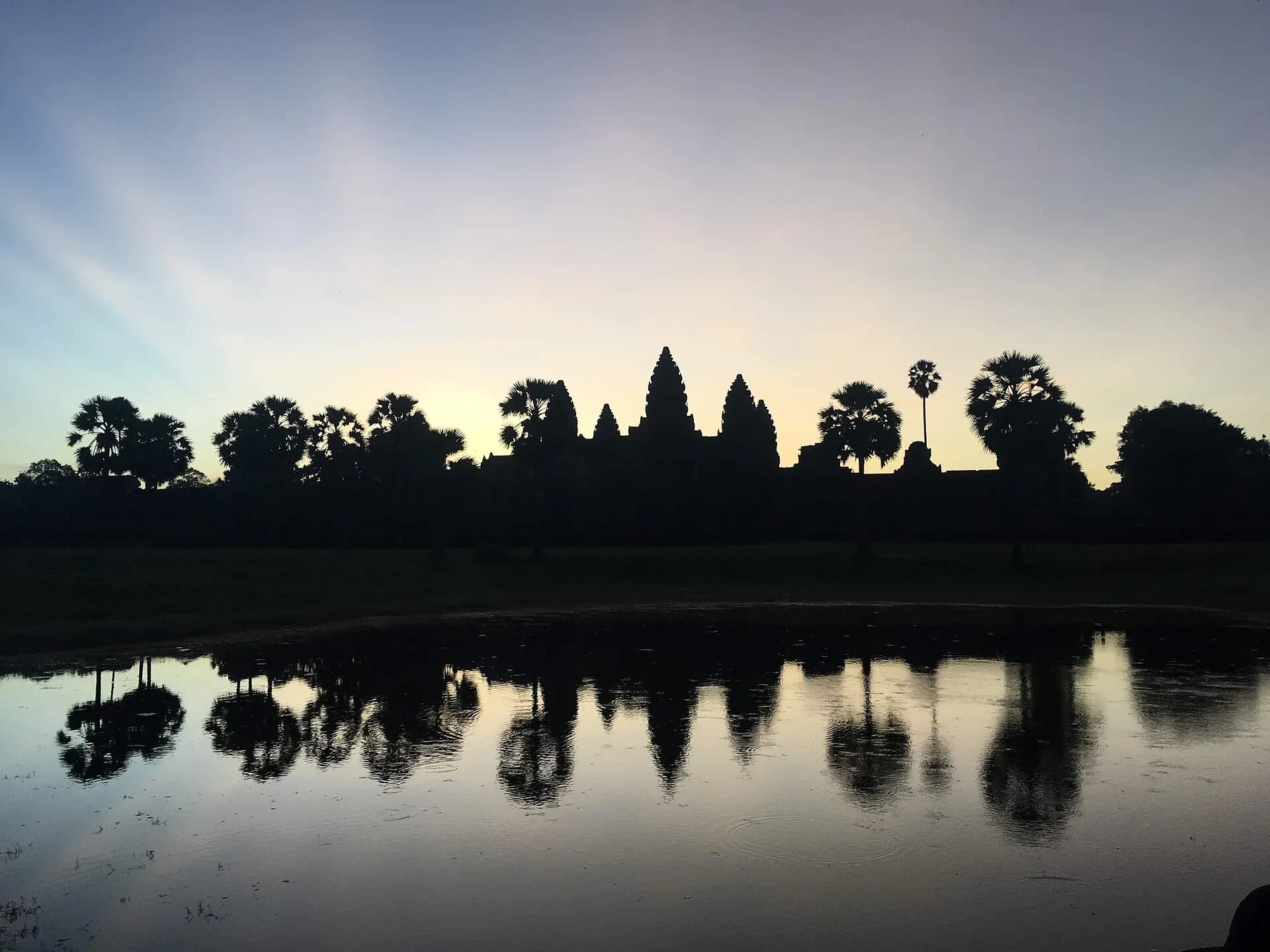
From the ninth to the fifteenth century, the Khmer Empire ruled much of mainland Southeast Asia from its capital at Angkor, in what is now northern Cambodia. Its kings built hundreds of temples, first Hindu and later Buddhist, across a vast area of reservoirs and canals, and the ruins that remain, now a World Heritage Site, are among the most extraordinary on earth.
The town of Siem Reap, a few kilometres south, is the base for exploring them, with hotels, markets and a lively evening scene. The temple area is enormous, so plan your days, start early to beat the heat and the crowds, and leave time for the quieter temples where the jungle still holds sway.
The top 9 in Siem Reap and Angkor
- 1
Angkor Wat
Photo: No(0)GoodNamesLeft, CC BY-SA 4.0, via Wikimedia Commons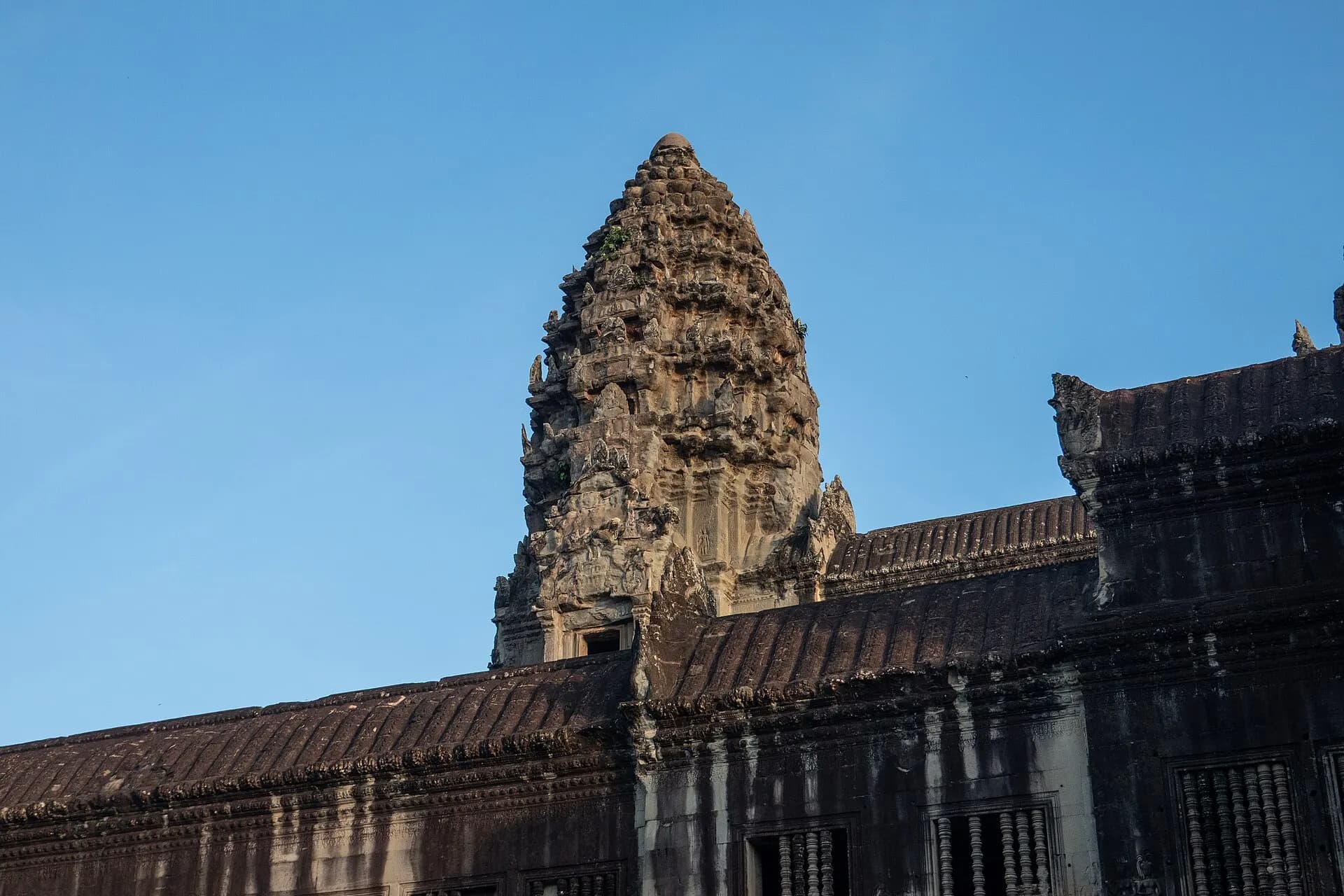
The largest religious monument in the world, built in the early twelfth century as a Hindu temple to Vishnu and later used by Buddhists. Its five lotus-shaped towers rise above a moat and causeway, and its galleries are lined with hundreds of metres of carved reliefs, including the Churning of the Ocean of Milk.
TipSunrise over the towers, reflected in the pond in front, is famous and crowded; afterwards, explore the galleries while most people head to breakfast.
- 2
Angkor Thom and the Bayon
Photo: KhalidAlzeyoudi, CC0, via Wikimedia Commons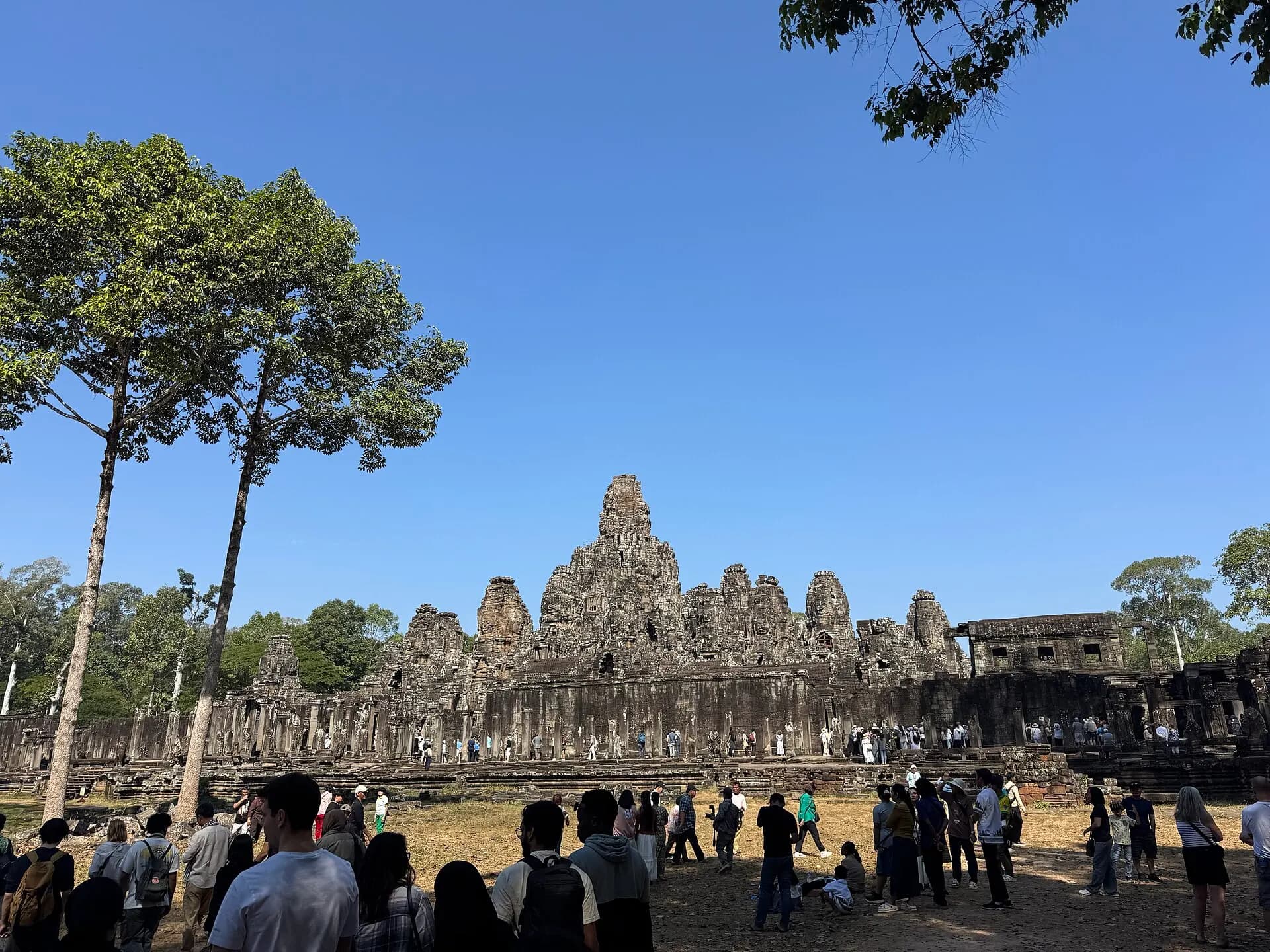
The walled royal city of King Jayavarman VII, entered through monumental gates lined with gods and demons. At its centre, the Bayon temple has more than two hundred serene stone faces gazing out from its towers, and fine reliefs of daily life and battles.
- 3
Ta Prohm
Photo: lumoplank, CC0, via Wikimedia Commons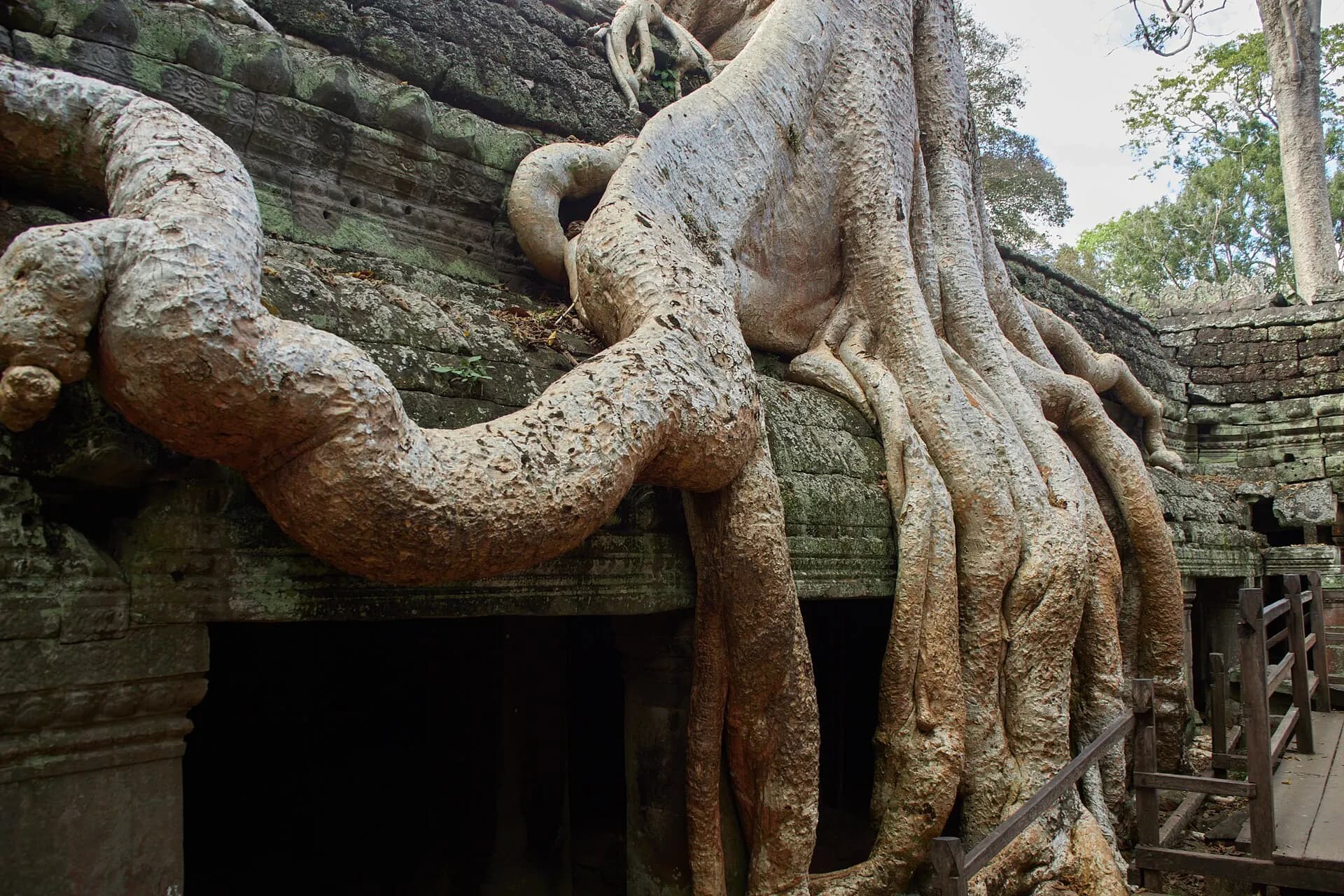
A temple left partly to the jungle, where giant silk-cotton and strangler fig trees grow out of the walls and roofs, their roots wrapping around the stones. It's one of the most atmospheric places at Angkor.
TipArrive at opening time to see it before the crowds.
- 4
The Terrace of the Elephants and the Leper King
Photo: Marcin Konsek, CC BY-SA 4.0, via Wikimedia Commons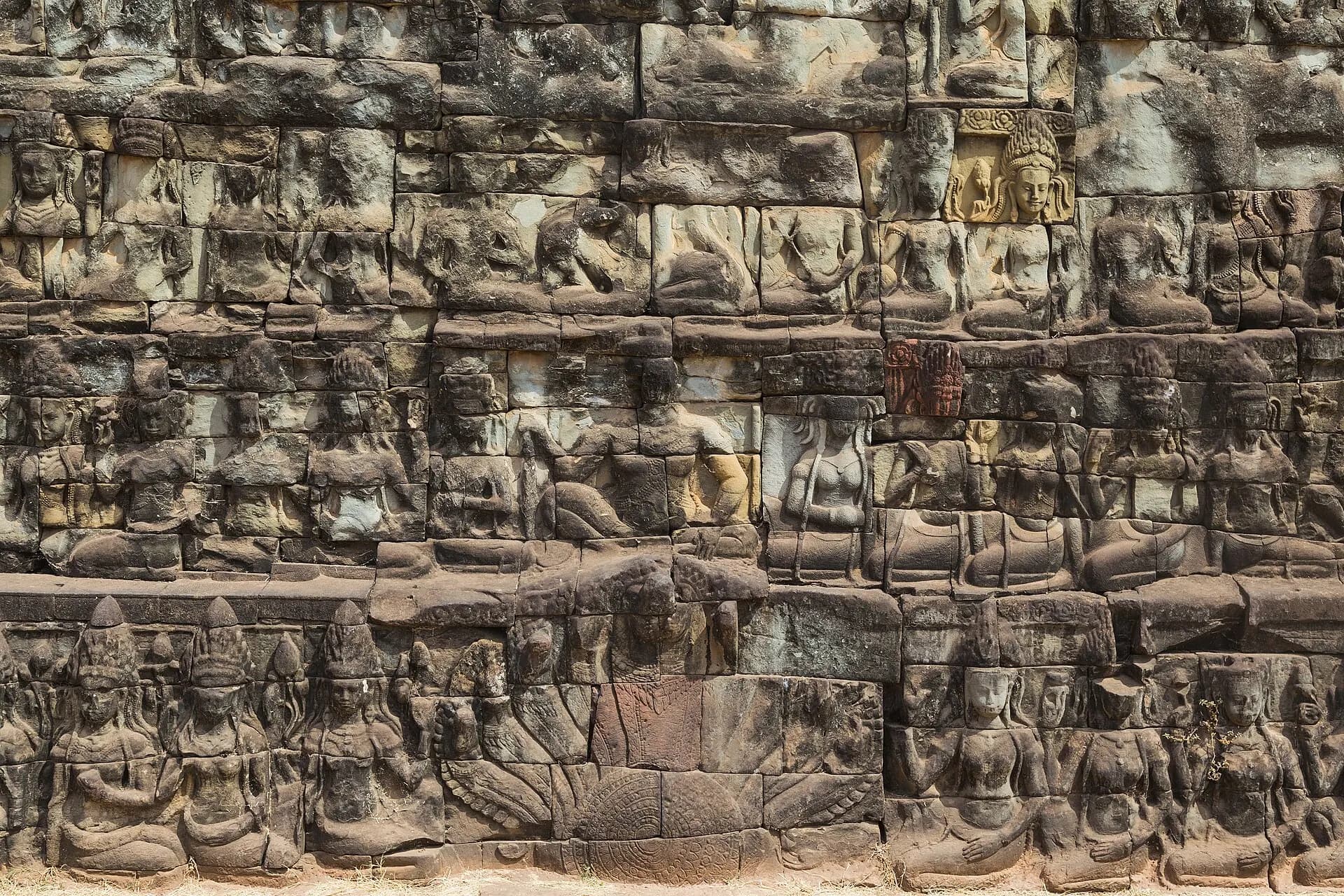
Two long terraces in Angkor Thom, used for royal ceremonies and reviews, carved with parades of elephants, mythical creatures and multiple layers of hidden reliefs.
- 5
Banteay Srei
Photo: Olaf Tausch, CC BY 3.0, via Wikimedia Commons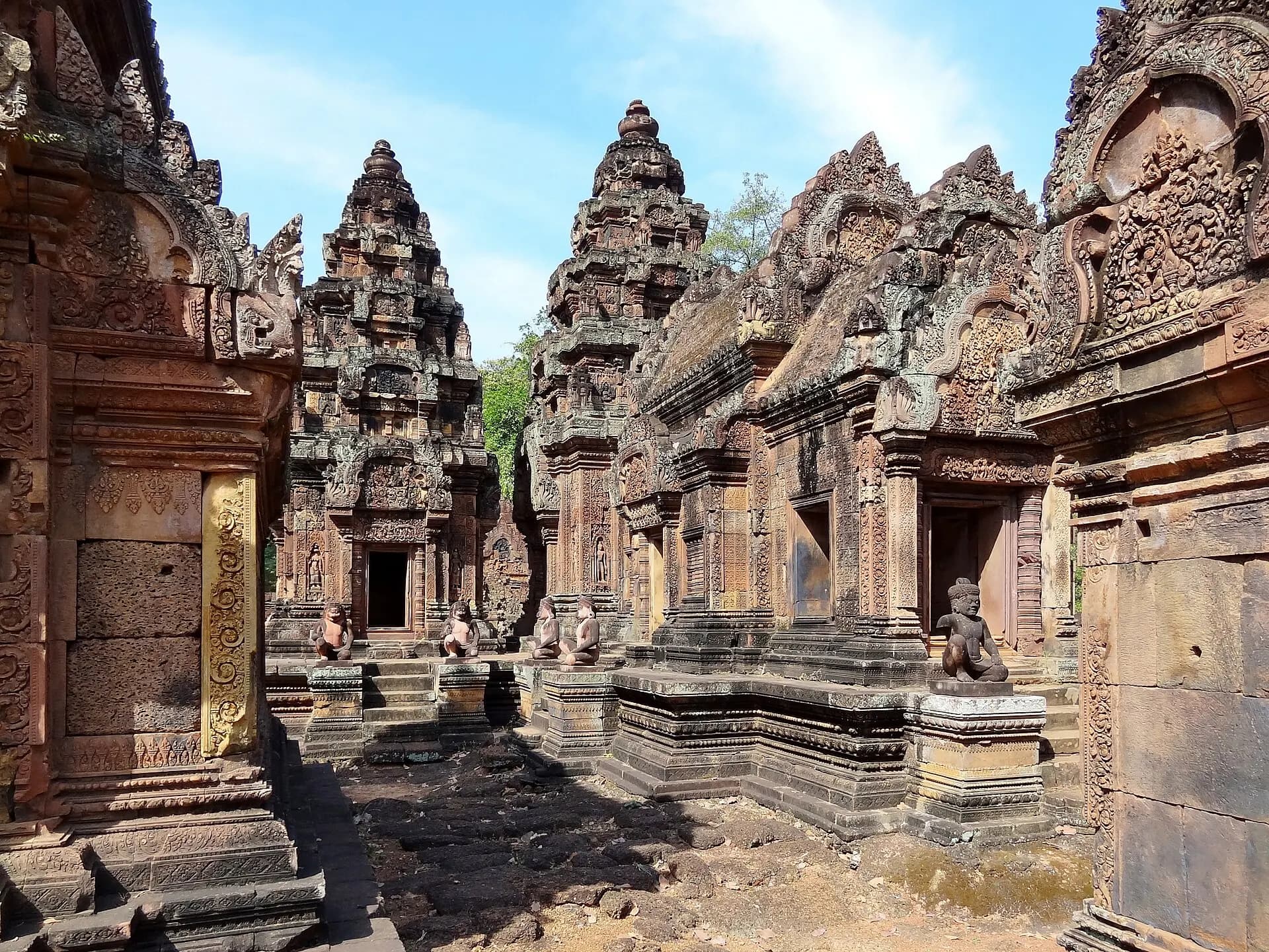
A small tenth-century temple about thirty-five kilometres north-east, built of pink sandstone and covered in some of the finest, most delicate carvings in Khmer art. It's often called the "citadel of women" for its beauty.
- 6
Preah Khan
Photo: Marcin Konsek, CC BY-SA 4.0, via Wikimedia Commons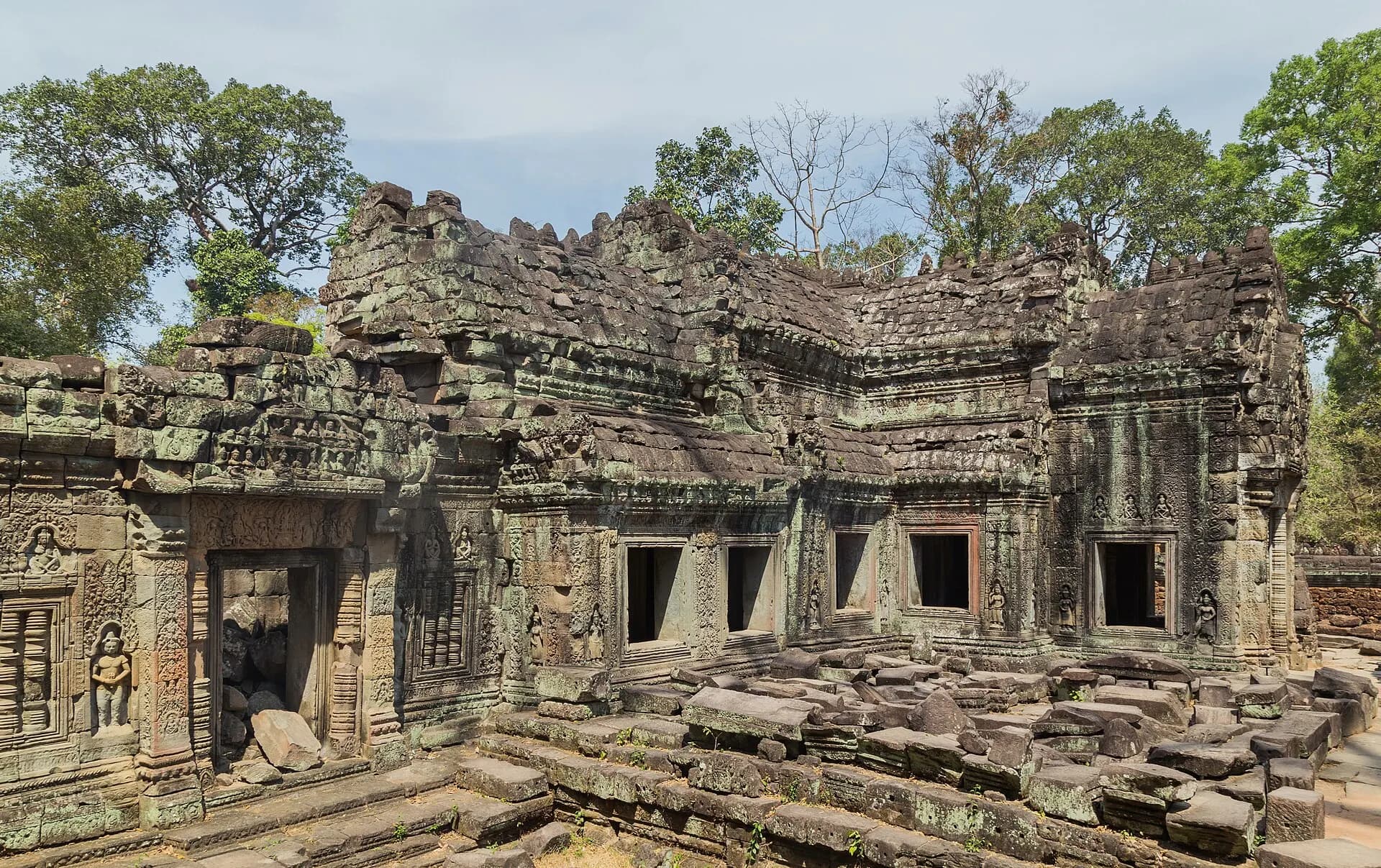
A sprawling twelfth-century temple complex built by Jayavarman VII, with long corridors, doorways framing doorways, and trees growing among the ruins, far quieter than Ta Prohm.
- 7
Phnom Bakheng
Photo: Satdeep Gill, CC BY-SA 4.0, via Wikimedia Commons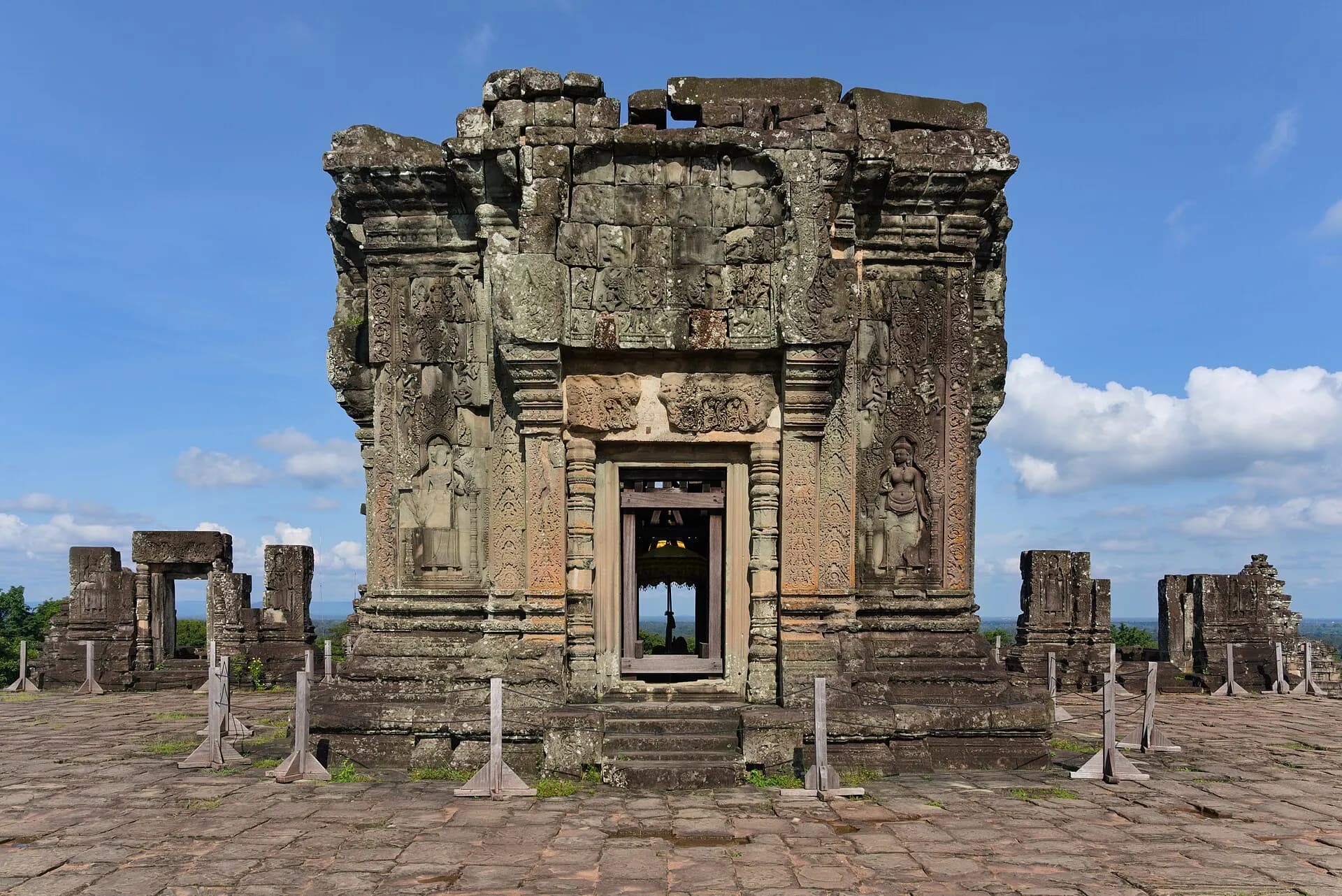
A temple on a hilltop between Angkor Wat and Angkor Thom, a popular spot for sunset over the forests and the distant towers of Angkor Wat. Visitor numbers at the top are limited.
- 8
- 9
Siem Reap town
Photo: Pierre André Leclercq, CC BY-SA 4.0, via Wikimedia Commons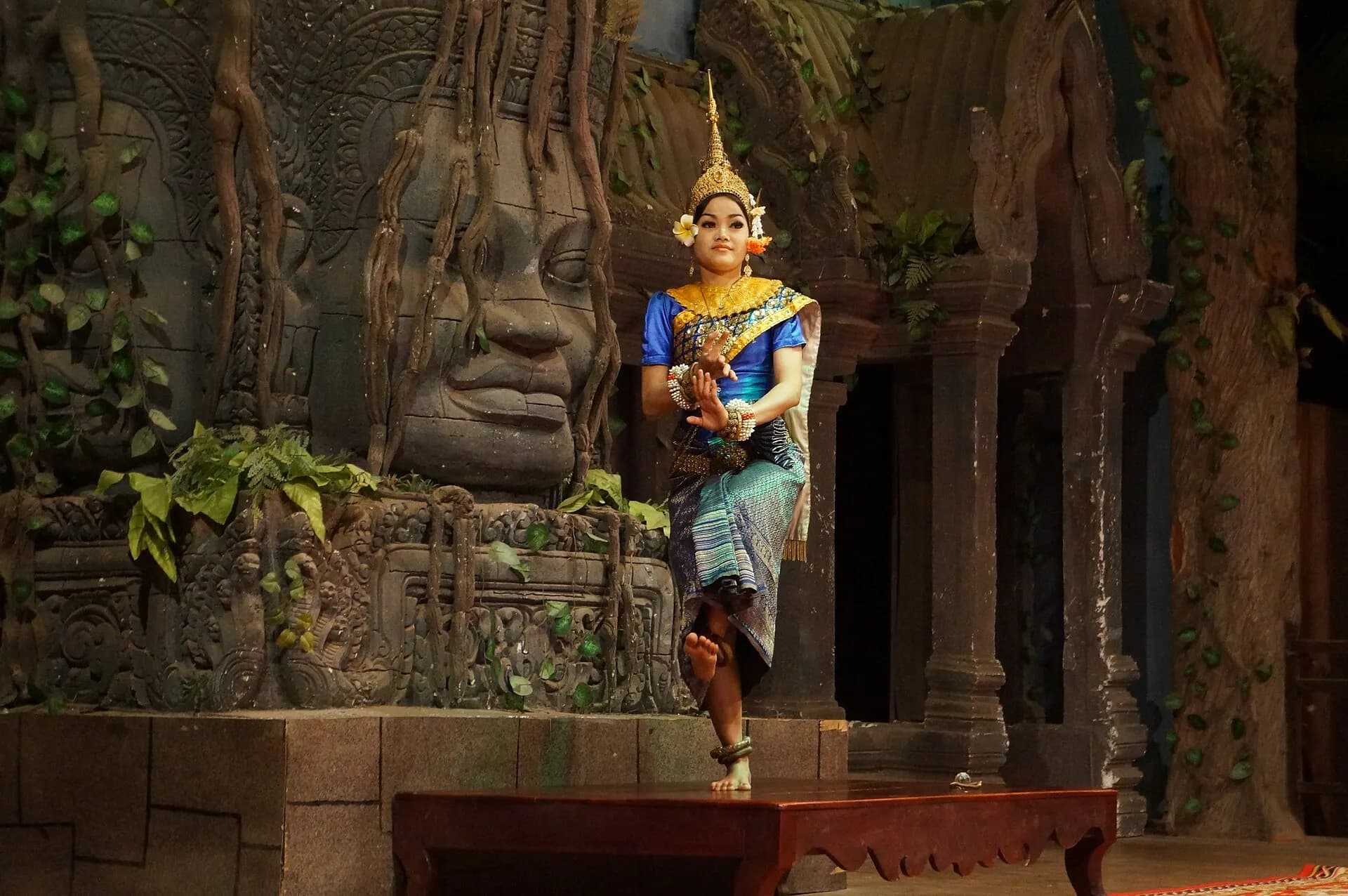
The town has markets, restaurants and bars around Pub Street and the Old Market, the Angkor National Museum, and the Phare circus, a social enterprise where young Cambodian performers combine acrobatics, theatre and music. The Angkor National Museum is a good introduction before visiting the temples, explaining Khmer history, religion and architecture.
When to go
The cool, dry season from November to February is the most comfortable and the busiest. March to May is very hot, often above 35 °C. The rainy season, from June to October, brings afternoon downpours, lush green landscapes and far fewer visitors, and the moats and reservoirs fill up. Khmer New Year in mid-April brings celebrations around the temples.
Getting around
Most visitors hire a tuk-tuk and driver by the day, the classic way to tour the temples, or a car with air conditioning. Cycling is possible on the flat roads, and electric bikes can be rented in town. Licensed guides add a great deal to the experience.
Siem Reap–Angkor International Airport is about an hour from town by road, with shuttle buses. Buses link Siem Reap with Phnom Penh and Bangkok.
Local tips
- Buy your Angkor pass at the official ticket office or online; one-, three- and seven-day passes are available, and your photo is printed on it.
- Check visa requirements; many visitors can apply for a Cambodian e-visa online.
- Dress modestly, covering shoulders and knees, especially for the upper levels of Angkor Wat.
- Carry plenty of water, sunscreen and a hat; the heat is intense.
- US dollars are widely used alongside the Cambodian riel; carry small notes.
- Don't climb on fragile ruins or touch the carvings.
Eat and drink
Cambodian cooking is milder than its neighbours'. Try fish amok, fish steamed in banana leaves with coconut and spices; lok lak, stir-fried beef with a lime and pepper dipping sauce; and kuy teav, a noodle soup for breakfast. Fresh fruit shakes are sold everywhere, and the town's restaurants include several social enterprises that train young Cambodians in hospitality.
Planning your temple days
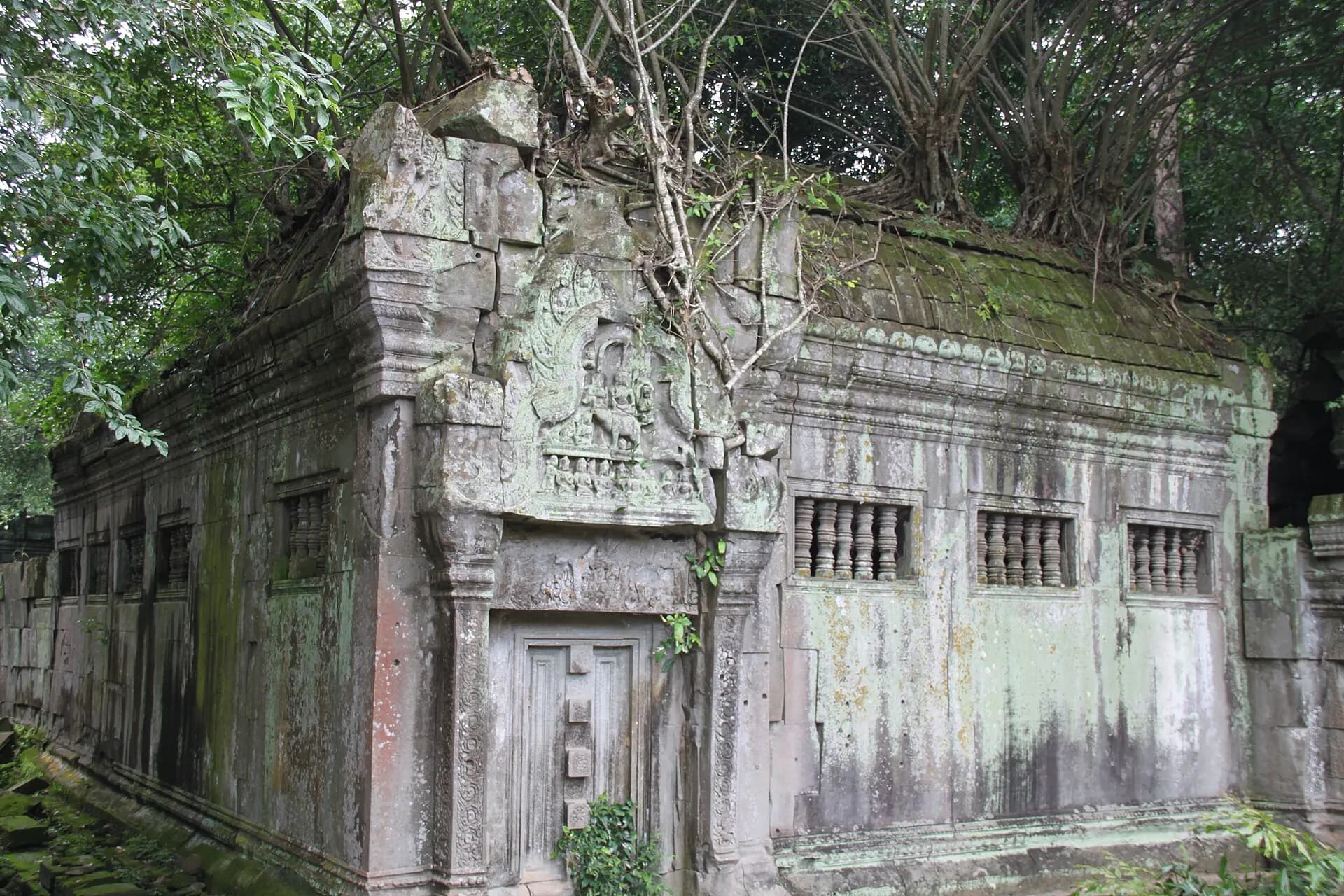
With one day, see Angkor Wat at sunrise, then Angkor Thom and the Bayon, and Ta Prohm. With three days, add the "grand circuit" of Preah Khan, Neak Pean and Ta Som, and Banteay Srei. With more time, venture further to Beng Mealea, Koh Ker and the river carvings of Kbal Spean.
Where to stay
Siem Reap has hotels for every budget, from guesthouses near Pub Street to boutique hotels and resorts with pools set in gardens along the river. Staying near the Old Market puts restaurants and nightlife within walking distance, while hotels along the road to the temples are quieter and closer to Angkor for early starts. Many hotels arrange tuk-tuk drivers and guides for temple days.