Okavango Delta
A vast inland delta in the Kalahari, where floodwaters bring channels, islands and some of Africa's richest wildlife.
- Best time to go
- June to October, the dry season with high water and best game viewing
- Local time
- –
- Currency
- Botswanan Pula (BWP)
- Reading time
- 4 min
- Language
- English and Tswana

The Okavango Delta, in northern Botswana, is one of the world's largest inland deltas, where the Okavango River spreads out across the Kalahari Desert instead of reaching the sea. Each year, rains in the highlands of Angola send a flood slowly downstream, arriving months later, in the dry season, and transforming the delta into a maze of channels, lagoons, floodplains and islands. Wildlife gathers from far around.
It's home to elephants, lions, leopards, wild dogs, buffalo, hippos and hundreds of species of birds, and the delta was made the thousandth World Heritage Site in 2014. Botswana has protected it through a policy of low-impact, high-value tourism, so camps are small and remote, and often reached only by light aircraft. It's expensive, but few safaris compare.
The top 7 in Okavango Delta
- 1
Moremi Game Reserve
Photo: diego_cue, CC BY-SA 3.0, via Wikimedia Commons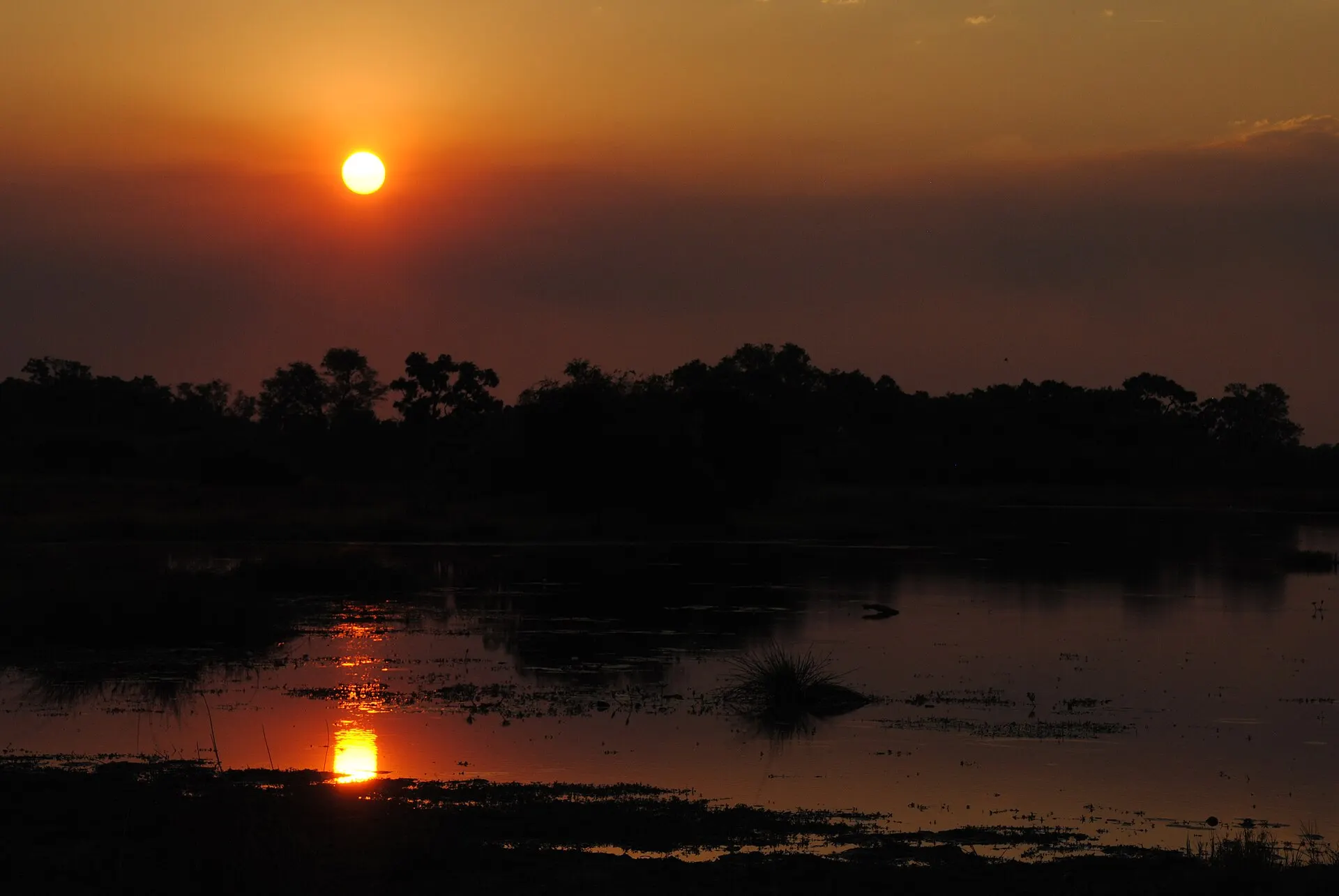
A reserve covering a large part of the eastern delta, with a mix of dry land and floodplains, home to big cats, elephants and wild dogs. It's the only part of the delta accessible by self-drive.
- 2
A mokoro trip
Photo: Diego Delso, CC BY-SA 4.0, via Wikimedia Commons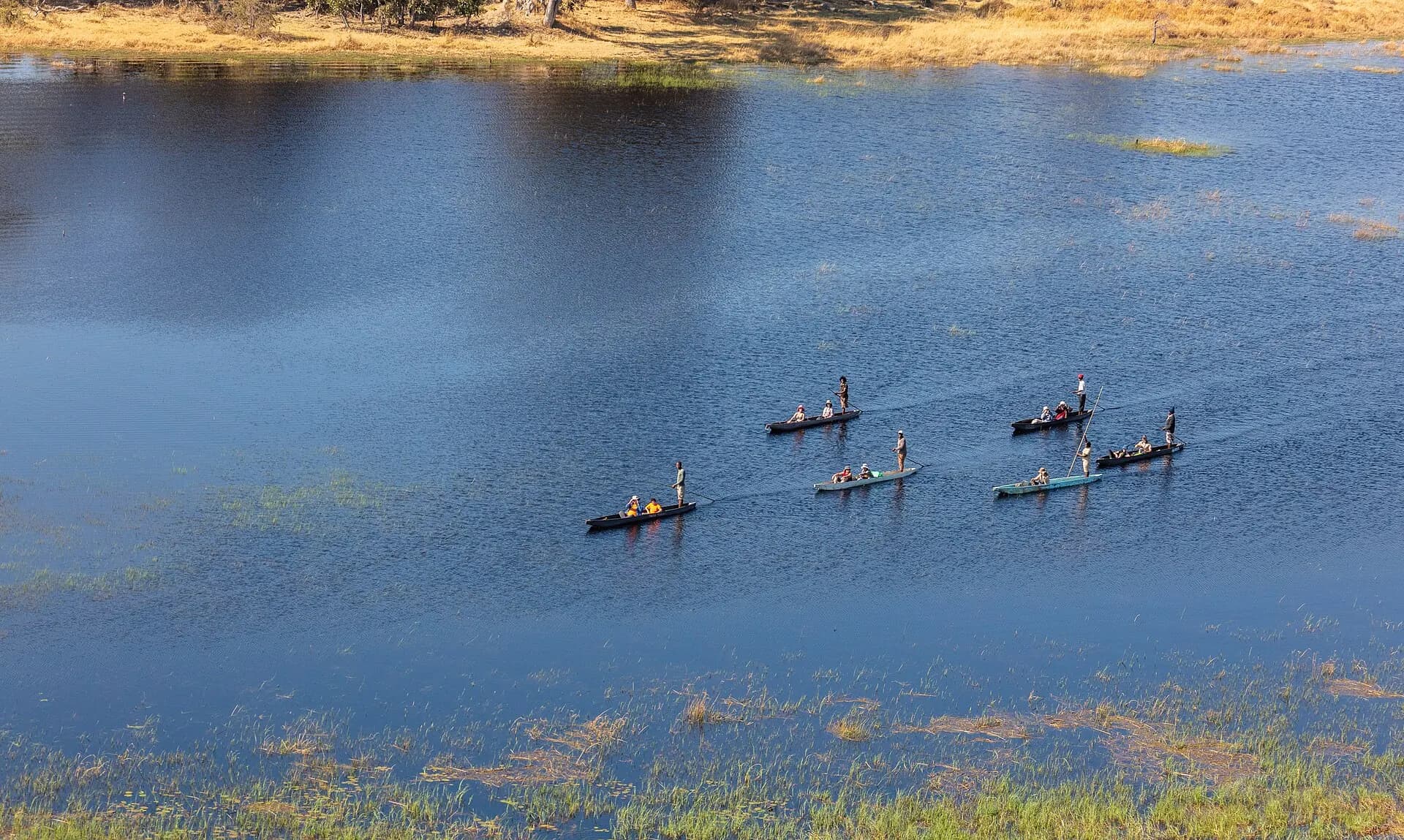
Gliding through the reeds and lily pads of the shallow channels in a mokoro, a traditional dugout canoe, now often made of fibreglass, poled by a local guide, is the classic delta experience.
TipMokoro trips work best when the water is high, usually from about June to September.
- 3
Chief's Island
The largest island in the delta, inside Moremi, with some of the densest concentrations of wildlife, including lions and leopards. Several luxury camps operate nearby.
- 4
Scenic flights over the delta
Photo: diego_cue, CC BY-SA 3.0, via Wikimedia Commons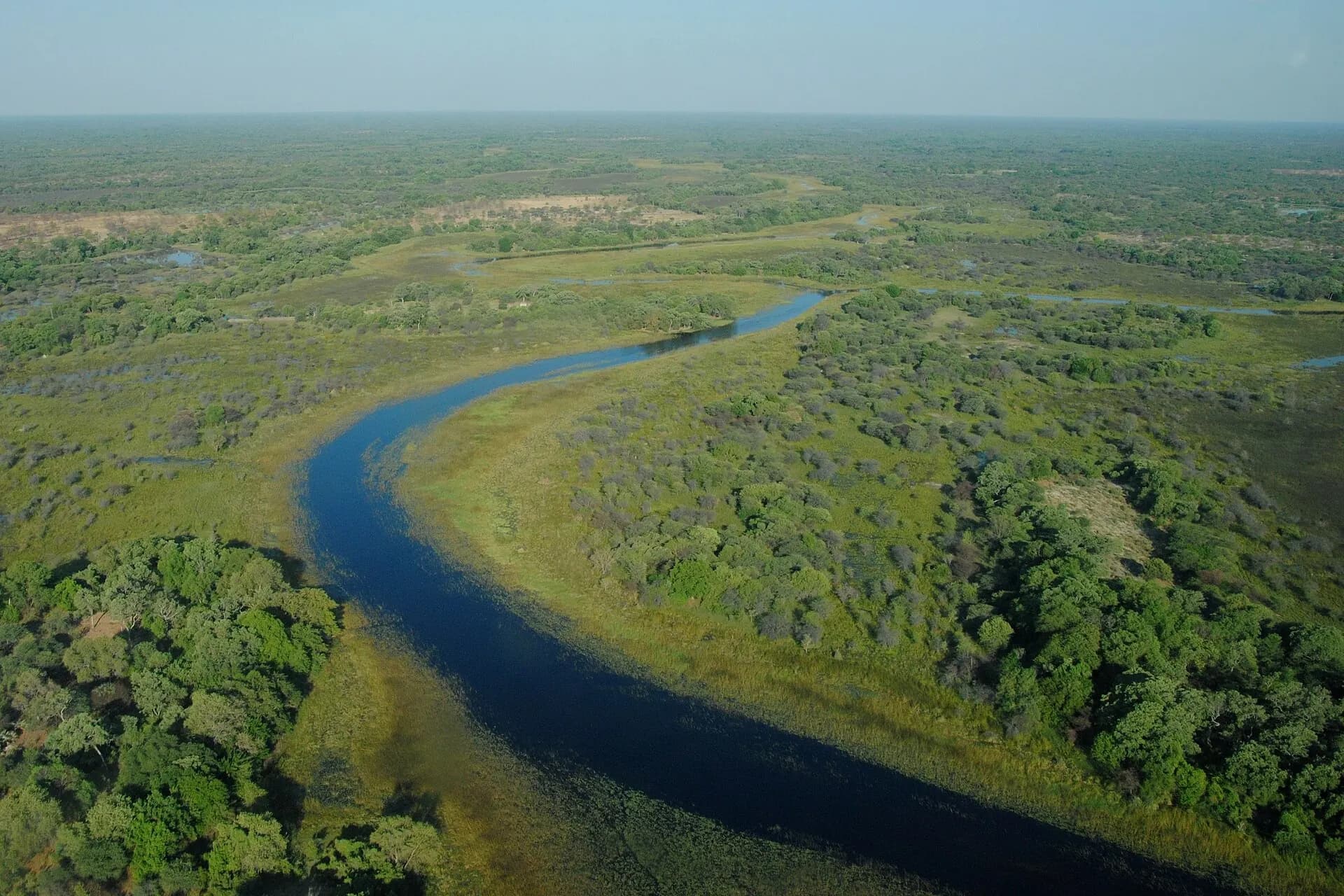
Flights in light aircraft or helicopters reveal the pattern of channels, islands and lagoons from above, with herds of elephants and buffalo crossing the water.
- 5
Maun
Photo: Diego Delso, CC BY-SA 4.0, via Wikimedia Commons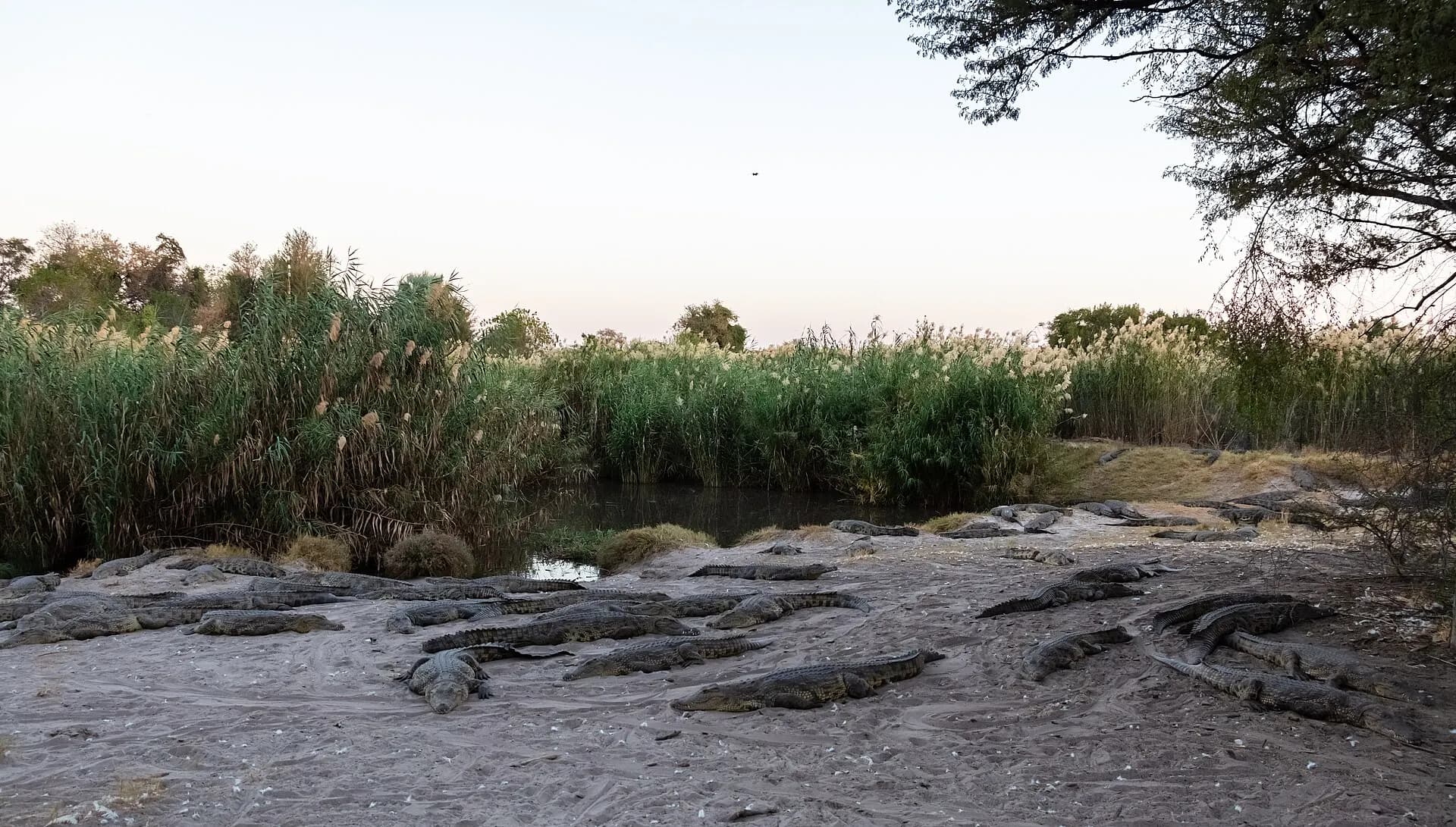
The gateway town to the delta, with the main airport for flights to the camps, as well as shops and lodges by the Thamalakane River.
- 6
The Khwai concession
A community-run area on the north-east edge of Moremi, along the Khwai River, known for its wildlife and its relaxed rules, allowing night drives and walking safaris.
- 7
Chobe National Park
Northeast of the delta, near Kasane, famous for its vast herds of elephants, especially along the Chobe River in the dry season, where boat cruises bring you close to elephants swimming and drinking.
When to go
The dry season, from June to October, coincides with the annual flood in the delta and is the best time for game viewing, as animals gather near water. It's also the busiest and most expensive time. The rainy season, from November to March, brings green landscapes, newborn animals and migrating birds, with lower prices but hotter weather and heavier rain.
Getting around
Most visitors fly in small aircraft from Maun or Kasane to the camps' airstrips, with strict weight limits on luggage, usually in soft bags. Self-drive trips into Moremi and Chobe are possible in a well-equipped four-wheel-drive vehicle, but require experience and booked campsites. Maun's airport has connections to Johannesburg and other regional hubs.
Local tips
- Book well in advance, especially for the dry season.
- Pack soft-sided bags for light aircraft flights.
- Wear neutral colours on safari, and bring layers for cold mornings and evenings.
- Take medical advice on malaria before travelling.
- Follow your guide's instructions closely around wildlife, especially on walks and in a mokoro.
- Check visa requirements for Botswana before you travel.
Eat and drink
Safari camps usually serve full board, with meals around a fire and drinks at sunset. Try seswaa, slow-cooked pounded beef, often served with pap, a maize porridge, and morogo, wild spinach.
Where to stay
Camps range from luxury lodges with private plunge pools to simple tented camps, all small and spread out to limit the impact on the environment. Maun has lodges for overnight stays before or after flying into the delta. Mobile camping safaris offer a more affordable way to experience the area.
Conservation
Botswana's approach to tourism, which limits the number of visitors and camps, has helped protect one of Africa's great wildernesses. Many camps work with local communities through concession agreements that share income and jobs, and contribute to anti-poaching and research projects. The delta is home to a large share of Africa's remaining elephants and wild dogs.
The people of the delta
People have lived in and around the delta for thousands of years, including the Bayei, who brought the mokoro to the region, the Hambukushu and the San. Many guides are from local communities and have grown up on the water, reading tracks and knowing the habits of animals. Tourism provides an important income for villages around the delta, and some community-run concessions offer cultural visits and walking safaris.
Safari activities
Unlike many parks in Africa, where visitors stay in vehicles, the delta offers a range of ways to see wildlife. Game drives in open vehicles explore the dry islands and floodplains, often at dawn and dusk when animals are most active. Mokoro trips and motorboat cruises explore the channels and lagoons, ideal for birds, hippos and elephants crossing the water. Guided walking safaris, led by armed, experienced guides, let you track animals on foot and learn about plants, insects and footprints. Night drives, allowed in private concessions, reveal nocturnal animals such as leopards, hyenas, porcupines and bushbabies. Many camps specialise in water or land activities depending on their location, so combining two or three camps gives the fullest experience.
Birdlife
More than four hundred species of birds have been recorded in the delta. Look for African fish eagles calling from treetops, the colourful lilac-breasted roller, saddle-billed storks, kingfishers, herons and the rare Pel's fishing owl, which hunts at night along the channels. The wet season brings migratory birds from Europe and the rest of Africa.